
US Navy 20mm Oerlikon Cannon Tech Data
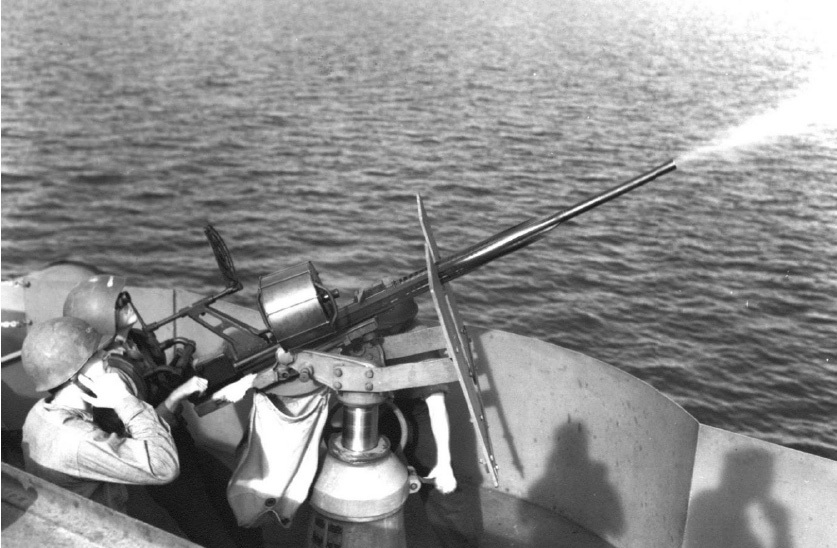 The Oerlikon 20mm cannon was used by nearly every combatant nation during WW2, as both a naval mount, aircraft weapon, and infantry support weapon. It started appearing on US Navy ships in 1942 as a replacement for the Browning M2 .50caliber machine gun. The purpose of this document is to highlight the various versions of the US Navy 20mm mounts and their application onboard US Navy ships. Contrary to popular belief, although the 20mm Oerlikon gun itself remained relatively unchanged, it had 181 permutations of pedestal mounts, gun sights, and gun shield combinations (USN ORDNANCE PAMPHLET 60, Sept. 1944), with guns and mounts being simplified for mass production, weight saving, and increased accuracy. If you are modeling a specific ship, always research historical photos of your specific ship to determine which specific variety of 20mm mount was used. In most instances The only distinguishable features will be the gun sight, shape of the pedestal mount, and gun shield. A list of online photo resources appears at the end of this document. All of the images in this document are taken from the US National Archives, Naval Historical Center, and WW2-era US Navy manuals. All images and illustrations are in the public domain. Italicized text is taken directly from the USN Manuals.
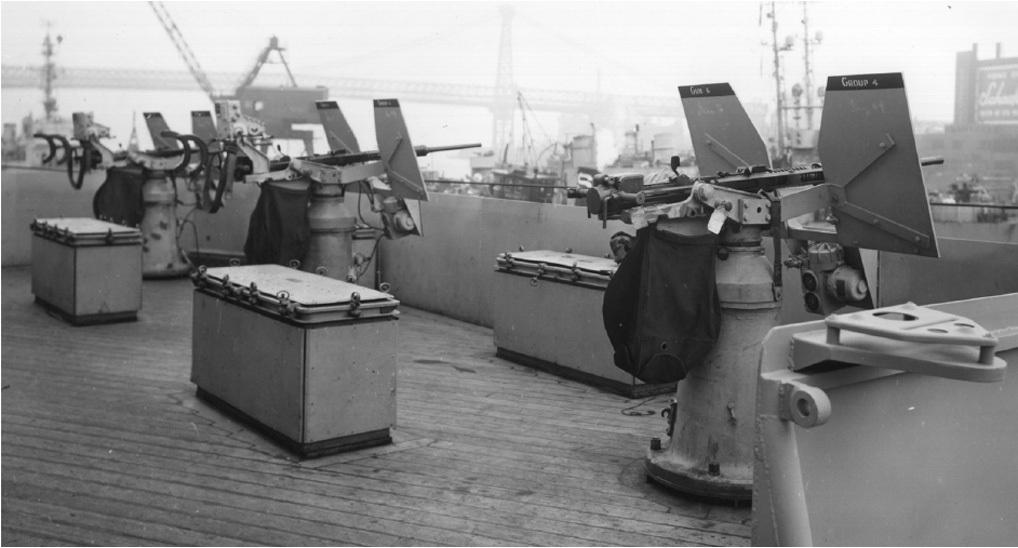 20mm Mk4 Mod 3 mount with Mk14 Computing Sights, Mk4 Mod 1 gun shield (tapered) onboard USS Iowa in 1943. The first gun is missing the shoulder rests and upper gun sight. Note the maintenance tag on the gun cradle. (NARA)
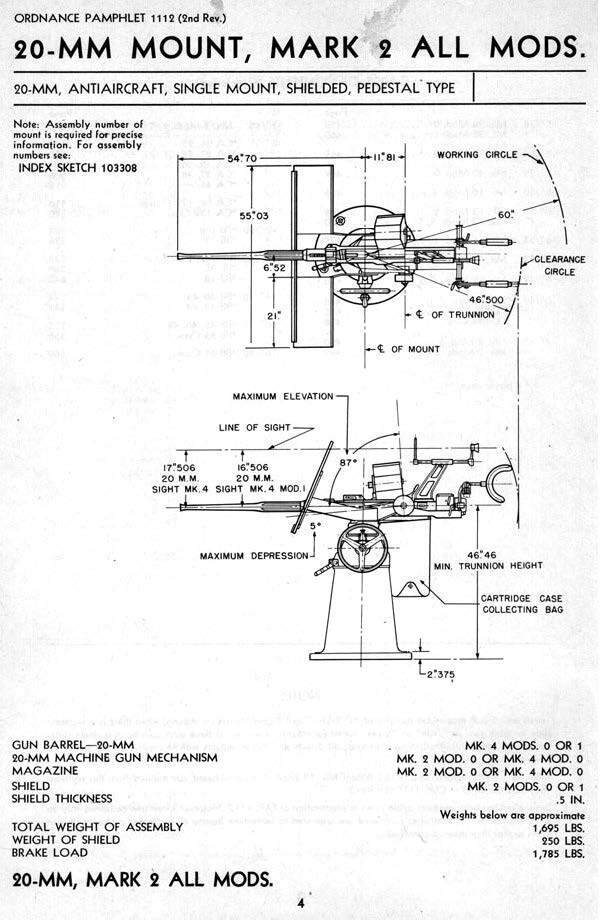
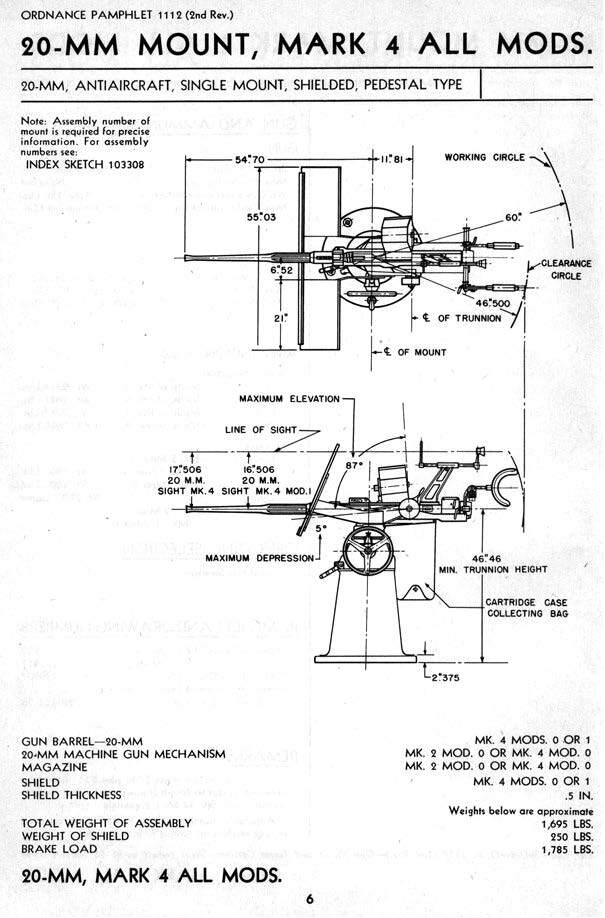
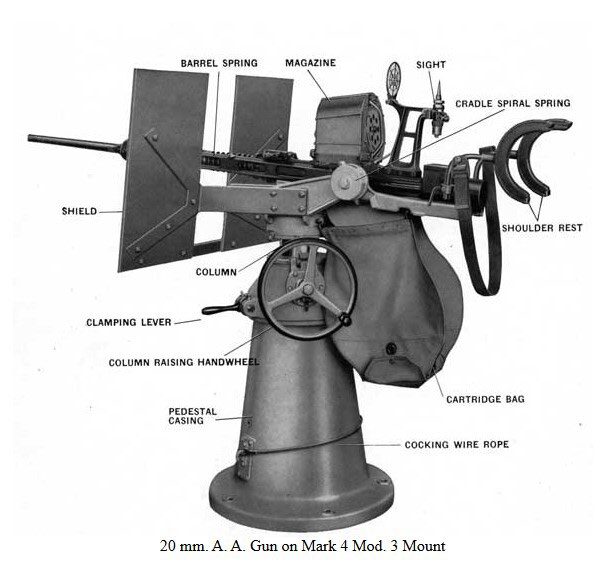
The Mark 2 Mount is built to British standards and specifications in this country, but it has been issued by the U. S. Navy as well as the British Admiralty. In this mount the trunnion height is varied by means of a handwheel operating, through a train of gears, a screw inside the stand.
The Mark 4 Mount is identical in operation and almost identical in appearance to the Mark 2 Mount. The Mark 4 Mount has the cocking cable wound around the stand and secured to a hook at one end and a snap at the other. The Mark 2 Mount Cocking Cable is secured to a spring loaded reel which is housed within the stand. The Mark 4 Mount is built to U. S. standards and specifications and is issued by both the U. S. Navy and British Admiralty.
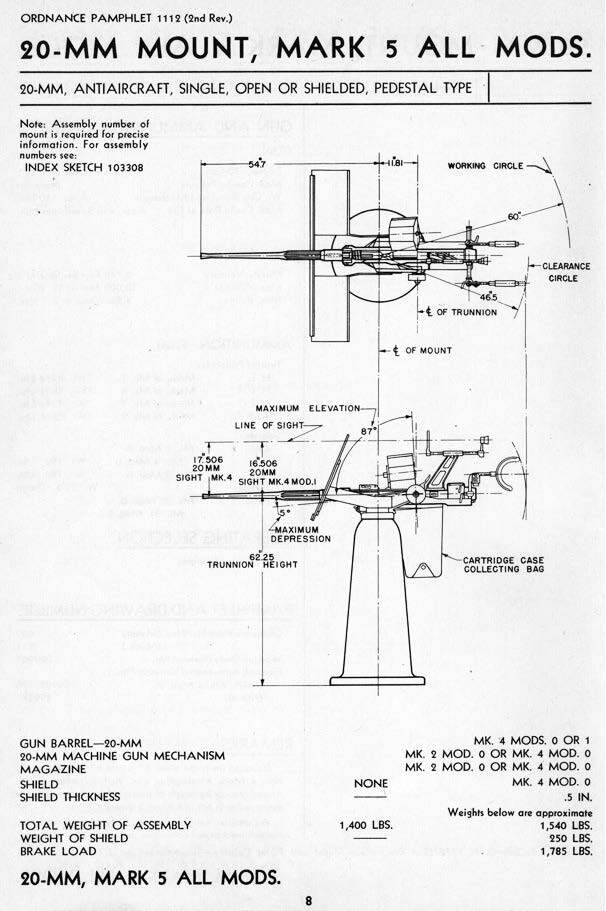
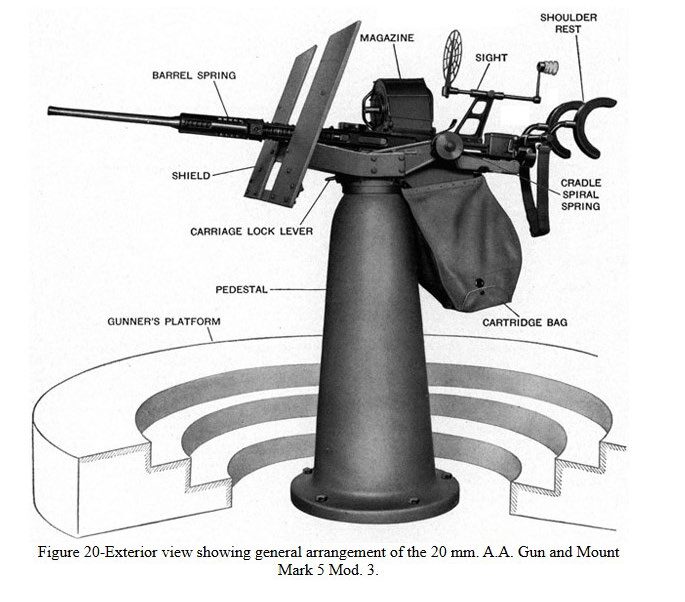
Mark 5 Mount is a Fixed Trunnion Height type. The use of Mounts Mark 5 is a temporary expedient and these mounts will be replaced on Naval Vessels by Mounts Marks 2, 4, 6, or 10, when available. A limited number of Mark 5 Mounts have been issued for installation in Merchant Vessels and these mounts are considered to be practical for this purpose. Mark 5 are often seen on early and mid 1942-era ships.
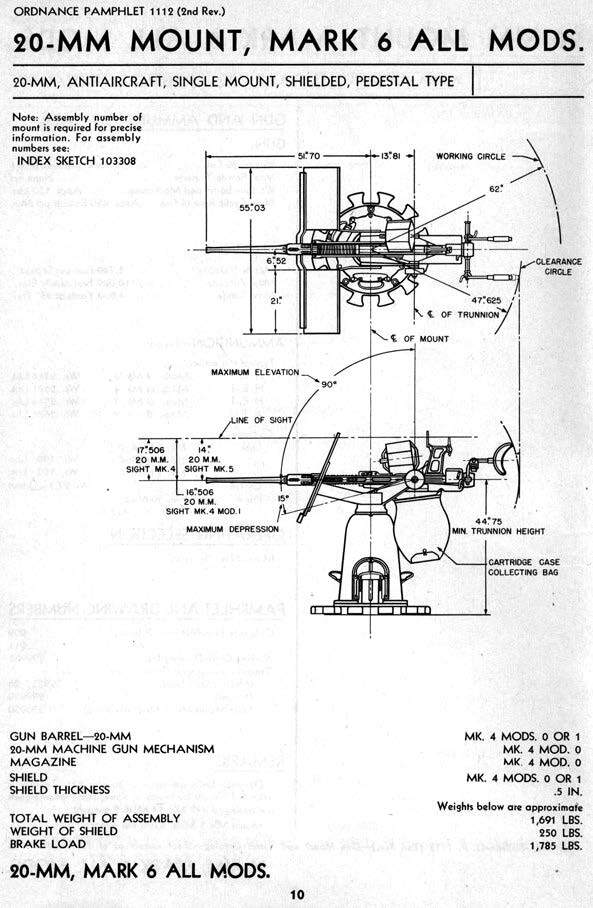
The Mark 6 Mount is an Adjustable Trunnion Height hydraulically operated type. The height of the trunnion is varied by a hydraulic system operated by foot pedals located in the pedestal.
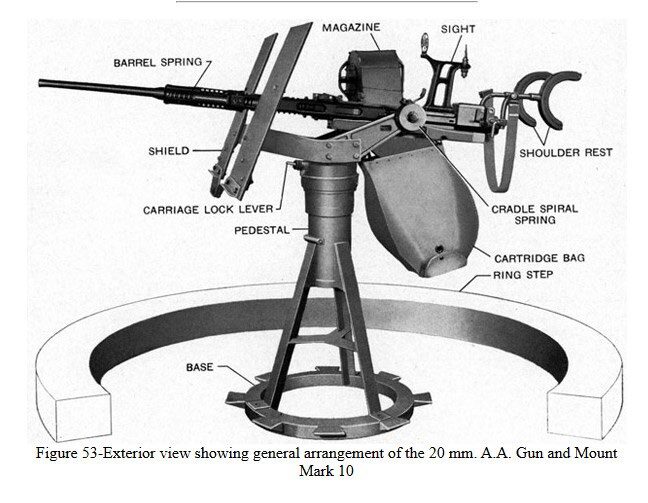
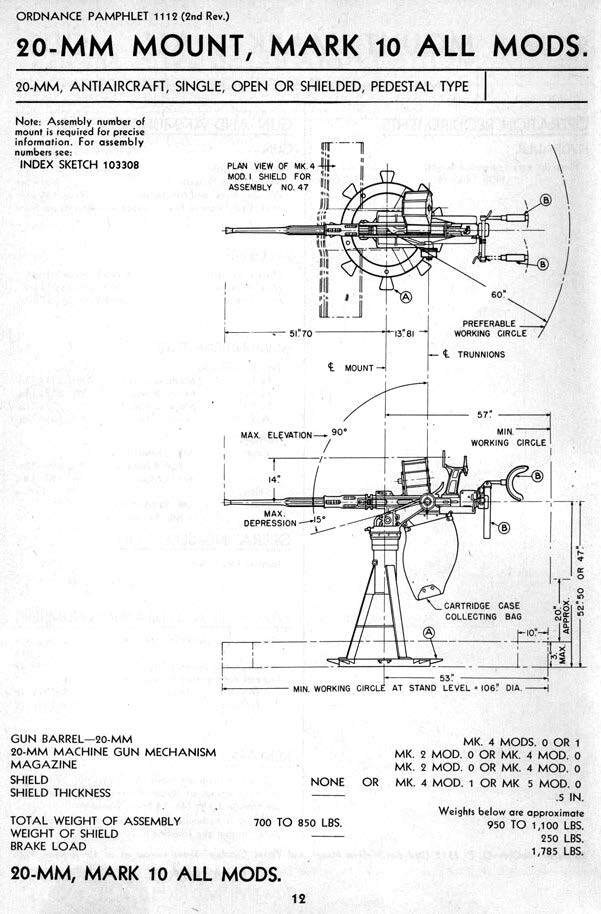
Mark 10 Mount is a Fixed Trunnion Height type. The stand is a weldment of steel stampings, instead of a casting such as used on other types of 20 mm. A.A. Gun Mounts.
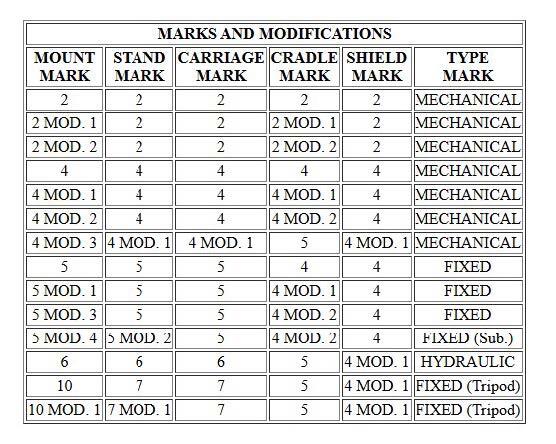
This chart illustrates the various pedestal mounts, carriages, cradles and gun shields used from 1942-45. With the exception of submarine-mounted guns, all of these mounts could utilize the Mk2, Mk4(Mod1), Mk 5 or Mk 14 gun sights. Because the Mk14 was an electrically-powered computing gun sight, it was not used onboard submarines or PT boats. Because of the small sizes of these guns and mounts in 1/200, 1/350, and 1/700 scales, the variations of cradles and carriages will not be uniquely modeled.
Gun Sights
The only difference between the Mark 4 and Mark 2 gun sight is the ability to adjust the height of the eye piece at the rear of the sight. The Mark 4 Mod 1 is identical to the Mark 4 but one inch lower (in 1:1 scale) with a slightly less backward angle.
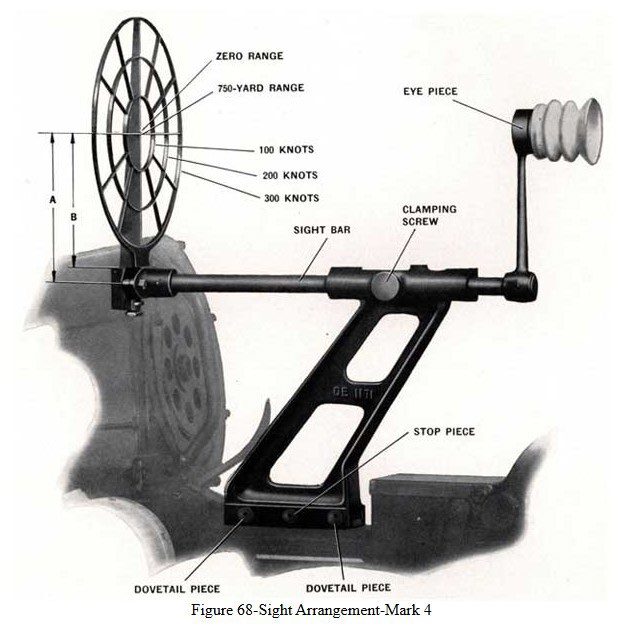
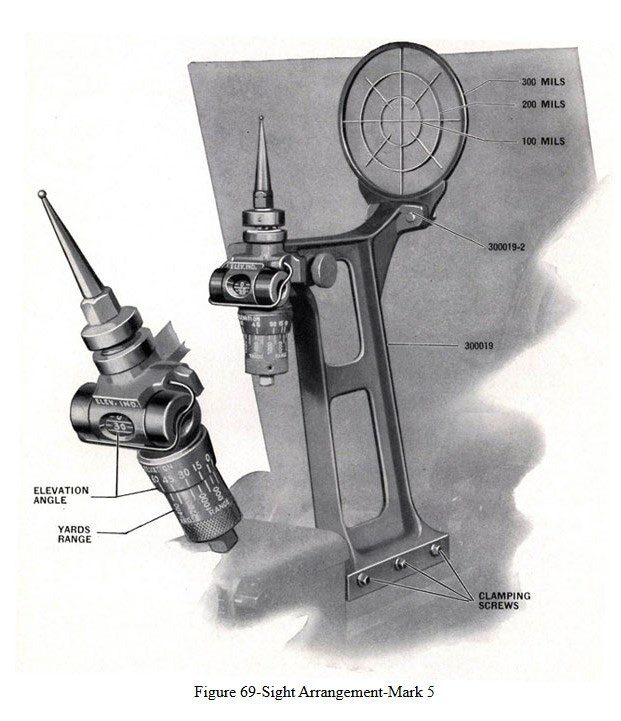
Mark 5 sight uses a single adjustment which compensates for both range and elevation and has a simple elevation indicator.
Mark 14 sight is an electrically-powered computing gun sight which entered service in 1943 and was in wide-spread use by 1945.
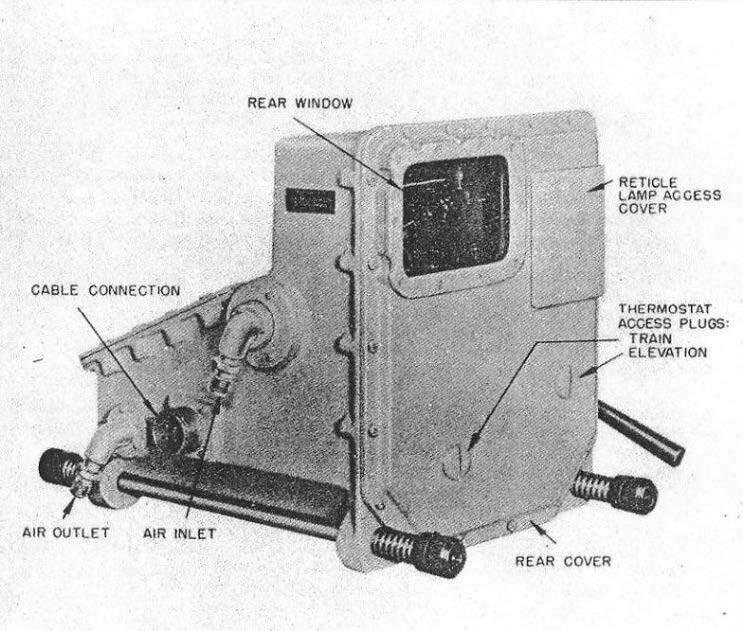
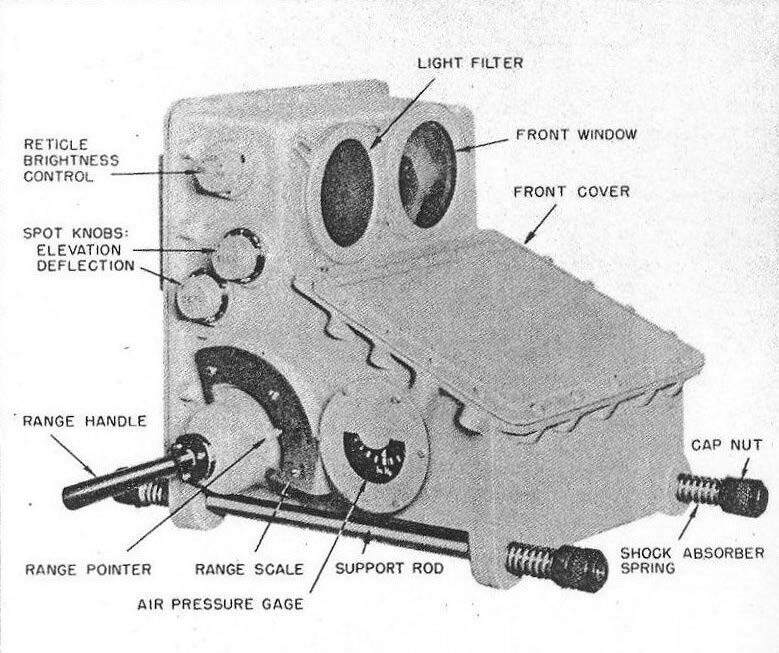
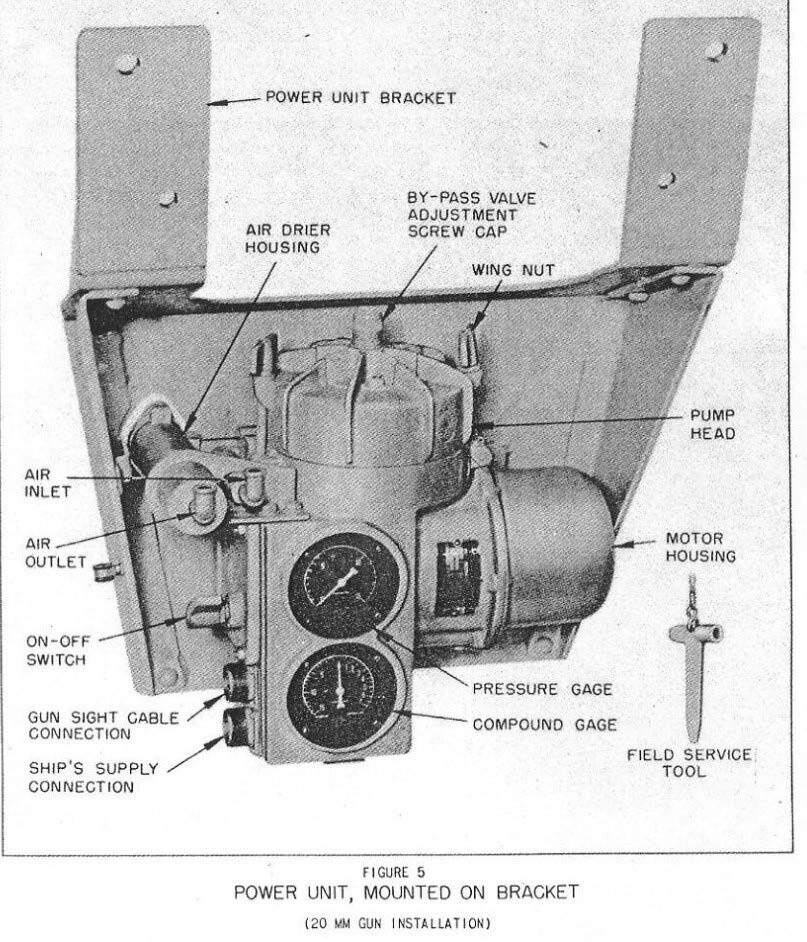
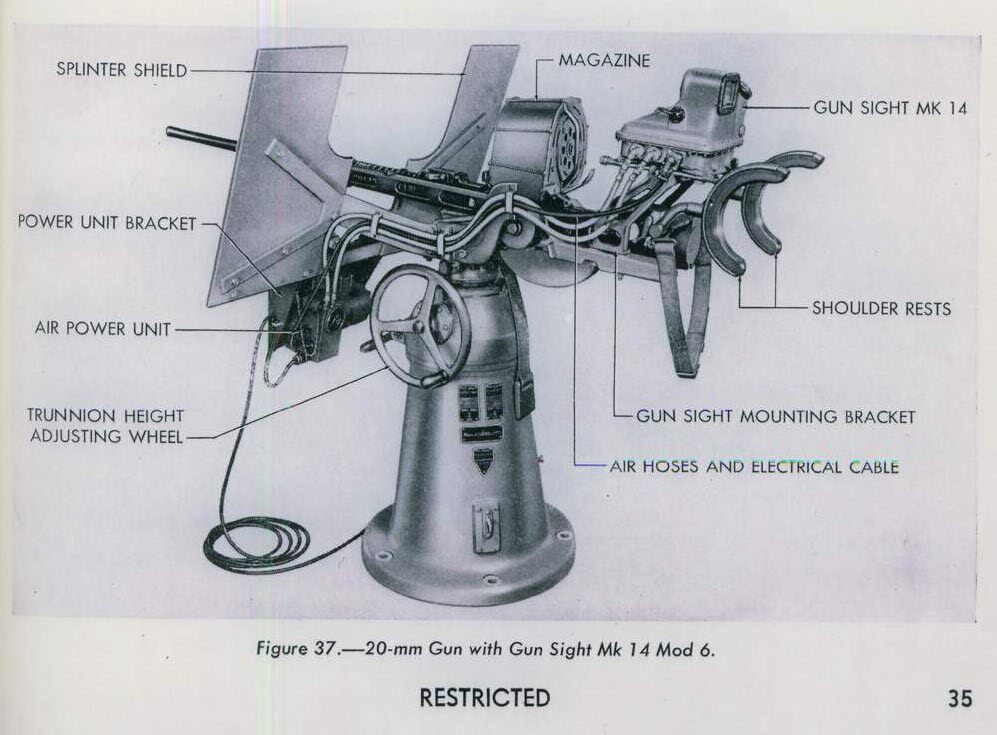
Mark 14 sight is an electrically-powered computing gun sight which entered service in 1943 and was in wide-spread use by 1945. The Mark 14 sight can be seen all mounts except Mark 5 Mod 4, which was a submarine mount. It is also quite rare to see on a standard Mark 5 mount, as these were phased out before the Mk14 was widely implemented. Exceptions, however, probably exist.
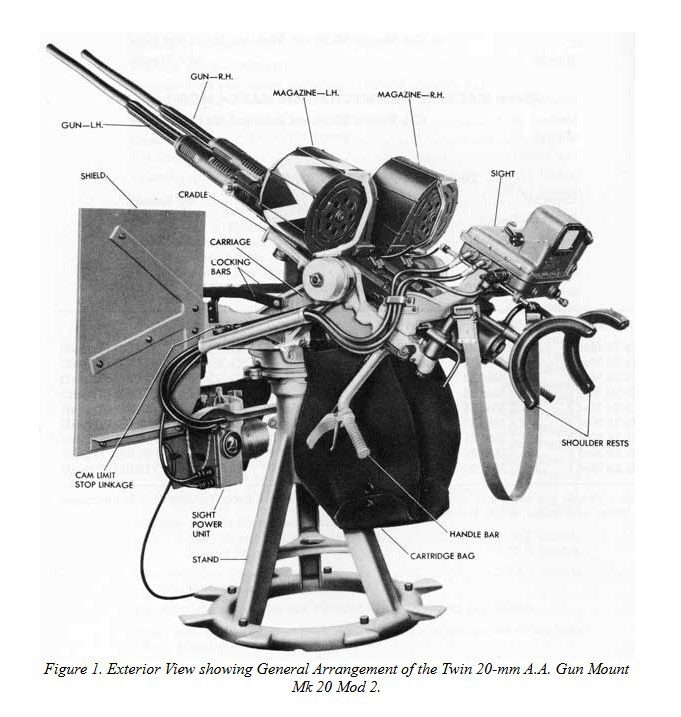
A Mark 14 Mod 6 Computing Sight on the ultimate version of the 20mm, the twin-gun, tripod mount Mk20 Mod 2. This configuration was commonly seen onboard late-war Emergency AA-fit destroyers of the Fletcher, Gearing, and Sumner classes beginning in May of 1945.
Gun Shields
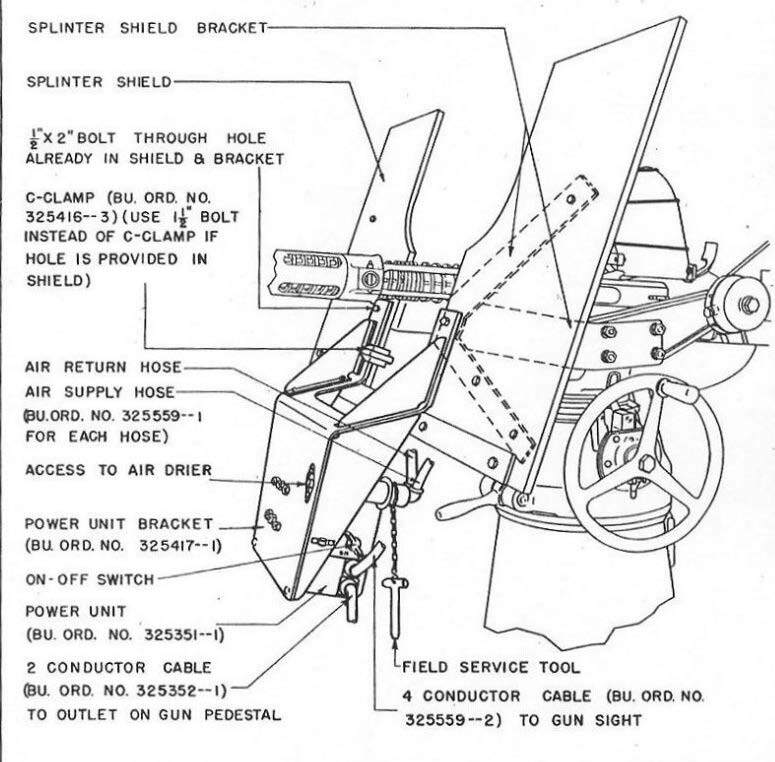
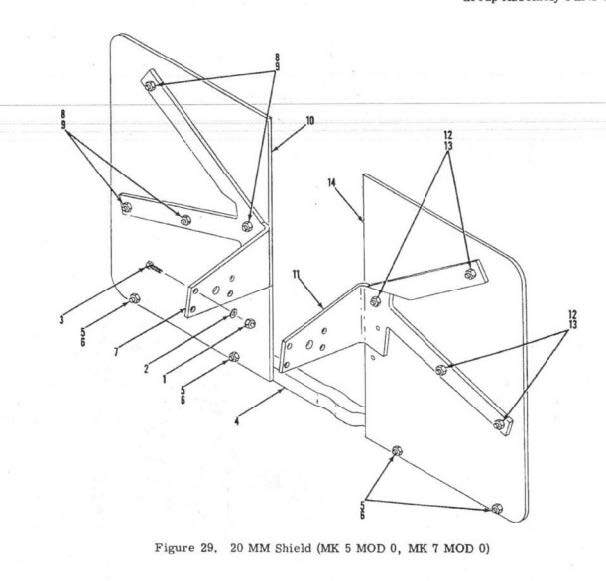
Despite the US Navy having a Mark or a Mod for every minor change it made to its equipment, the USN only lists four varieties of gun shields, the Mark 2, Mark 4, Mark 4 Mod 1, and Mod 7. In each instance, the Mod pertains to the shield mounting brackets.
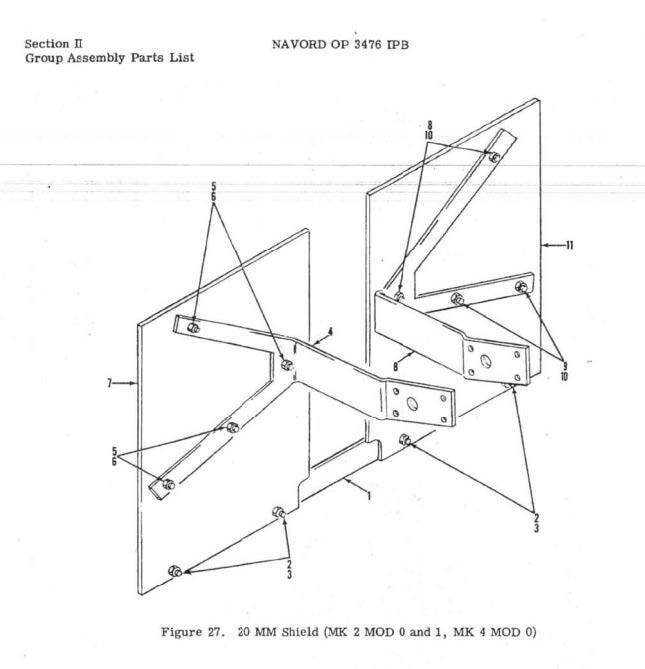
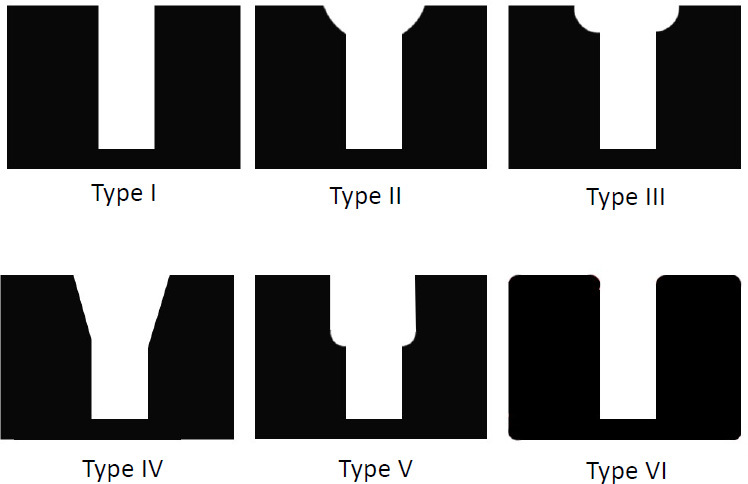
In dozens of Navy illustrations, a variety of gun-shield shapes are shown. In all of the drawings, the gun shields appear to be uniform in basic dimensions, with the only variations to the shield itself being “sharp” or “rounded” edges, or various types of cutouts. It is not known if the US Navy had individual Mark and Mods for each of these gun shield styles. If it were only that simple…
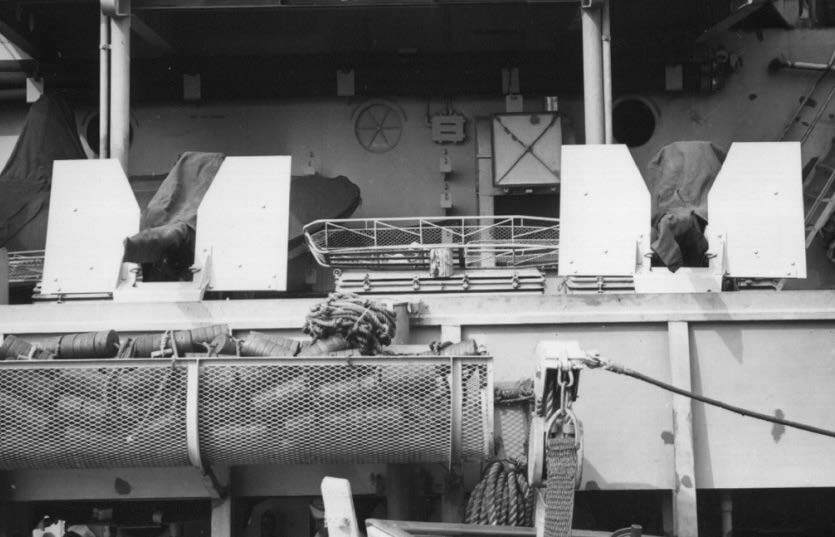
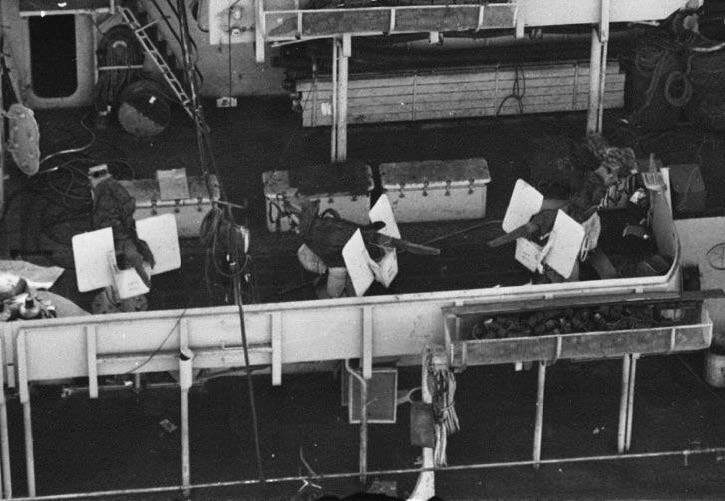
Research of historical photos indicate that no fewer than 6 different designs of splinter shields were used by the USN. Here’s some examples. Please note: The “Type” assigned here is an arbitrary system and not an official USN system. Also note that the connecting bar at the bottom of the shield is a separate piece, and two versions of this piece were used, one straight, one off-set. The offset connecting bar was used on Mark 6 and Mark 10 mounts to account for the lower gun depression. Please review photos of whatever ship you are modeling to determine which gun shields were used.
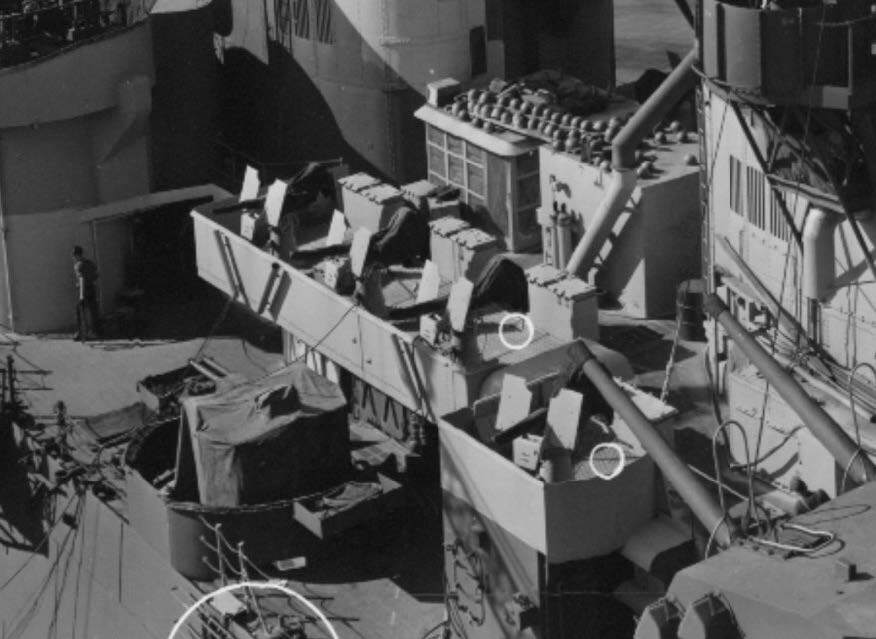 |
USS Birmingham (Cleveland Class CL), 1944 |
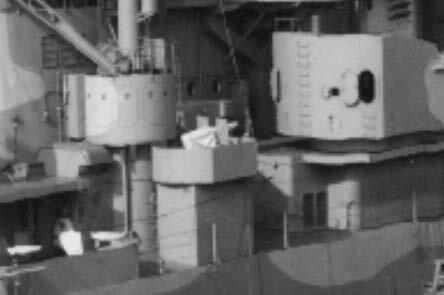 |
USS Cleveland (Cleveland Class CL), 1942
|
 |
USS Iowa (Iowa Class BB), 1943
|
 |
USS New Jersey (Iowa Class BB), 1945 Type VI Gun Shield with Mk14 Gun Sights and bolt-on front armor plate.  |
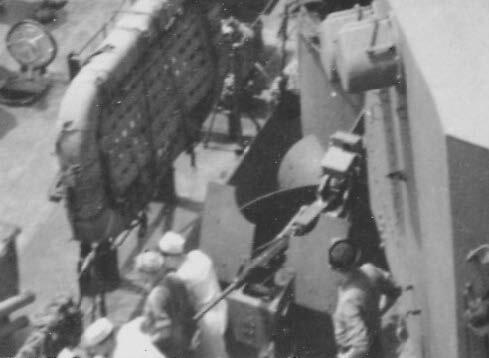 |
USS Pennsylvania (Pennsylvania Class BB), 1944 Type II Gun Shield with Mk14 gun sights and bolt-on armor plate.  |
|
|
USS Vicksburg (Cleveland Class CL), 1945
Type V Gun Shield with Mk 14 gun sights (foreground)
|

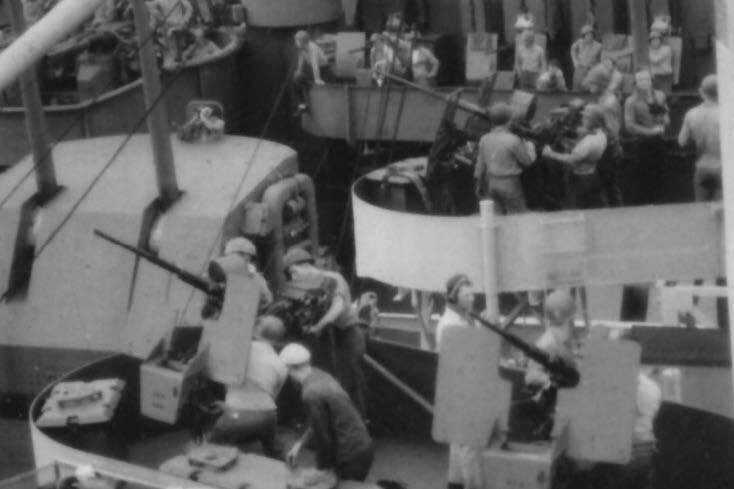
It appears that there is no comprehensive rhyme or reason as to how the various 20mm gun shields were installed – although there does appear to be consistency for the most part, that one specific style of gun shield was used throughout the entire ship, with a few notable exceptions as demonstrated in the USS Vicksburg photo. Modelers are encouraged to research their specific ship to determine which mount and shield combination works best for your specific application.
20mm Items for Ship Models
These detail photos, drawings, and information are pertinent to all of the Squadron Gold Medal 3D 20mm Oerlikon gun mounts in all scales including, but not limited to, 1/200 scale, 1/350 scale and 1/700 scale.
Click Here To See Our Currently Offered 20mm Selections. (Link Coming Soon)