
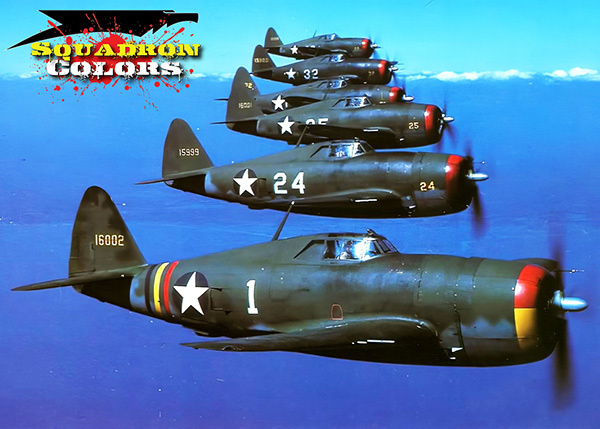
Aircraft Colors - Master Customer Reference
How to Use This Guide
- Start with the aircraft nationality or period, then use the chapter Quick Reference or scheme table to identify the likely Squadron colors.
- Aircraft-specific evidence wins. Manufacturer, production date, theater, factory, repaint history, and photographs can override a generic scheme recommendation.
- Historical names remain authoritative. Federal Standard, RGB, hexadecimal, and other modern comparisons are cross-references only when the historical color predates those systems.
- This guide focuses on colors normally visible on a finished model: exterior camouflage, markings, cockpits, wheel wells, open bays, and other exposed areas.
- Squadron Colors are generally supplied in a semi-gloss finish to make decal application easier. Use the final clear coat to reproduce the desired service sheen.
- Commercial SKU names are preserved as sold even when a historical designation or spelling differs.
Contents
- U.S. Aircraft Colors (SCA000-SCA048)
- Japanese Aircraft Colors (SCA100-SCA104)
- Great Britain Aircraft Colors (SCA200-SCA211)
- German Aircraft Colors (SCA300-SCA315)
- Russian / Soviet Aircraft Colors (SCA400-SCA406 and SCA800-SCA806)
- Italian Aircraft Colors (SCA500-SCA515)
- Polish Aircraft Colors (SCA600-SCA605)
- French Aircraft Colors (SCA700-SCA709)
- World War I Aircraft Colors (SCA900-SCA946)
- Bibliography and Sources
1. U.S. Aircraft Colors
SCA000-SCA048
Core U.S. Aircraft Scheme Relationships
|
Scheme |
Principal colors / notes |
|
USAAF Olive Drab / Neutral Gray |
Olive Drab 41; Neutral Gray 43 |
|
USAAF OD/NG with disruptive green |
Olive Drab 41; Neutral Gray 43; Medium Green 42 |
|
Early-war USN Blue Gray |
Blue Gray; Light Gray |
|
USN 1943 Four-Color / commonly "Tri-Color" |
ANA606 Semi-Gloss Sea Blue; ANA607 Non-Specular Sea Blue; ANA608 Intermediate Blue; Insignia White |
|
Late-war USN overall Sea Blue |
ANA623 Gloss Sea Blue, with local non-specular Sea Blue anti-glare treatment where applicable |
|
USAF Southeast Asia / SEA |
FS34102; FS34079; FS30219; FS36622 |
|
F-15 Compass Ghost |
FS36320; FS36375 |
|
F-15 Mod Eagle |
FS36176; FS36251 |
|
F-15 Air Superiority Blue |
FS35450 family |
|
USN/USMC Gull Gray and White |
Light Gull Gray; Insignia White |
|
USN/USMC Tactical Paint Scheme |
FS35237; FS36320; FS36375 and related grays depending upon aircraft |
|
AV-8B Land Camouflage |
FS34064; FS36099; Light Gull Gray on early version |
|
USMC Desert Storm helicopter schemes |
FS33711 with several documented darker companion colors depending upon aircraft/unit |
|
WWII U.S. visible interior greens |
Bronze Green No. 9; Dull Dark Green; Interior Green - manufacturer, production period and compartment specific |
|
USAF Air Defense Command overall gray |
FS16473 Aircraft Gray / ADC Gray on applicable interceptors and related aircraft |
U.S. Aircraft Color Records
SCA000 - Insignia Blue FS35044
Historical designation: ANA 605 Insignia Blue / FS35044
Application type: Markings and national insignia
Historical sheen: Flat under FS35044 specification
Squadron bottle sheen: Semi-gloss
Period: WWII through modern use where specified
Description: A very dark blue used principally in U.S. national insignia and standardized aircraft markings. During WWII it formed the blue field of the U.S. star insignia and was also used when blue replaced the short-lived red border around the star-and-bar marking in 1943.
Primary application(s): National insignia, identification markings, lettering and other standardized blue markings where Insignia Blue is specified.
Typical subjects: Applicable across a very broad range of U.S. Army Air Forces, Air Force, Navy and Marine aircraft according to the marking standards of the period.
Companion colors: Insignia White and, where historically appropriate, Insignia Red.
Modeling note: This is primarily a marking color rather than a camouflage color. Final sheen should normally be adjusted with the overall model finish.
SCA001 - USN Sea Blue ANA623
Historical designation: ANA 623 Sea Blue / Gloss Sea Blue
Color family: Sea Blue
Application type: Exterior camouflage
Historical sheen: Gloss
Squadron bottle sheen: Semi-gloss
Period: Late WWII and early postwar U.S. naval aviation
Description: The dark Sea Blue used for the late-war overall U.S. Navy and Marine Corps aircraft finish. ANA 623 belongs to the same basic Sea Blue hue family as ANA 606 Semi-Gloss Sea Blue and ANA 607 Non-Specular Sea Blue, while remaining a separate official designation because of its specified finish.
Primary scheme(s): Overall Gloss Sea Blue. The overall Gloss Sea Blue finish replaced the earlier multi-tone naval camouflage system on many carrier aircraft during the latter part of WWII.
Typical subjects: F6F-5 Hellcat, later F4U Corsair variants, TBM Avenger, SB2C Helldiver, F8F Bearcat and numerous late-war and early-postwar Navy and Marine aircraft.
Companion colors: Insignia White, Insignia Blue and other markings appropriate to the particular aircraft and date.
Modeling note: "Overall Gloss Sea Blue" does not necessarily mean that every exterior surface had an identical sheen. Non-specular Sea Blue could still be used locally on the upper cowling or other forward anti-glare areas.
SCA002 - USN Int. Sea Blue ANA608
Historical designation: ANA 608 Intermediate Blue
Commercial name: USN Int. Sea Blue ANA608
Application type: Exterior camouflage
Period: Primarily 1943-44 U.S. naval aviation
Description: A medium blue used as the intermediate tone of the U.S. Navy's 1943 multi-color camouflage system. It visually bridged the dark Sea Blue upper areas and the white lower surfaces.
Primary scheme(s): USN 1943 Four-Color Scheme, commonly called the Tri-Color Scheme. The scheme employed ANA 606 Semi-Gloss Sea Blue, ANA 607 Non-Specular Sea Blue, ANA 608 Intermediate Blue, and Insignia White. Although technically four official color specifications were involved, ANA 606 and ANA 607 represented the same basic Sea Blue hue in different sheen levels. This is one reason the scheme is commonly understood by modelers as a three-color appearance.
Primary application(s): Fuselage sides, vertical tail surfaces and transitional camouflage areas.
Typical subjects: F4U Corsair, F6F Hellcat, TBF/TBM Avenger and SB2C Helldiver.
Companion colors: ANA 606, ANA 607 and Insignia White.
Modeling note: Surface placement varied with aircraft geometry, with the intention of producing a graduated transition from dark upper surfaces to light undersides.
SCA003 - USN Dk. Gull Gray ANA 621
Historical designation: ANA 621 Dark Gull Gray
Application type: Exterior camouflage
Period: WWII Atlantic anti-submarine operations
Description: A dark neutral gray used in U.S. Navy Atlantic anti-submarine camouflage. Its wartime exterior role should be kept distinct from the much later widespread use of Dark Gull Gray as an aircraft cockpit and interior color.
Primary scheme(s): Atlantic ASW Scheme I: Dark Gull Gray upper surfaces, Light Gull Gray sides and white lower surfaces. Atlantic ASW Scheme II: Dark Gull Gray upper surfaces with white side and lower surfaces.
Typical subjects: Atlantic Fleet anti-submarine and patrol aircraft, including Wildcats, Dauntlesses, Catalinas, PB4Y patrol aircraft and other types where the appropriate Atlantic scheme was specified.
Companion colors: SCA004 Light Gull Gray in Scheme I and Insignia White in Schemes I and II.
Modeling note: Aircraft, unit, theater and date should determine whether Scheme I or Scheme II is appropriate.
SCA004 - USN Light Gull Gray ANA620
Historical designation: ANA 620 Light Gull Gray
Application type: Exterior camouflage
Period: WWII Atlantic anti-submarine operations
Description: A light gray used principally as the side color of the U.S. Navy's WWII Atlantic ASW Scheme I. It is historically related to the later Light Gull Gray family used extensively by postwar naval aviation, but those later Federal Standard finishes should be treated separately.
Primary scheme(s): Atlantic ASW Scheme I. Applied to side surfaces between ANA 621 Dark Gull Gray above and white beneath.
Typical subjects: U.S. Navy patrol and anti-submarine aircraft operating under Atlantic camouflage requirements.
Companion colors: SCA003 Dark Gull Gray and Insignia White.
Modeling note: For the classic postwar Gull Gray and White naval aircraft scheme, SCA034 FS26440 is the more appropriate Squadron product.
SCA005 - USN Blue-Gray 1942
Historical identity: Revised 1942 U.S. Navy Non-Specular Blue Gray
Application type: Exterior camouflage
Historical sheen: Non-specular
Squadron bottle sheen: Semi-gloss
Period: Primarily 1942 into early 1943
Description: The upper-surface blue-gray used on U.S. Navy and Marine aircraft during the early Pacific War. SCA005 specifically represents the revised 1942 version of Blue Gray rather than the earlier 1941 formulation, which proved lighter and particularly susceptible to fading.
Primary scheme(s): USN Blue Gray over Light Gray. Blue Gray was applied to the upper surfaces and fuselage sides, with Light Gray beneath.
Typical subjects: F4F Wildcat, SBD Dauntless, TBD Devastator, early TBF Avenger, PBY Catalina and numerous other Navy and Marine aircraft of the early-war period.
Companion colors: USN Light Gray and the appropriate period national-insignia colors.
Modeling note: Blue Gray weathered noticeably in service. Considerable variation can therefore appear in period photographs without necessarily indicating a different specified color.
SCA006 - USAAF Olive Drab '43 ANA613
Historical designation: ANA 613 Olive Drab
Application type: Exterior camouflage
Period: Later WWII ANA-standard period
Description: The standardized ANA Olive Drab introduced as the joint Army-Navy color system replaced earlier service-specific standards. ANA 613 succeeded Dark Olive Drab No. 41 administratively, but the transition was not immediate or uniform. Existing stocks of OD 41 remained in use, some manufacturers continued earlier formulations, and the USAAF was simultaneously eliminating factory camouflage from many combat aircraft. ANA 613 should therefore be treated as an overlapping successor to OD 41 rather than as the result of a single universal changeover date.
Primary application(s): Upper-surface camouflage on U.S. aircraft produced or refinished under later ANA-era camouflage requirements.
Typical subjects: Later camouflaged USAAF aircraft, transports and other U.S.-built aircraft where ANA-standard materials are appropriate. Exact applicability should be determined by aircraft type, manufacturer and production period.
Companion colors: ANA 603 Sea Gray as the nominal ANA lower-surface gray.
Modeling note: Do not automatically replace OD 41 with ANA 613 simply because an aircraft was built after the introduction of the ANA system.
SCA007 - USAAF Neutral Gray ANA603
Formal historical designation: ANA 603 Sea Gray
Commercial product name: USAAF Neutral Gray ANA603
Application type: Exterior camouflage / lower surfaces
Period: Later WWII ANA-standard period
Description: ANA 603 Sea Gray was adopted within the joint ANA system as the standardized gray that succeeded the earlier USAAF Neutral Gray No. 43 requirement. The commercial Squadron product name is retained exactly as released. For historical database purposes, however, ANA 603 Sea Gray and Neutral Gray No. 43 should remain distinct designations rather than being treated as a simple renumbering of the same paint.
Primary application(s): Lower surfaces of later camouflaged USAAF aircraft where ANA 603 was specified or documented.
Typical subjects: Aircraft continuing to receive camouflage during the ANA transition period, with applicability dependent upon manufacturer, production date and finish specification.
Companion colors: SCA006 ANA 613 Olive Drab, or earlier Olive Drab formulations where production practice overlapped.
Modeling note: The transition from Neutral Gray 43 to ANA 603 was gradual rather than instantaneous.
SCA008 - US Interior Green
Historical designation: ANA 611 Interior Green
Application type: Cockpit and visible interior finish
Period: Primarily mid-to-late WWII and later applications where specified
Description: A standardized green interior finish developed from tinted zinc-chromate primer practice. Interior Green became one of the most recognizable cockpit and crew-area colors on U.S. WWII aircraft. It was not universal. Bronze Green, Dull Dark Green, earlier Yellow Green finishes and manufacturer-specific practices remained applicable to particular aircraft and production periods.
Primary application(s): Cockpits, crew stations and other normally visible finished interior areas.
Typical subjects: A wide range of later-WWII U.S. aircraft where Interior Green is appropriate to the particular manufacturer and production period.
Companion colors: Zinc Chromate primers, SCA046 Dull Dark Green, SCA048 Bronze Green No. 9 and other aircraft-specific interior finishes.
Modeling note: For the purposes of this reference, Interior Green should be recommended where it is visible on a conventional model. Deep structural primer variations need not be included unless the builder opens those areas.
SCA009 - US Zinc Chromate Yellow
Historical identity: Untinted yellow zinc-chromate primer
Application type: Primer / internal structural finish
Period: Broad prewar, WWII and postwar aircraft use
Description: A corrosion-resistant primer widely used on aluminum aircraft structure. Zinc Chromate Yellow was applied to internal skins, spars, ribs, structural components and other protected metal surfaces before additional tinted primers or finish coatings were applied where required.
Primary application(s): Internal aircraft structure and exposed primer areas.
Typical subjects: Extremely widespread across U.S. aircraft, but the location and visibility of the yellow primer varied significantly by manufacturer, aircraft and production period.
Companion colors: Interior Green and other tinted zinc-chromate finishes.
Modeling note: This is generally a secondary/detail color, not a primary requirement for an ordinary closed-up model. For example, on a typical P-51 build, Chromate Green or the appropriate finished interior color is more relevant to visible areas; Zinc Chromate Yellow becomes important mainly when deeper structural spaces are exposed.
SCA010 - USAAF Olive Drab 41
Historical designation: Dark Olive Drab No. 41
Application type: Exterior camouflage
Period: Primarily 1941-43, with continued use beyond formal replacement
Description: Dark Olive Drab No. 41 was the principal upper-surface camouflage color of the USAAF during the early years of WWII. It was normally paired with Neutral Gray No. 43 beneath the aircraft. Weathering, exposure, production variation and field conditions could produce considerable visible variation in Olive Drab aircraft.
Primary scheme(s): USAAF Olive Drab 41 / Neutral Gray 43. Medium Green No. 42 could also be added as disruptive blotching, particularly around the outer edges of wings and tail surfaces.
Typical subjects: P-38 Lightning, P-39 Airacobra, P-40 Warhawk, early P-47 Thunderbolt variants, early P-51 Mustang variants, B-17 Flying Fortress, B-24 Liberator, B-25 Mitchell, B-26 Marauder, C-47 Skytrain and many other USAAF aircraft. Aircraft variant and production date remain important. A P-47C, for example, belongs naturally within the Olive Drab/Neutral Gray era; a P-47N does not.
Companion colors: Neutral Gray No. 43 and, where appropriate, SCA012 Medium Green 42.
Modeling note: Not every Olive Drab aircraft received Medium Green disruptive areas. Period photographs and subject-specific references should determine whether the additional green is required.
SCA011 - USAAF Sand 49
Historical designation: Sand No. 49
Application type: Exterior camouflage
Period: WWII, particularly North African and Mediterranean operations
Description: Sand No. 49 was developed for aircraft operating over desert and arid terrain. It was a special-purpose camouflage color rather than a universal replacement for Olive Drab.
Primary scheme(s): USAAF desert camouflage. Sand could replace Olive Drab as the principal upper-surface color where desert conditions warranted it, with lower-surface and secondary colors depending upon the aircraft and particular scheme.
Typical subjects: Most useful for USAAF subjects operating in North Africa and the Mediterranean, including documented examples among P-38s, B-24s, B-25s and other aircraft.
Companion colors: Lower-surface gray and any secondary camouflage colors appropriate to the specific aircraft.
Modeling note: Location alone is not sufficient reason to specify Sand 49. Many aircraft serving in desert theaters retained other factory or field finishes.
SCA012 - USAAF Green 42
Historical designation: Medium Green No. 42
Application type: Disruptive exterior camouflage
Period: WWII
Description: Medium Green No. 42 was commonly used as a disruptive camouflage color over Olive Drab aircraft. Its most recognizable application consists of irregular darker green patches or mottling along wing and tail edges, intended to break up the aircraft's outline when viewed from above.
Primary scheme(s): Olive Drab / Neutral Gray with Medium Green disruptive camouflage.
Typical subjects: Seen on numerous P-40s, B-17s, C-47s and other Olive Drab USAAF aircraft where the specific camouflage pattern called for additional disruptive green.
Companion colors: SCA010 Olive Drab 41 and Neutral Gray No. 43.
Modeling note: Medium Green 42 should be treated as a conditional scheme component. It should not automatically be added to every Olive Drab aircraft.
SCA013 - USN True Blue
Historical identity: Prewar U.S. Navy identification color; ANA 501 lineage
Application type: Identification and unit markings
Period: Primarily pre-WWII naval aviation
Description: True Blue was one of the distinctive colors used in the U.S. Navy's highly visible prewar aircraft identification system. It was principally a marking color rather than camouflage.
Primary application(s): True Blue identified the third section within the prewar Navy section-color system. Depending upon aircraft position within the section, the color could appear on cowling areas, wing chevrons, fuselage bands and other unit-identification markings.
Typical subjects: Prewar Navy and Marine carrier, scouting, observation, patrol, torpedo and bombing aircraft using the section-color identification system.
Companion colors: Insignia Red, White, Black, Willow Green and Lemon Yellow.
SCA014 - USN Willow Green
Historical identity: Prewar U.S. Navy identification color; ANA 503 lineage
Application type: Identification and unit markings
Period: Primarily pre-WWII naval aviation
Description: Willow Green was one of the standard section colors used in the colorful prewar U.S. Navy aircraft marking system.
Primary application(s): Willow Green identified the fifth section. It could appear on cowlings, fuselage bands, wing chevrons and other section or unit-identification markings according to aircraft position and period.
Typical subjects: Prewar U.S. Navy and Marine aircraft using the section-color system.
Companion colors: True Blue, Insignia Red, White, Black and Lemon Yellow.
SCA015 - USN Insignia Red
Historical identity: U.S. Insignia Red; ANA 509/619 lineage depending upon standard and period
Application type: National insignia and identification markings
Period: Prewar through postwar use where specified
Description: Insignia Red was used extensively in U.S. aircraft markings. It appeared in prewar Navy identification systems, national insignia, and later standardized U.S. military markings. Within the prewar Navy section system, red identified the first section.
Primary application(s): National insignia, section markings, warning and identification markings, and other specified red aircraft markings.
Typical subjects: Broad application across U.S. Navy, Marine, Army Air Forces and later U.S. military aircraft according to the marking standard of the period.
Companion colors: Insignia Blue, Insignia White and other period identification colors.
Modeling note: Because Insignia Red is primarily a marking color, aircraft date and marking style matter more than aircraft type.
SCA016 - USN Orange Yellow
Historical identity: Prewar U.S. Navy Orange Yellow; later gloss Orange Yellow standardized as ANA 506
Application type: Identification, visibility and marking color
Period: Prewar through postwar applications
Description: Orange Yellow is most strongly associated with the highly visible upper wing surfaces of prewar U.S. naval aircraft, producing the familiar "Yellow Wings" appearance. It continued to have important visibility and identification applications after the prewar era.
Primary application(s): Prewar upper wings, aircraft identification areas, propeller-tip markings and selected training or high-visibility applications.
Typical subjects: Prewar carrier aircraft such as F2A Buffaloes, F3F fighters, TBD Devastators, SBC Helldivers, SBD predecessors and numerous observation, scouting and patrol types.
Companion colors: Aluminum or gray airframe finishes, prewar section colors and appropriate national markings.
SCA017 - USN Lemon Yellow
Historical identity: ANA 505 Lemon Yellow lineage
Application type: Identification markings
Period: Primarily prewar U.S. Navy aviation
Description: Lemon Yellow was a specific Navy identification yellow and should not be confused with the more orange-toned Orange Yellow used for large visibility areas such as prewar upper wings.
Primary application(s): Lemon Yellow identified the sixth section in the Navy's prewar section-color system.
Typical subjects: Cowling areas, wing chevrons, fuselage bands and other identification markings on prewar U.S. Navy and Marine aircraft.
Companion colors: Insignia Red, White, True Blue, Black and Willow Green.
SCA018 - USAF Medium Green FS34102
Historical designation: FS34102 Medium Green
Application type: Exterior camouflage
Period: Vietnam era through selected later Cold War schemes
Description: Medium Green FS34102 is one of the defining colors of the USAF Southeast Asia camouflage system. It forms the lighter green component of the familiar green-green-tan tactical camouflage used during the Vietnam War.
Primary scheme(s): Southeast Asia / SEA: FS34102 Medium Green, FS34079 Dark Green, FS30219 Dark Tan, FS36622 Camouflage Gray. FS34102 also appeared in selected later tactical camouflage systems.
Typical subjects: F-4 Phantom II, F-100 Super Sabre, F-105 Thunderchief, F-104 Starfighter, A-7D Corsair II, F-5, C-7 Caribou, C-130 Hercules, OV-10 Bronco and many other Vietnam-era USAF aircraft.
Companion colors: SCA019, SCA020 and SCA021.
SCA019 - USAF Dark Green FS34079
Historical designation: FS34079 Dark Green
Application type: Exterior camouflage
Period: Vietnam era through later Cold War applications
Description: FS34079 is the darker green of the classic USAF Southeast Asia camouflage system and became one of the most widely used U.S. tactical camouflage colors of the Cold War.
Primary scheme(s): Southeast Asia / SEA, as the dark green companion to FS34102 and FS30219. FS34079 also appears in other schemes, including strategic-bomber and later tactical camouflage systems.
Typical subjects: F-4, F-100, F-105, F-104, A-7D, F-5, C-7, C-130, B-52 and numerous other U.S. aircraft depending upon scheme and period.
Companion colors: SCA018 Medium Green, SCA020 Dark Tan and SCA021 Camouflage Gray in SEA applications.
SCA020 - USAF Dark Tan FS30219
Historical designation: FS30219 Dark Tan / Sierra Tan
Application type: Exterior camouflage
Period: Vietnam era and later specialized applications
Description: FS30219 is the brown-tan component of the classic USAF Southeast Asia camouflage scheme.
Primary scheme(s): Southeast Asia / SEA. Used with FS34079 Dark Green, FS34102 Medium Green and FS36622 Camouflage Gray.
Typical subjects: F-4 Phantom II, F-100 Super Sabre, F-105 Thunderchief, F-104 Starfighter, A-7D Corsair II, F-5, C-7 Caribou, C-130 Hercules, O-2 Skymaster, OV-10 Bronco and many other Vietnam-era aircraft.
Companion colors: SCA018, SCA019 and SCA021.
SCA021 - USAF Camouflage Gray FS36622
Historical designation: FS36622 Camouflage Gray
Application type: Exterior camouflage / lower surfaces
Period: Vietnam era and selected later uses
Description: A very light gray used most famously on the undersides of USAF aircraft wearing Southeast Asia camouflage.
Primary scheme(s): Southeast Asia / SEA. The three upper colors - FS34102, FS34079 and FS30219 - were typically used over FS36622 lower surfaces.
Typical subjects: F-4, F-100, F-105, F-104, F-5, A-7D, C-7, C-130, O-2 and other SEA-camouflaged aircraft.
Companion colors: SCA018, SCA019 and SCA020.
Modeling note: As with all Squadron Colors, the bottle is supplied in a decal-friendly semi-gloss application finish. The correct flat appearance can be restored with the model's final clear coat.
SCA022 - US Radome Tan FS33613
Historical designation: FS33613 Radome Tan
Application type: Radome / dielectric surface
Period: Primarily Cold War and later aircraft
Description: A light tan associated with radar-transparent radomes and other dielectric aircraft components. Radome materials and protective coatings could weather, discolor or change significantly over time, meaning photographs often show considerable tonal variation.
Primary application(s): Nose radomes, antenna covers and other dielectric panels where FS33613 is appropriate to the particular aircraft.
Typical subjects: A variety of Cold War and later U.S. aircraft, with application dependent strongly upon type, block and date.
Modeling note: Radome Tan should never be automatically assigned simply because an aircraft has a radar nose. Black, gray, white and other radome finishes were also common.
SCA023 - USN Medium Gray FS35237
Historical designation: FS35237 Medium Gray
Application type: Exterior low-visibility camouflage
Period: Late Cold War through modern U.S. naval aviation
Description: A blue-gray medium tone used extensively in U.S. Navy and Marine Corps low-visibility camouflage.
Primary scheme(s): Tactical Paint Scheme - TPS. FS35237 is particularly important in three-gray TPS applications alongside FS36320 Dark Ghost Gray and FS36375 Light Ghost Gray.
Typical subjects: F-14 Tomcat, selected F/A-18 applications, USMC AH-1 helicopters and other Navy/Marine aircraft where the particular TPS specification includes FS35237.
Companion colors: SCA027 Dark Ghost Gray and SCA028 Light Ghost Gray.
SCA024 - US Gunship Gray FS36118
Historical designation: FS36118 Gunship Gray
Application type: Exterior camouflage
Period: Late Cold War through modern use
Description: A very dark neutral gray that became one of the most important modern USAF tactical colors.
Primary scheme(s): F-15E Strike Eagle: essentially overall FS36118. F-16 gray schemes: used as the dark upper-surface color in multiple F-16 camouflage arrangements. F-4 Hill Gray: paired with lighter gray on late USAF Phantoms. FS36118 also appears on A-10s and a variety of test, tactical and specialized subjects.
Typical subjects: F-15E, F-16, late F-4 variants, selected A-10 schemes and other modern USAF aircraft.
Companion colors: SCA033 FS36270 and, depending upon F-16 scheme, SCA028 FS36375.
SCA025 - US Have Glass Gray FS36170
Historical designation: FS36170
Application type: Low-observable exterior finish
Period: Modern U.S. tactical aviation
Description: Represents the USAF-listed FS36170 color used with Have Glass low-observable finishes. The real coating can display metallic, reflective and color-shifting characteristics due to its material composition, but those effects are substantially diminished at modeling scales. SCA025 therefore represents the underlying specified color rather than attempting to duplicate the full optical behavior of the full-scale coating.
Primary scheme(s): Have Glass V and related modern low-observable finishes.
Typical subjects: F-35A, F-35B and F-35C, plus later F-16C/CM aircraft using Have Glass finishes.
Modeling note: This is intentionally a practical scale-model representation of the specified USAF color. Surface character and final sheen may be adjusted after decals according to the particular aircraft.
SCA026 - US Dark Gull Gray FS36231
Historical designation: FS36231 Dark Gull Gray
Application type: Cockpit and visible interior finish
Period: Postwar through modern U.S. aviation
Description: Dark Gull Gray became one of the standard cockpit colors of postwar U.S. military aviation. For most modelers its principal relevance is the visible cockpit, making it a normal paint requirement rather than a hidden structural detail.
Typical subjects: Cockpits and crew stations on many F-4, F-8, A-4, A-6, A-7, F-14, F-15, F-16 and other postwar U.S. aircraft, subject to aircraft-specific exceptions.
Companion colors: Black instrument panels, consoles, ejection seats and other cockpit details as appropriate.
Modeling note: This postwar interior role should remain separate from ANA621 Dark Gull Gray's earlier WWII exterior-camouflage application.
SCA027 - US Dark Ghost Gray FS36320
Historical designation: FS36320 Dark Ghost Gray
Application type: Exterior low-visibility camouflage
Period: Late Cold War through modern use
Description: One of the principal low-visibility grays used by both the USAF and U.S. naval aviation.
Primary scheme(s): F-15 Compass Ghost: paired with FS36375 Light Ghost Gray. USN/USMC Tactical Paint Scheme: used with FS36375 and, on appropriate aircraft, FS35237.
Typical subjects: F-15A/C, F-14A/B/D, F/A-18 family and numerous other Navy and Marine low-visibility aircraft.
Companion colors: SCA028 Light Ghost Gray and SCA023 Medium Gray where appropriate.
SCA028 - US Light Ghost Gray FS36375
Historical designation: FS36375 Light Ghost Gray
Application type: Exterior low-visibility camouflage
Period: Late Cold War through modern use
Description: A light neutral gray with enormous application across modern U.S. military aircraft.
Primary scheme(s): F-15 Compass Ghost; USN/USMC Tactical Paint Scheme; F-16 gray camouflage systems.
Typical subjects: F-15A/C, F-14, F/A-18, F-16 and numerous Navy, Marine and Air Force aircraft depending upon scheme and date.
Companion colors: SCA027 Dark Ghost Gray, SCA023 Medium Gray, and on certain F-16 schemes SCA024 Gunship Gray and SCA033 Medium Gray.
SCA029 - US Light Gray FS36495
Historical designation: FS36495 Light Gray
Application type: Exterior camouflage / specialized low-visibility finish
Period: Primarily late Cold War applications
Description: A very light gray appearing in selected U.S. tactical, test and aggressor camouflage schemes.
Primary application(s): Particularly useful on some early F/A-18A/B Tactical Paint Scheme configurations, where it could be used with FS36375 and FS35237. It also appears in selected F-16 aggressor and test schemes.
Typical subjects: Early Hornets and specific aggressor/test aircraft where the scheme explicitly calls for FS36495.
Companion colors: SCA028 and SCA023 in appropriate early Hornet schemes; other colors according to aggressor pattern.
Modeling note: FS36495 should not be substituted indiscriminately for Light Ghost Gray in later TPS aircraft.
SCA030 - US F-15 Dark Gray FS36176
Historical designation: FS36176
Application type: Exterior camouflage
Period: Late Cold War through modern F-15 service
Description: A dark blue-gray forming the darker camouflage component of the later F-15 Mod Eagle scheme.
Primary scheme(s): Mod Eagle. FS36176 forms the darker disruptive areas over the lighter FS36251 base color.
Typical subjects: F-15A, F-15C and F-15D aircraft wearing the Mod Eagle finish.
Companion colors: SCA031 FS36251 Aggressor Gray.
Modeling note: FS36176 has also been associated with modeling interpretations of the F-22, but the Raptor's low-observable metallic surface system substantially changes the apparent character of its colors. F-22 applications should therefore be handled separately rather than treated as ordinary Mod Eagle paint.
SCA031 - US Aggressor Gray FS36251
Historical designation: FS36251 Aggressor Gray
Application type: Exterior camouflage
Period: Late Cold War through modern use
Description: A medium gray used as the lighter/base color of the F-15 Mod Eagle camouflage system and in selected aggressor/adversary schemes.
Primary scheme(s): Mod Eagle, paired with FS36176.
Typical subjects: F-15A/C/D in Mod Eagle camouflage and selected F-15/F-16 aggressor aircraft where FS36251 is specified.
Companion colors: SCA030 FS36176.
Modeling note: Aggressor aircraft frequently use highly individualized schemes. The name "Aggressor Gray" should not imply that all aggressor aircraft use this color.
SCA032 - USAF Air Superiority Blue FS35450
Historical designation: FS35450 Air Superiority Blue
Application type: Exterior camouflage
Period: Early F-15 service, primarily 1970s
Description: A pale blue-gray developed for the USAF's new air-superiority fighter and intended to reduce visual contrast against the sky.
Primary scheme(s): F-15 Air Superiority Blue. This was the original operational appearance of early F-15A/B Eagles before the fleet transitioned to Compass Ghost gray camouflage.
Typical subjects: Early F-15A and F-15B development, evaluation and operational aircraft.
Companion colors: Primarily white, black and aircraft markings rather than a second major camouflage hue.
SCA033 - USAF Medium Gray FS36270
Historical designation: FS36270 Neutral/Medium Gray
Application type: Exterior camouflage
Period: Late Cold War through modern use
Description: A medium neutral gray best known as one of the defining colors of the F-16 family.
Primary scheme(s): F-16 gray camouflage: used with FS36118 and, in some earlier arrangements, FS36375. F-4 Hill Gray: used with FS36118 on late-service USAF Phantoms.
Typical subjects: F-16A/C/D and later Fighting Falcons depending upon date and block, plus late F-4C/D/E/G aircraft in Hill Gray camouflage.
Companion colors: SCA024 FS36118 and, where appropriate, SCA028 FS36375.
SCA034 - USN Light Gull Gray FS26440
Historical designation: FS26440 Light Gull Gray
Application type: Exterior camouflage
Period: Primarily mid-1950s through the high-visibility Cold War naval era
Description: The characteristic gray used on the upper surfaces of the classic U.S. Navy and Marine Corps Light Gull Gray over White aircraft scheme. The 2 prefix specifies a semi-gloss finish, matching the normal Squadron Colors application philosophy particularly well.
Primary scheme(s): USN/USMC Light Gull Gray and White.
Typical subjects: F-4 Phantom II, F-8 Crusader, A-4 Skyhawk, A-6 Intruder, A-7 Corsair II, RA-5C Vigilante and many other Navy and Marine aircraft.
Companion colors: SCA035 Underside White FS27875.
Modeling note: Related Light Gull Gray specifications may appear with 1-, 2- or 3-series sheen prefixes. Historical sheen and Squadron bottle sheen should remain separate database fields.
SCA035 - US Underside White FS 27875
Historical identity: Insignia White family / FS27875 application finish
Application type: Exterior camouflage and markings
Period: Broad postwar application
Description: The white companion to the classic postwar Light Gull Gray naval aircraft scheme and a general-purpose aircraft white where the appropriate specification calls for it. Historically, Insignia White also appears under other sheen prefixes, particularly FS17875.
Primary scheme(s): USN/USMC Light Gull Gray and White.
Typical subjects: F-4, F-8, A-4, A-6, A-7, E-2, S-2, SH-3 and many other postwar Navy and Marine aircraft.
Companion colors: SCA034 Light Gull Gray.
Modeling note: Where the historical specification calls for gloss or flat white, Squadron's decal-friendly semi-gloss application finish can be adjusted to the correct final sheen after decals.
SCA036 - USMC Medium Green FS 34095
Historical designation: FS34095
Application type: Exterior camouflage
Period: Primarily late 1970s through 1980s Marine aviation
Description: A dark green adopted as a standard Marine Corps helicopter finish after the Vietnam era. It first appeared as an overall helicopter color and later became one component of a multi-color Marine Land Camouflage Scheme.
Primary scheme(s): Overall USMC helicopter green; USMC helicopter Land Camouflage Scheme.
Typical subjects: UH-1, AH-1, CH-46, CH-53 and other Marine helicopters of the late 1970s and 1980s.
Companion colors: SCA023 FS35237 and Black in the later multi-color Land Camouflage Scheme.
SCA037 - USMC Extra Dark Green FS 34064
Historical designation: FS34064
Application type: Exterior camouflage
Period: Primarily 1980s-early 1990s
Description: A very dark green most strongly associated with the U.S. Marine Corps AV-8B Harrier II Land Camouflage Scheme.
Primary scheme(s): AV-8B Land Camouflage Scheme. Early version: FS34064 Extra Dark Green, FS36099 Dark Blue Gray, Light Gull Gray lower surfaces. Later version: FS34064 and FS36099 in a two-color wraparound camouflage.
Typical subjects: AV-8B Harrier II aircraft prior to widespread adoption of later gray Tactical Paint Schemes.
Companion colors: SCA038 Dark Blue Gray and Light Gull Gray on earlier aircraft.
SCA038 - USMC Dark Blue Gray FS 36099
Historical designation: FS36099
Application type: Exterior camouflage
Period: Primarily 1980s-early 1990s
Description: An extremely dark blue-gray used with FS34064 on Marine AV-8B Harrier II aircraft.
Primary scheme(s): AV-8B Land Camouflage Scheme. Initially used as an upper-surface camouflage color above a Light Gull Gray underside, then retained with FS34064 when the scheme evolved into a two-color wraparound finish.
Typical subjects: AV-8B Harrier II.
Companion colors: SCA037 FS34064 and, on early configurations, Light Gull Gray.
SCA039 - USMC Dark Blue FS 35190
Historical designation: FS35190 modeling match
Application type: Theater-applied exterior camouflage
Period: Operation Desert Storm, 1991
Description: A blue associated particularly with the unusual camouflage applied to VMA-231 AV-8B Harrier IIs during Operation Desert Storm. The aircraft were finished under field/theater conditions, and FS35190 is best regarded as a practical modeling match rather than proof that every aircraft was painted directly from a standardized can marked FS35190.
Primary application(s): VMA-231 Desert Storm AV-8B camouflage.
Typical subjects: AV-8B Harrier II aircraft of VMA-231 during the 1991 Gulf War.
Companion colors: A very light gray, commonly represented near FS36495.
Modeling note: Period photographs and individual aircraft references should be used because the finish was not a conventional standardized factory camouflage system.
SCA040 - USMC Sand FS 33711
Historical designation: FS33711 USMC Sand
Application type: Theater-applied desert camouflage
Period: Primarily Operation Desert Storm, 1991
Description: A pale sand color strongly associated with U.S. Marine helicopter camouflage during the Gulf War. Unlike formal factory schemes such as SEA or Mod Eagle, Marine desert finishes showed considerable unit and aircraft variation.
Primary application(s): Used overall on some aircraft or as the lighter component of two-tone desert camouflage.
Typical subjects: AH-1 Sea Cobra/Super Cobra, UH-1, CH-46, CH-53 and other Marine helicopters operating during Desert Storm.
Companion colors: Depending upon the individual aircraft, documented darker companions include SCA041 FS30279, SCA020 FS30219, SCA042 FS30117 and other colors.
SCA041 - USMC Sand FS 30279
Historical designation: FS30279 Desert Sand
Application type: Exterior desert camouflage
Period: Primarily Gulf War Marine applications within this product context
Description: A warmer, darker desert color used as one of the possible companion tones to FS33711 in U.S. Marine helicopter camouflage during Operation Desert Storm.
Primary application(s): Two-tone Marine desert helicopter schemes.
Typical subjects: AH-1, UH-1, CH-46 and CH-53 aircraft where photographic or unit references support the lighter sand-on-sand combination.
Companion colors: SCA040 FS33711.
Modeling note: FS30279 was not the universal darker companion to FS33711; several alternatives appeared in theater.
SCA042 - USMC Earth Red FS 30117
Historical designation: FS30117 Earth Red
Application type: Exterior camouflage
Period: Gulf War application plus other U.S. camouflage uses
Description: A dark reddish-earth color with broader U.S. military camouflage applications, including use as one of the darker tones seen on some Marine aircraft during Desert Storm.
Primary application(s): Two-tone Marine desert helicopter camouflage using FS33711 as the lighter color.
Typical subjects: 1991 Marine helicopters where period photographs or specific references show the strong reddish-brown contrast.
Companion colors: SCA040 FS33711.
Modeling note: Earth Red should be treated as aircraft-specific rather than as part of a mandatory generic USMC Desert Storm palette.
SCA043 - USMC Dark Green FS 34097
Historical designation: FS34097 Field Green family
Application type: Exterior camouflage
Period: Primarily 1950s through Vietnam-era and immediate post-Vietnam Marine aviation
Description: The characteristic dark Field Green associated with Marine helicopters during much of the Vietnam era. The specified sheen changed during its service life, including use of both flat and gloss-numbered variants of the same general hue family.
Primary scheme(s): Overall USMC Field Green.
Typical subjects: UH-1E Huey, CH-34, CH-46, CH-53, early AH-1J Sea Cobra and other Marine helicopters.
Companion colors: SCA036 FS34095 became the later standard Marine helicopter green.
Modeling note: Because Squadron Colors are normally supplied semi-gloss for decal compatibility, the modeler can reproduce the required historical flat or gloss appearance with the final clear coat.
SCA044 - US Army Helo Drab FS 34031
Historical designation: FS34031 U.S. Army Helo Drab
Application type: Exterior camouflage
Period: Primarily mid-1980s through modern Army aviation
Description: The very dark olive-green finish that became synonymous with modern U.S. Army helicopters. The color can appear green, olive, brownish or nearly gray depending upon lighting, weathering and photography.
Primary scheme(s): Overall U.S. Army Helo Drab.
Typical subjects: UH-60 Black Hawk, AH-64 Apache, OH-58 Kiowa, later AH-1 Cobra, MH/AH-6 variants, CH-47 Chinook during applicable periods and numerous other Army rotary-wing aircraft.
Companion colors: Primarily cockpit, rotor, exhaust and detail colors rather than additional exterior camouflage colors.
Modeling note: Helo Drab should not automatically be assigned to every modern Army helicopter regardless of date. Individual types, including later CH-47 finishes, have exceptions that should be handled at subject level.
SCA045 - US Insignia Yellow ANA 614
Historical designation: ANA 614 Orange Yellow
Commercial product name: US Insignia Yellow ANA 614
Application type: Identification, visibility and marking color
Historical sheen: Non-specular under ANA 614
Squadron bottle sheen: Semi-gloss
Period: WWII into early postwar applications where appropriate
Description: ANA 614 was the non-specular Orange Yellow of the wartime Army-Navy Aeronautical color system. Squadron retains the commercial name "US Insignia Yellow ANA 614," but the historical designation field remains ANA 614 Orange Yellow.
Primary application(s): Identification panels, warning and visibility markings, propeller-tip markings, and other yellow areas where ANA 614 or its service-specific predecessor is documented.
Typical subjects: Broad application across U.S. Army Air Forces, Navy and Marine aircraft during the ANA-standard period, subject to the marking instructions and finish requirement for the particular aircraft and date.
Companion colors: Insignia Blue, Insignia Red, Insignia White and other period marking colors.
Modeling note: The FS13538 value used in Squadron product-development data is a modern comparison/formulation reference and should not be treated as the historical definition of ANA 614. Historical cross-reference tables commonly place ANA 614 nearer the flat FS33538 family; the ANA designation remains authoritative.
SCA046 - US Dark Dull Green FS34092
Historical identity: Dull Dark Green
Commercial product name: US Dark Dull Green FS34092
Application type: Cockpit, crew-station and visible interior finish
Period: Primarily WWII
Description: A very dark, low-reflectance green used in selected U.S. aircraft cockpits, crew stations and interior components during WWII. Dull Dark Green belongs to the family of dark U.S. interior finishes used alongside or after Bronze Green No. 9 and before Interior Green became widespread. It was not a universal cockpit color.
Primary application(s): Cockpits, crew compartments, seats, armor and other visible interior areas where manufacturer- or aircraft-specific evidence supports Dull Dark Green.
Typical subjects: Selected WWII U.S. Army Air Forces and naval aircraft. Applicability depends strongly on manufacturer, production period, compartment and individual aircraft instructions.
Companion colors: SCA048 Bronze Green No. 9, SCA008 Interior Green, SCA009 Zinc Chromate Yellow and other aircraft-specific primer/interior finishes.
Modeling note: FS34092 is a useful modern visual comparison for Dull Dark Green, not the original WWII specification. Do not recommend SCA046 merely because an aircraft is American and wartime; subject-level evidence should determine whether Dull Dark Green, Bronze Green or Interior Green is appropriate.
SCA047 - USAF Air Defense Command Gray FS 16473
Historical designation: FS16473 Aircraft Gray / Air Defense Command Gray
Application type: Exterior aircraft finish
Historical sheen: Gloss under FS16473
Squadron bottle sheen: Semi-gloss
Period: Primarily Cold War Air Defense Command / Aerospace Defense Command service
Description: A light, slightly cool aircraft gray strongly associated with U.S. Air Force interceptor aircraft assigned to Air Defense Command and its successor organizations. Unlike FS comparisons attached to older WWII colors, FS16473 is an actual Federal Standard-era specification.
Primary scheme(s): Overall Aircraft Gray / ADC Gray exterior finish on applicable interceptor aircraft.
Typical subjects: F-102 Delta Dagger, F-106 Delta Dart, F-101B/F Voodoo and other Air Defense Command, Aerospace Defense Command or Air National Guard aircraft where FS16473 is documented.
Companion colors: Black, white, metallic and radome/dielectric colors appropriate to the individual aircraft and period.
SCA048 - US Bronze Green #9
Historical designation: Bronze Green No. 9
Application type: Cockpit, crew-station and visible interior finish
Period: Prewar through early/mid-WWII, with aircraft-specific continuation
Description: A very dark olive-green interior finish used in enclosed cockpits, crew stations and selected components before and during the early years of WWII. Bronze Green No. 9 is distinct from Dull Dark Green and from the later, lighter Interior Green family.
Primary application(s): Cockpits, crew compartments, seats, armor and other finished interior areas where Bronze Green No. 9 is documented.
Typical subjects: Selected prewar and early-WWII U.S. Army and naval aircraft. Manufacturer, production date and compartment remain decisive because U.S. interior practice varied considerably.
Companion colors: SCA046 Dull Dark Green, SCA008 Interior Green, SCA009 Zinc Chromate Yellow and other aircraft-specific interior/primer finishes.
Modeling note: Bronze Green No. 9 predates Federal Standard 595. Any FS number offered for it in later references is only a modern comparison and must not replace the original historical designation.
2. Japanese Aircraft Colors
SCA100-SCA104
Japanese Aircraft - Quick Reference
|
SKU |
Product |
Practical modeler application |
|
SCA100 |
IJN Ame-Iro 1941/42 |
Early-war IJN gray-green; Pearl Harbor-era Zero and related early-war finishes |
|
SCA101 |
IJN/IJA ID Chrome Yellow |
Yellow leading-edge and identification markings |
|
SCA102 |
IJN/IJA Trainer Orange |
Overall trainer/prototype orange-yellow |
|
SCA103 |
IJN Mitsubishi Green |
Mitsubishi-built IJN dark-green camouflage |
|
SCA104 |
IJA Nakajima Green |
Nakajima-built IJA green camouflage |
SCA100 - IJN Ame-Iro 1941/42
Historical identity: Early-war IJN gray-green / amber-gray finish
Application type: Exterior camouflage
Period: Primarily 1941-42
Squadron bottle sheen: Semi-gloss
Description: SCA100 represents the characteristic light gray-green to subtly amber or khaki-gray finish associated with early-war Imperial Japanese Navy aircraft. For many years, aircraft such as the early Zero were commonly portrayed in a very pale neutral gray. Research based on surviving original finishes and wartime documentation instead demonstrates a warmer gray-green appearance, sometimes showing a distinct amber or khaki tendency. The precise Japanese terminology and interpretation of this finish have generated considerable historical debate. For the modeler, however, the practical application is straightforward: the familiar light gray-green finish of Pearl Harbor-era IJN aircraft is represented by SCA100.
Primary applications:
- Early A6M2 Zero fighters, including Pearl Harbor and other early Pacific-war aircraft.
- Other early IJN aircraft where the characteristic gray-green/amber-gray finish is appropriate.
- Early D3A1 Val and B5N Kate applications may also fall within this general color family where the specific subject and reference support it.
Typical modeler callout: Pearl Harbor A6M2 Zero -> SCA100 IJN Ame-Iro 1941/42
Manufacturer variation: Mitsubishi- and Nakajima-built aircraft could display somewhat different tendencies within the general early-war gray-green family. Mitsubishi examples tend toward the greener side, while surviving Nakajima finishes can appear somewhat more khaki or tan. For ordinary modeling purposes, these variations do not normally require a separate Squadron color.
Weathering note: The original finish could weather substantially. Exposed paint may become lighter, chalkier and noticeably grayer than protected original material. The appearance of heavily weathered wreckage therefore should not automatically be interpreted as representing the factory-applied color.
Modeling note: For the modeler, the rule can remain simple: Early-war light gray-green IJN aircraft -> SCA100.
SCA101 - IJN/IJA ID Chrome Yellow
Historical identity: Japanese aircraft identification yellow
Application type: Recognition and identification markings
Period: Primarily WWII
Description: A strong yellow used by both Imperial Japanese Navy and Army aviation for highly visible aircraft identification and recognition markings. Its most familiar application is the yellow recognition band applied to the leading edges of the wings on many mid- and late-war Japanese combat aircraft.
Primary applications:
- Wing-leading-edge identification bands and other yellow recognition markings where documented.
Typical modeler callout: Japanese aircraft with yellow leading-edge recognition bands -> SCA101
Typical subjects: A6M Zero, J2M Raiden, N1K Shiden/Shiden-Kai, Ki-43 Hayabusa, Ki-44 Shoki, Ki-61 Hien, Ki-84 Hayate and many other Japanese combat aircraft.
Relationship to SCA102 Trainer Orange: SCA101 should primarily be treated as an identification color. Japanese trainer finishes could sometimes appear distinctly yellow or yellow-orange, which has contributed to confusion between identification yellow and trainer orange. The default overall trainer recommendation remains SCA102 unless evidence for the specific aircraft indicates otherwise.
Modeling note: Field application could create variations in width, sharpness and exact appearance of the identification bands. These minor differences do not require a different basic paint recommendation.
SCA102 - IJN/IJA Trainer Orange
Historical identity: Japanese trainer/prototype orange-yellow
Application type: High-visibility trainer and test-aircraft finish
Period: Prewar through WWII
Description: SCA102 represents the distinctive orange to orange-yellow finish associated with Japanese military training aircraft. Both the Imperial Japanese Army and Navy used this general high-visibility color family for trainers, while the Navy also applied orange finishes to prototypes and aircraft undergoing service testing. The Japanese designation commonly translated as orange-yellow could produce appearances ranging from a strong reddish orange through yellow-orange.
Primary applications:
- Overall or extensive high-visibility finishes on training aircraft.
- Selected IJN prototype or evaluation aircraft.
Typical modeler callout: Japanese orange/yellow-orange trainer -> SCA102 Trainer Orange
Typical IJN subjects: K5Y Type 93 "Willow," A6M2-K Zero trainer and other Navy trainers and prototypes.
Typical IJA subjects: Ki-9, Ki-17, Ki-55 and other Army training aircraft.
Trainer Orange vs. Chrome Yellow: There is legitimate historical discussion concerning trainer aircraft that appear considerably more yellow than orange. Surviving material and period imagery demonstrate that the practical appearance of Japanese trainer finishes could vary across the yellow-orange spectrum. This has resulted in some aircraft being described simply as yellow. For the modeler, SCA102 remains the default overall trainer color. SCA101 Chrome Yellow should be reserved primarily for identification markings unless the particular aircraft reference clearly supports a more yellow overall interpretation.
Late-war application: Some trainers and test aircraft later received dark green camouflage over portions of their original high-visibility finish. Orange could remain visible on lower surfaces or other areas.
Modeling note: The customer does not need to resolve whether a source describes a finish as orange, orange-yellow, or trainer yellow before selecting the basic trainer color.
SCA103 - IJN Mitsubishi Green
Historical identity: Mitsubishi IJN factory dark green
Application type: Exterior camouflage
Period: Primarily mid-to-late WWII
Description: SCA103 represents the dark green upper-surface camouflage associated particularly with Mitsubishi-built Imperial Japanese Navy aircraft. The IJN's later-war dark green camouflage was not represented by one visually identical paint across every aircraft manufacturer. Surviving samples show meaningful differences among Mitsubishi, Nakajima, Aichi and other manufacturers. Mitsubishi's Navy dark green is generally associated with a deep, strong green appearance.
Primary applications:
- Factory-applied dark-green upper surfaces on Mitsubishi-built IJN aircraft.
Typical modeler callout: Mitsubishi-built later Zero with dark-green upper surfaces -> SCA103 IJN Mitsubishi Green
Typical subjects: Most importantly, Mitsubishi-built later Zero variants, including A6M5-family aircraft where Mitsubishi factory camouflage is appropriate. Mitsubishi-built G4M Betty aircraft and other Mitsubishi Navy types may also use this color where the particular production period and finish support it.
Manufacturer note: This product should not be interpreted as representing every dark green used by the Imperial Japanese Navy. Nakajima-produced Navy aircraft could show a distinctly different dark green, while Aichi, Kawanishi and other manufacturers also displayed their own tendencies.
SCA104 - IJA Nakajima Green
Historical identity: Nakajima-associated IJA dark green / dark olive-green camouflage
Application type: Exterior camouflage
Period: WWII
Description: SCA104 represents the green camouflage associated with Nakajima-built Imperial Japanese Army aircraft. Surviving aircraft material documents shades ranging from dark green into dark olive-green. Field application, weathering and differing production practices could produce considerable variation in appearance. This is a practical modeling representation of the characteristic Nakajima Army green family rather than an assertion that every Nakajima Army aircraft received one chemically identical paint.
Primary applications:
- Green camouflage on Nakajima-built IJA aircraft where a green finish is appropriate.
Typical modeler callout: Ki-43 or Ki-44 requiring green camouflage -> SCA104 IJA Nakajima Green
Typical subjects: Ki-43 Hayabusa "Oscar," Ki-44 Shoki "Tojo," and other Nakajima Army aircraft according to date and camouflage treatment.
Application variation: Many Japanese Army aircraft left the factory in natural metal or simpler finishes and later received camouflage at depots, maintenance facilities or operational units. Consequently, mottling, solid green areas, disruptive patterns and coverage could vary considerably even where the same general green family is appropriate.
Ki-84 note: The Ki-84 Hayate requires slightly more caution. Some aircraft and finishes can legitimately involve green camouflage, but later standardized factory camouflage also included the Army #7 Olive Brown family. SCA104 therefore should not automatically be assigned to every Ki-84 simply because Nakajima manufactured the aircraft. Ki-84 recommendations should be linked to the particular period or aircraft whenever that information is available.
Modeling note: For common green-camouflaged Nakajima Army fighters, SCA104 remains the straightforward practical choice.
3. Great Britain Aircraft Colors
SCA200-SCA211
Great Britain Aircraft - Quick Reference
|
SKU |
Product |
Practical modeler application |
|
SCA200 |
RAF Dark Green |
Core RAF upper-surface camouflage; early Dark Earth partner and later Ocean Grey partner |
|
SCA201 |
RAF Dark Earth |
Early RAF and bomber upper camouflage; desert partner to Middle Stone |
|
SCA202 |
RAF Ocean Gray |
Later-war RAF Day Fighter upper camouflage with Dark Green |
|
SCA203 |
Medium Sea Gray |
Later-war RAF Day Fighter lower-surface color |
|
SCA204 |
RAF Extra Dark Sea Gray |
Main FAA Temperate Sea Scheme dark grey |
|
SCA205 |
RAF Dark Sea Gray |
FAA shadow-shading color; also selected maritime/Coastal Command applications |
|
SCA206 |
Dark Slate Gray |
Main FAA Temperate Sea Scheme green-grey partner |
|
SCA207 |
Light Slate Gray |
FAA biplane shadow-compensation partner to Dark Sea Grey |
|
SCA208 |
Sky Gray |
Early FAA / maritime lower-surface color |
|
SCA209 |
Sky Type S |
1940-41 RAF fighter undersides; later ID bands, spinners and other specified uses |
|
SCA210 |
Sky Blue |
Distinct pale blue; use only where the subject or documented scheme specifically calls for Sky Blue |
|
SCA211 |
Middlestone |
RAF desert upper camouflage paired with Dark Earth |
SCA200 - RAF Dark Green
Historical identity: RAF Dark Green
Application type: Exterior camouflage
Period: Late 1930s through WWII; continued where specified after the war
Description: One of the principal RAF camouflage colors of WWII. At the outbreak of war it was paired with Dark Earth on day fighters and many other operational aircraft. When RAF day-fighter camouflage changed in August 1941, Dark Green remained in use while Ocean Grey replaced Dark Earth and Medium Sea Grey replaced Sky beneath the aircraft.
Primary schemes / applications:
- Early RAF / Temperate Land applications: Dark Green + Dark Earth.
- Later RAF Day Fighter Scheme: Dark Green + Ocean Grey over Medium Sea Grey.
- Bomber camouflage: Dark Green + Dark Earth over Night on types such as Lancaster.
Typical applications:
- Spitfire and Hurricane, with companion colors determined by date and role.
- Lancaster and other RAF bombers in Dark Green/Dark Earth over Night.
- Mosquito FB VI in Day Fighter camouflage, and later examples retaining Dark Green/Ocean Grey above Night.
Companion colors:
- SCA201 RAF Dark Earth
- SCA202 RAF Ocean Gray
- SCA203 Medium Sea Gray
Modeling note: Dark Green is a long-lived color whose companion color is the key to identifying the scheme. The aircraft date and role usually matter more than the aircraft type by itself.
SCA201 - RAF Dark Earth
Historical identity: RAF Dark Earth
Application type: Exterior camouflage
Period: Prewar through WWII; retained in bomber, overseas and special applications after it left the home day-fighter scheme
Description: The brown component of the classic early-war RAF camouflage system. Dark Earth and Dark Green dominated day-fighter upper surfaces during the opening years of WWII. In August 1941, Ocean Grey replaced Dark Earth on the standard home-based Day Fighter Scheme, but Dark Earth remained important on bombers and in overseas and desert camouflage.
Primary schemes / applications:
- Early RAF / Temperate Land applications: Dark Earth + Dark Green.
- RAF bomber camouflage: Dark Earth + Dark Green over Night.
- Desert camouflage: Dark Earth + Middle Stone, with the appropriate underside color for the subject.
Typical applications:
- Battle of Britain-era Spitfires and Hurricanes.
- Lancaster and other bombers retaining Dark Earth/Dark Green upper camouflage.
- RAF and Commonwealth aircraft in desert and Mediterranean schemes when paired with Middle Stone.
Companion colors:
- SCA200 RAF Dark Green
- SCA211 Middlestone
Typical modeler callout:
- Battle of Britain RAF fighter -> SCA200 Dark Green + SCA201 Dark Earth.
- RAF desert aircraft -> SCA201 Dark Earth + SCA211 Middlestone.
Modeling note: Dark Earth did not disappear from RAF service when Ocean Grey replaced it on the home day-fighter scheme. Treat the 1941 change as a scheme change, not the retirement of the color.
SCA202 - RAF Ocean Gray
Historical identity: RAF Ocean Grey
Application type: Exterior camouflage
Period: From August 1941 through the remainder of WWII and later where specified
Description: Ocean Grey replaced Dark Earth as the grey component of the RAF Day Fighter Scheme in August 1941. With Dark Green above and Medium Sea Grey below, it produced the familiar later-war camouflage of RAF day fighters and many tactical aircraft.
Primary schemes / applications:
- RAF Day Fighter Scheme: Dark Green + Ocean Grey over Medium Sea Grey.
Typical applications:
- Spitfire Mk V and later day-fighter marks, depending on date and role.
- Hurricane day fighters after the August 1941 change.
- Typhoon, Tempest and other later-war RAF tactical aircraft.
- Mosquito FB VI initially in the standard Day Fighter Scheme; many later FB VI aircraft retained Dark Green/Ocean Grey upper surfaces over Night.
Companion colors:
- SCA200 RAF Dark Green
- SCA203 Medium Sea Gray
Typical modeler callout:
- Later-war RAF day fighter -> SCA200 + SCA202 + SCA203.
Modeling note: Sky identification spinners and fuselage bands could remain in use after the upper/lower camouflage changed, so scheme colors and identification colors should be handled as separate application records.
SCA203 - Medium Sea Gray
Historical identity: RAF Medium Sea Grey
Application type: Exterior camouflage, primarily lower surfaces
Period: From August 1941 through WWII and later use where specified
Description: Medium Sea Grey became the standard lower-surface color of the RAF Day Fighter Scheme when it replaced Sky beneath day fighters in August 1941.
Primary schemes / applications:
- RAF Day Fighter Scheme lower surfaces beneath Dark Green + Ocean Grey.
Typical applications:
- Spitfire, Hurricane, Typhoon, Tempest and other RAF day fighters wearing the later-war Day Fighter Scheme.
- Early Mosquito FB VI aircraft in standard Day Fighter camouflage.
- Selected spinners and other subject-specific applications; Chapter Nine notes Medium Sea Grey spinners on many Mosquito FB VI aircraft in the later night-fighter arrangement.
Companion colors:
- SCA200 RAF Dark Green
- SCA202 RAF Ocean Gray
Typical modeler callout:
- 1941-45 RAF Day Fighter underside -> SCA203 Medium Sea Gray.
Bottle-sheen note: Squadron Colors are generally supplied semi-gloss to improve decal application. The appropriate final service sheen can be restored with the finishing clear coat.
SCA204 - RAF Extra Dark Sea Gray
Historical identity: Extra Dark Sea Grey
Application type: Fleet Air Arm / maritime exterior camouflage
Period: WWII and later naval aviation where specified
Description: One of the two principal upper-surface colors of the Fleet Air Arm Temperate Sea Scheme. It was paired with Dark Slate Grey to create the characteristic dark maritime camouflage of British naval aircraft.
Primary schemes / applications:
- Fleet Air Arm Temperate Sea Scheme: Extra Dark Sea Grey + Dark Slate Grey.
Typical applications:
- Swordfish, Fulmar, Firefly, Barracuda, Seafire, Sea Hurricane and other FAA aircraft when the Temperate Sea Scheme is appropriate.
- Underside color varied with period, aircraft and mission, including Sky and later White in anti-submarine applications.
Companion colors:
- SCA206 Dark Slate Gray
Typical modeler callout:
- WWII FAA Temperate Sea Scheme -> SCA204 Extra Dark Sea Gray + SCA206 Dark Slate Gray.
Modeling note: Do not confuse Extra Dark Sea Grey with Dark Sea Grey. The lighter Dark Sea Grey had different applications, including shadow compensation and selected maritime schemes.
SCA205 - RAF Dark Sea Gray
Historical identity: RAF Dark Sea Grey
Application type: Exterior camouflage / maritime and shadow-compensation applications
Period: WWII and later where specified
Description: A lighter grey than Extra Dark Sea Grey. During WWII it appears in more than one role: as part of the lighter shadow-compensation pairing on FAA biplanes, and in selected maritime schemes. Chapter Nine specifically notes Coastal Command Mosquitoes appearing in overall Dark Sea Grey with Sky undersides.
Primary schemes / applications:
- FAA biplane shadow compensation: Dark Sea Grey + Light Slate Grey on shaded/lower-plane camouflage areas where specified.
- Selected Coastal Command and maritime applications, including Dark Sea Grey over Sky on documented Mosquito subjects.
Typical applications:
- Swordfish and other FAA biplanes when the aircraft carried full shadow-shading treatment.
- Coastal Command Mosquitoes where the specific aircraft is documented in Dark Sea Grey over Sky.
Companion colors:
- SCA207 Light Slate Gray
- SCA209 Sky Type S for documented Dark Sea Grey-over-Sky applications
Typical modeler callout:
- FAA biplane with shadow-compensation colors -> SCA205 + SCA207 on the appropriate shaded/lower-plane areas.
- Documented Coastal Command Mosquito in Dark Sea Grey over Sky -> SCA205 + SCA209.
Modeling note: Do not substitute SCA205 for SCA204 merely because the names are similar. Extra Dark Sea Grey and Dark Sea Grey are separate historical colors.
SCA206 - Dark Slate Gray
Historical identity: Dark Slate Grey
Application type: Fleet Air Arm / maritime exterior camouflage
Period: Primarily WWII; later where specified
Description: The green-grey partner to Extra Dark Sea Grey in the Fleet Air Arm Temperate Sea Scheme. Despite the name, Dark Slate Grey has a pronounced green character and should not be interpreted as an ordinary neutral grey.
Primary schemes / applications:
- Fleet Air Arm Temperate Sea Scheme: Extra Dark Sea Grey + Dark Slate Grey.
Typical applications:
- Swordfish, Fulmar, Barracuda, Firefly, Sea Hurricane, Seafire and other FAA subjects where the Temperate Sea Scheme is appropriate.
- Upper planes of early FAA biplanes when shadow compensation was used; Light Slate Grey served as its lighter counterpart on shaded/lower-plane areas.
Companion colors:
- SCA204 RAF Extra Dark Sea Gray
- SCA207 Light Slate Gray for shadow-compensated lower-plane work
Typical modeler callout:
- WWII FAA Temperate Sea Scheme -> SCA204 + SCA206.
Modeling note: The "Slate Grey" name can mislead modelers. Treat it as a green-grey camouflage color, not a neutral grey.
SCA207 - Light Slate Gray
Historical identity: Light Slate Grey
Application type: Fleet Air Arm shadow-compensation camouflage
Period: Primarily early WWII applications
Description: The lighter counterpart to Dark Slate Grey used in shadow-compensated Fleet Air Arm camouflage. Its most important modeling role is on the upper surfaces of lower wings and related shaded areas of biplanes, where it was paired with Dark Sea Grey.
Primary schemes / applications:
- FAA biplane shadow compensation: Dark Sea Grey + Light Slate Grey.
Typical applications:
- Swordfish and other FAA biplanes where photographs or instructions support the shadow-shaded treatment.
- Use is subject-specific; not every Swordfish or FAA biplane requires Light Slate Grey.
Companion colors:
- SCA205 RAF Dark Sea Gray
Typical modeler callout:
- Swordfish or similar FAA biplane with shadow shading -> SCA205 + SCA207 on the appropriate lower-plane camouflage areas.
SCA208 - Sky Gray
Historical identity: Sky Grey
Application type: Maritime lower-surface camouflage
Period: Primarily prewar and early WWII for the applications relevant to this range
Description: An early Fleet Air Arm and maritime lower-surface color. It belongs to the period before Sky became the more familiar pale underside color on many British service aircraft.
Primary schemes / applications:
- Early FAA / maritime lower surfaces where the particular date and aircraft specify Sky Grey.
Typical applications:
- Early-war FAA subjects such as Skua, Roc, Swordfish, Sea Gladiator, Walrus and related naval aircraft when the documented scheme calls for Sky Grey.
- Use should be controlled by aircraft/date reference rather than by the simple appearance of a pale underside in a photograph.
Companion colors:
- SCA204 RAF Extra Dark Sea Gray
- SCA206 Dark Slate Gray
Typical modeler callout:
- Early FAA aircraft specifically calling for Sky Grey undersides -> SCA208.
Important distinction: Sky Grey and Sky/Type S are separate colors. Do not treat SCA208 and SCA209 as synonyms.
SCA209 - Sky Type S
Historical identity: Sky / Sky Type S
Application type: Lower surfaces and identification markings
Period: Introduced during 1940; extensive WWII use
Description: The familiar pale greenish British color strongly associated with RAF fighter undersides from the Battle of Britain period into 1941. It also became important as an identification color on spinners, fuselage bands and other specified markings.
Primary schemes / applications:
- RAF fighter undersides from the June 1940 change until Medium Sea Grey replaced Sky in the standard Day Fighter Scheme in August 1941.
- Sky spinners and 18-inch fuselage identification bands on RAF day fighters during the relevant period.
- Selected Fleet Air Arm and other service applications where the applicable order calls for Sky.
Typical applications:
- Spitfire, Hurricane, Defiant and many other RAF aircraft according to period and role.
- Fleet Air Arm undersides after adoption of Sky in the appropriate schemes.
Companion colors:
- SCA200 RAF Dark Green
- SCA201 RAF Dark Earth
- SCA205 RAF Dark Sea Gray in documented Coastal Command applications
Typical modeler callout:
- Battle of Britain fighter with standard Sky underside -> SCA209.
- Later RAF fighter requiring a Sky spinner or fuselage band -> SCA209.
SCA210 - Sky Blue
Historical identity: RAF Sky Blue
Application type: Exterior camouflage / lower-surface color in specific documented applications
Period: WWII; application is subject and theater dependent
Description: A distinct pale blue color and not another name for Sky/Type S. The supplied project sources establish Sky Blue as a separate RAF color but do not support treating it as a universal fighter underside. For that reason, SCA210 should be recommended only when the aircraft, theater, date or primary reference specifically calls for Sky Blue.
Primary schemes / applications:
- Subject-specific lower-surface or camouflage applications where Sky Blue is explicitly documented.
Typical applications:
- Use with aircraft-level evidence rather than as a generic substitute for Sky/Type S or Azure Blue.
Typical modeler callout:
- Documented RAF/Commonwealth subject specifically calling for Sky Blue -> SCA210.
Important distinction: SCA210 Sky Blue is not SCA209 Sky Type S, and it is not Azure Blue.
SCA211 - Middlestone
Historical identity: Middle Stone
Application type: Desert exterior camouflage
Period: WWII; later use where specified
Description: The light ochre/tan component of the familiar RAF desert camouflage system. It was paired with Dark Earth on upper surfaces of aircraft operating in North Africa, the Mediterranean and other appropriate overseas environments.
Primary schemes / applications:
- RAF desert camouflage: Dark Earth + Middle Stone. Azure Blue was a common lower-surface partner in the historical Desert Scheme.
Typical applications:
- Spitfire, Hurricane, Kittyhawk, Tomahawk, Baltimore, Blenheim and numerous RAF/Commonwealth aircraft in desert or Mediterranean service, depending upon aircraft and period.
Companion colors:
- SCA201 RAF Dark Earth
Typical modeler callout:
- RAF desert aircraft -> SCA201 Dark Earth + SCA211 Middlestone.
British Aircraft - Scheme Relationships
|
Scheme / application |
Squadron Colors |
Guidance |
|
Early RAF / Temperate Land |
SCA200 Dark Green + SCA201 Dark Earth |
Underside varies by date; Sky becomes the key 1940-41 fighter underside. |
|
1940-41 RAF fighter |
SCA200 Dark Green + SCA201 Dark Earth + SCA209 Sky Type S |
Use aircraft/date reference for transitional underside and marking anomalies. |
|
Later RAF Day Fighter |
SCA200 Dark Green + SCA202 Ocean Gray + SCA203 Medium Sea Gray |
Sky may remain on spinner/fuselage band as an identification color. |
|
RAF bomber |
SCA200 Dark Green + SCA201 Dark Earth over Night |
Lancaster is the cleanest core example. |
|
FAA Temperate Sea |
SCA204 Extra Dark Sea Gray + SCA206 Dark Slate Gray |
Underside depends on date and role; Sky and White are important examples. |
|
FAA biplane shadow compensation |
SCA205 Dark Sea Gray + SCA207 Light Slate Gray |
Use only where the individual aircraft carried the shadow-shaded treatment. |
|
Early FAA / maritime underside |
SCA208 Sky Gray |
Subject/date specific. |
|
RAF Desert |
SCA201 Dark Earth + SCA211 Middlestone |
Azure Blue commonly belongs beneath; do not substitute Sky Blue. |
|
Documented Sky Blue application |
SCA210 Sky Blue |
Subject/reference driven; separate from Sky and Azure Blue. |
4. German Aircraft Colors
SCA300-SCA315
|
Critical German-section rule: standardized colors did not produce standardized aircraft. |
German Aircraft - Quick Reference
|
SKU |
Product |
Practical modeler application |
|
SCA300 |
Luftwaffe RLM 74 Graugrun |
Mid-war fighter dark grey/grey-green; normally with RLM 75 over RLM 76 |
|
SCA301 |
Luftwaffe RLM 75 Grauviolet |
Mid-war fighter grey-violet; normally with RLM 74 over RLM 76 |
|
SCA302 |
Luftwaffe RLM 76 Lichtblau |
Mid/late-war fighter lower-surface pale blue |
|
SCA303 |
Luftwaffe RLM 80 Olivgrun |
Tropical disruptive green used with RLM 79 over historical RLM 78 |
|
SCA304 |
Luftwaffe RLM 02 Grau |
Interior/structural finish and selected early exterior camouflage |
|
SCA305 |
Luftwaffe RLM 66 Dunkelgrau |
Dark cockpit-visible/anti-glare interior finish |
|
SCA306 |
Luftwaffe RLM 70 Black Green |
Early dark green; with RLM 71 over RLM 65; also propeller application |
|
SCA307 |
Luftwaffe RLM 71 Dark Green |
Early green partner to RLM 70 over RLM 65 |
|
SCA308 |
Luftwaffe RLM 65 Light Blue |
Early-war lower-surface light blue |
|
SCA309 |
Luftwaffe RLM 79 Sand Brown |
Tropical sand upper color; often with RLM 80 over historical RLM 78 |
|
SCA310 |
Luftwaffe RLM 04 |
Yellow identification/tactical marking color |
|
SCA311 |
RLM 81 Braunviolet Legacy Interpretation |
Traditional brown-violet hobby interpretation; pair with SCA313 |
|
SCA312 |
RLM 81 Dunkelgrun Modern Interpretation |
Modern dark-green Squadron interpretation; pair with SCA314 |
|
SCA313 |
RLM 82 Lichtgrun Legacy Interpretation |
Traditional lighter-green hobby interpretation; pair with SCA311 |
|
SCA314 |
RLM 82 Dunkelgrun Modern Interpretation |
Modern darker-green Squadron interpretation; pair with SCA312 |
|
SCA315 |
RLM 83 Dunkelblau |
Document-supported dark-blue RLM 83; not a generic late-war fighter green |
Core Scheme Relationships
|
Scheme / application |
Squadron relationship |
|
Early green camouflage |
SCA306 RLM 70 + SCA307 RLM 71 over SCA308 RLM 65 |
|
Mid-war fighter grey scheme |
SCA300 RLM 74 + SCA301 RLM 75 over SCA302 RLM 76 |
|
Tropical camouflage |
SCA309 RLM 79 + SCA303 RLM 80 over historical RLM 78 |
|
Legacy late-war interpretation |
SCA311 RLM 81 Legacy + SCA313 RLM 82 Legacy |
|
Modern late-war interpretation |
SCA312 RLM 81 Modern + SCA314 RLM 82 Modern |
|
Cockpit / interior |
SCA304 RLM 02 and SCA305 RLM 66 according to location and period |
|
Yellow identification markings |
SCA310 RLM 04 |
SCA300 - Luftwaffe RLM 74 Graugrun
Historical designation / identity: RLM 74; contemporary 1941 regulation terminology: Dunkelgrau; familiar modeling name: Graugrun / grey-green
Application type: Upper-surface fighter camouflage
Period: Primarily 1941-44, with transitional use where documented
Description: RLM 74 was the darker component of the familiar mid-war fighter camouflage system. The November 1941 revision of L.Dv. 521/1 formalized RLM 74 and 75 on fighters and Zerstorer aircraft with RLM 76 below. Modern modeling literature commonly calls 74 Graugrun, while the period regulation used the simpler designation Dunkelgrau.
Primary schemes / relationships:
- Mid-war fighter palette: RLM 74 + RLM 75 over RLM 76.
Typical applications:
- Bf 109F/G, Fw 190A, Bf 110 and other fighters/heavy fighters according to date, manufacturer and specific aircraft.
- Fuselage mottling and side application varied widely and should not be inferred from the RLM number alone.
Companion colors:
- SCA301 RLM 75 Grauviolet
- SCA302 RLM 76 Lichtblau
Typical modeler callout:
- Mid-war Luftwaffe fighter -> SCA300 + SCA301 over SCA302.
Transition note: RLM 74 was removed from general use during the 1944 camouflage transition, but mixed and transitional applications require aircraft-specific evidence.
SCA301 - Luftwaffe RLM 75 Grauviolet
Historical designation / identity: RLM 75; contemporary regulation terminology: Grau; familiar modeling name: Grauviolett / grey-violet
Application type: Upper-surface fighter camouflage
Period: Primarily 1941-45
Description: RLM 75 was the lighter grey component of the standard 74/75 fighter scheme. The contemporary 1941 regulation used the simple term Grau, while Grauviolett became the familiar descriptive name in later references and modeling literature.
Primary schemes / relationships:
- Mid-war fighter palette: RLM 74 + RLM 75 over RLM 76.
Typical applications:
- Bf 109F/G, Fw 190A, Bf 110, Me 410 and other fighter/Zerstorer families depending upon production period.
- RLM 75 can also appear in transitional late-war finishes alongside newer colors; do not assume an abrupt fleet-wide change.
Companion colors:
- SCA300 RLM 74 Graugrun
- SCA302 RLM 76 Lichtblau
Typical modeler callout:
- 1941-44 Luftwaffe fighter grey camouflage -> SCA300 + SCA301 + SCA302.
SCA302 - Luftwaffe RLM 76 Lichtblau
Historical designation / identity: RLM 76; contemporary regulation terminology: Weissblau; familiar modeling name: Lichtblau
Application type: Lower-surface and fuselage-side camouflage
Period: From approximately 1941 through the end of the war
Description: RLM 76 was the pale blue lower-surface color associated with the RLM 74/75 fighter system. It commonly continued up the fuselage sides, where darker mottling, overspray or field variation could create very different appearances between aircraft.
Primary schemes / relationships:
- RLM 74 + RLM 75 over RLM 76.
- Late-war use alongside RLM 81/82 where documented.
Typical applications:
- Bf 109, Fw 190, Bf 110, Me 410, Me 262 and many other mid/late-war aircraft.
Companion colors:
- SCA300 RLM 74
- SCA301 RLM 75
- Late-war RLM 81/82 products when the subject supports that palette
Typical modeler callout:
- Mid/late-war Luftwaffe fighter underside -> SCA302.
Late-war caution: Not every pale late-war underside or fuselage color should automatically be called standard RLM 76. Late-war pale green-blue and poorly standardized finishes require subject-level evidence.
SCA303 - Luftwaffe RLM 80 Olivgrun
Historical designation / identity: RLM 80 Olivgrun
Application type: Tropical disruptive camouflage
Period: Primarily 1941-43
Description: RLM 80 was the olive-green disruptive color of the Luftwaffe tropical system. It was normally used with RLM 79 over RLM 78 rather than as a generic European fighter green.
Primary schemes / relationships:
- Tropical palette: RLM 79 + RLM 80 over RLM 78.
Typical applications:
- Bf 109 Trop, Bf 110, Ju 87, Ju 88 and other North African/Mediterranean subjects where RLM 80 disruptive camouflage is documented.
- Application could range from patches and mottling to broader disruptive areas.
Companion colors:
- SCA309 RLM 79 Sand Brown
Typical modeler callout:
- Tropical Luftwaffe aircraft with green disruptive treatment over sand -> SCA309 + SCA303.
SCA304 - Luftwaffe RLM 02 Grau
Historical designation / identity: RLM 02 Grau
Application type: Interior/protective finish and selected exterior camouflage
Period: Prewar through WWII
Description: RLM 02 is one of the most widely encountered Luftwaffe colors. It was extensively used on internal structure and components and also appeared in selected exterior camouflage during the early-war transition period. It should not be reduced to a single-word description such as primer.
Primary schemes / relationships:
- General interior/structural applications according to manufacturer and period.
- Selected early-war exterior camouflage and transitional use.
Typical applications:
- Wheel wells, landing gear components, internal structure, engine/equipment areas and early cockpit areas where appropriate.
- Exterior disruptive use on documented early-war subjects.
Companion colors:
- SCA305 RLM 66 for cockpit-visible/anti-glare areas where specified
Typical modeler callout:
- Early Luftwaffe interior/structural color -> RLM 02 is a strong starting point, but verify the aircraft and production period.
Modeling note: Interior colors are especially manufacturer- and date-sensitive. Use RLM 02 as a historical color identity, not as a universal instruction to paint every internal surface the same color.
SCA305 - Luftwaffe RLM 66 Dunkelgrau
Historical designation / identity: RLM 66; very dark grey cockpit-visible finish
Application type: Cockpit and anti-glare interior finish
Period: WWII, especially mid- and late-war applications
Description: RLM 66 was the characteristic very dark grey used in visible cockpit areas to reduce glare. The 1941 paint instructions specify color 66 for areas visible through cockpit glazing while RLM 02 remained important elsewhere in the interior system.
Primary schemes / relationships:
- Visible cockpit/crew areas where RLM 66 is specified.
Typical applications:
- Bf 109, Fw 190, Ju 88, He 111, Bf 110, Me 410, Me 262 and many other Luftwaffe aircraft depending upon production date.
Companion colors:
- SCA304 RLM 02 Grau
Typical modeler callout:
- Most mid/late-war Luftwaffe cockpit-visible areas -> SCA305 is the normal starting recommendation.
Early-aircraft caution: Earlier aircraft and factory practices can retain substantial RLM 02 in the cockpit. The 1941 regulation is not a magic date at which every aircraft immediately changed.
SCA306 - Luftwaffe RLM 70 Black Green
Historical designation / identity: RLM 70 Schwarzgrun / black green
Application type: Upper-surface camouflage and propeller finish
Period: Prewar through WWII
Description: RLM 70 was the very dark green component of the classic early Luftwaffe splinter system. It was paired with RLM 71 above RLM 65. The same color remained strongly associated with propeller blades even after camouflage policy moved toward later colors.
Primary schemes / relationships:
- Early green palette: RLM 70 + RLM 71 over RLM 65.
- Propeller-blade application where specified.
Typical applications:
- He 111, Ju 88, Do 17, Ju 87, Ju 52 and many early Luftwaffe aircraft.
- Early fighters and transitional subjects where documentary or photographic evidence supports the 70/71 family.
Companion colors:
- SCA307 RLM 71 Dark Green
- SCA308 RLM 65 Light Blue
Typical modeler callout:
- Classic early-war bomber splinter camouflage -> SCA306 + SCA307 over SCA308.
SCA307 - Luftwaffe RLM 71 Dark Green
Historical designation / identity: RLM 71 Dunkelgrun
Application type: Upper-surface camouflage
Period: Prewar through much of WWII
Description: RLM 71 was the lighter partner to RLM 70 in the standard early green splinter camouflage. Bombers and transport aircraft retained the 70/71/65 system after fighters moved toward the 74/75/76 grey system.
Primary schemes / relationships:
- RLM 70 + RLM 71 over RLM 65.
Typical applications:
- He 111, Ju 88, Do 17, Ju 87, Ju 52 and many early-war bomber/transport/ground-attack subjects.
- Selected transitional fighter or field applications where documented.
Companion colors:
- SCA306 RLM 70 Black Green
- SCA308 RLM 65 Light Blue
Typical modeler callout:
- Early Luftwaffe two-green splinter camouflage -> SCA306 + SCA307.
SCA308 - Luftwaffe RLM 65 Light Blue
Historical designation / identity: RLM 65 Hellblau
Application type: Lower-surface camouflage
Period: Prewar through WWII, especially early/mid-war schemes
Description: RLM 65 was the standard light-blue underside color accompanying the early Luftwaffe green camouflage systems. It is historically distinct from later RLM 76 and tropical RLM 78.
Primary schemes / relationships:
- RLM 70 + RLM 71 over RLM 65.
Typical applications:
- Bf 109E and other early fighters, He 111, Ju 87, Ju 88, Do 17, Ju 52 and other early-war aircraft according to subject.
Companion colors:
- SCA306 RLM 70
- SCA307 RLM 71
Typical modeler callout:
- Early-war Luftwaffe light-blue underside -> SCA308.
Important distinction: RLM 65, RLM 76 and RLM 78 are separate historical colors with different scheme relationships. They should not be treated as interchangeable pale blues.
SCA309 - Luftwaffe RLM 79 Sand Brown
Historical designation / identity: RLM 79; Sandgelb / Sandbraun descriptions occur in the historical record
Application type: Tropical upper-surface camouflage
Period: Primarily 1941-43
Description: RLM 79 was the principal sand-colored upper-surface finish of the Luftwaffe tropical system. Historical material supports meaningful variation from a lighter/yellower sand appearance toward a browner interpretation, so one product name should not be read as proof that every RLM 79 aircraft appeared identical.
Primary schemes / relationships:
- RLM 79 + RLM 80 over RLM 78.
Typical applications:
- Bf 109E/F/G Trop, Ju 87, Ju 88, Bf 110 and other Mediterranean/North African aircraft according to date and unit.
Companion colors:
- SCA303 RLM 80 Olivgrun
Typical modeler callout:
- North African Luftwaffe sand camouflage -> SCA309, adding SCA303 where RLM 80 disruptive treatment is documented.
Variation note: Treat RLM 79 as a historical color family with documented variation, not as evidence that every tropical aircraft should be painted one identical modern chip.
SCA310 - Luftwaffe RLM 04
Historical designation / identity: RLM 04 Gelb
Application type: Identification, tactical and high-visibility markings
Period: Prewar through WWII
Description: RLM 04 was the Luftwaffe yellow marking color. It was used widely for identification and tactical markings rather than as a normal camouflage base color.
Primary schemes / relationships:
- Yellow recognition and tactical markings.
Typical applications:
- Engine cowlings or lower cowlings, rudders, wingtips, fuselage bands, tactical numbers and other high-visibility identification areas when documented.
Typical modeler callout:
- Luftwaffe yellow recognition marking -> SCA310 RLM 04.
Squadron product metadata: #FFC420; RGB 255/196/32; FS reference 13507. These values describe the Squadron product/reference representation, not the historical definition of RLM 04.
Late-War RLM 81/82/83 - Interpretation and Provenance
|
Legacy and Modern Interpretations |
|
Pairing recommendation |
SCA311 - Luftwaffe RLM 81 Braunviolet Legacy Interpretation
Historical designation / identity: RLM 81; Squadron Legacy interpretation: Braunviolet
Application type: Late-war upper-surface camouflage
Period: Primarily 1944-45
Description: SCA311 preserves the brown-violet/olive-brown appearance long associated in the modeling hobby with RLM 81. The historical term Braunviolett itself has documentary provenance in Messerschmitt material, while other manufacturers described the same RLM number differently. What makes this product Legacy is the familiar hobby interpretation of the color, not the mere existence of the word Braunviolett.
Primary schemes / relationships:
- Legacy late-war pair: SCA311 RLM 81 + SCA313 RLM 82.
Typical applications:
- Bf 109, Fw 190D, Ta 152, Me 262, He 162, Do 335 and other late-war subjects only where RLM 81 is appropriate to the production period and aircraft.
Companion colors:
- SCA313 RLM 82 Lichtgrun Legacy Interpretation
Typical modeler callout:
- Choose SCA311 when following the traditional brown-violet interpretation or an older reference/profile built around that visual convention.
Interpretation note: Do not present SCA311 and SCA312 as two separate historical RLM 81 standards. They are alternate Squadron modeling interpretations of one historical designation.
SCA312 - Luftwaffe RLM 81 Dunkelgrun Modern Interpretation
Historical designation / identity: RLM 81; Squadron Modern interpretation: Dunkelgrun
Application type: Late-war upper-surface camouflage
Period: Primarily 1944-45
Description: SCA312 represents Squadron's modern dark-green interpretation of RLM 81. Surviving manufacturer documentation describes RLM 81 with different color names, including Braunviolett, Olivbraun and Dunkelgrun. This is evidence of the difficulty of treating the late-war numbers as perfectly uniform modern chips.
Primary schemes / relationships:
- Modern late-war pair: SCA312 RLM 81 + SCA314 RLM 82.
Typical applications:
- Late-war fighter, jet and interceptor subjects where RLM 81 is supported by aircraft-specific or production-period evidence.
Companion colors:
- SCA314 RLM 82 Dunkelgrun Modern Interpretation
Typical modeler callout:
- Choose SCA312 when following Squadron's modern dark-green interpretation or research that supports a strongly green RLM 81 appearance.
Interpretation note: The modern product is an evidence-informed modeling interpretation, not a claim that every historical batch of RLM 81 was an identical dark green.
SCA313 - Luftwaffe RLM 82 Lichtgrun Legacy Interpretation
Historical designation / identity: RLM 82; Squadron Legacy interpretation: Lichtgrun / light green
Application type: Late-war upper-surface camouflage
Period: Primarily 1944-45
Description: SCA313 preserves the familiar lighter/bright-green RLM 82 appearance long established in modeling references. Historical manufacturer records include Hellgrun descriptions for RLM 82, but late-war documentation does not support a single perfectly uniform visual interpretation across all manufacturers and batches.
Primary schemes / relationships:
- Legacy late-war pair: SCA311 RLM 81 + SCA313 RLM 82.
Typical applications:
- Late-war Bf 109, Fw 190D, Ta 152, Me 262, He 162 and related subjects when using the traditional brown-and-lighter-green interpretation.
Companion colors:
- SCA311 RLM 81 Braunviolet Legacy Interpretation
Typical modeler callout:
- Choose SCA313 when reproducing the traditional high-contrast late-war brown/green appearance.
SCA314 - Luftwaffe RLM 82 Dunkelgrun Modern Interpretation
Historical designation / identity: RLM 82; Squadron Modern interpretation: darker green
Application type: Late-war upper-surface camouflage
Period: Primarily 1944-45
Description: SCA314 is Squadron's modern darker-green interpretation of RLM 82. Surviving late-war manufacturer documents show that color-name usage was not consistent; Dornier documentation, for example, could describe both 81 and 82 as Dunkelgrun even though other manufacturers used different descriptive names.
Primary schemes / relationships:
- Modern late-war pair: SCA312 RLM 81 + SCA314 RLM 82.
Typical applications:
- Late-war subjects where RLM 81/82 camouflage is appropriate and the modeler wishes to follow the Squadron modern interpretive set.
Companion colors:
- SCA312 RLM 81 Dunkelgrun Modern Interpretation
Typical modeler callout:
- Use SCA314 with SCA312 as the internally consistent Modern interpretation pair.
SCA315 - Luftwaffe RLM 83 Dunkelblau
Historical designation / identity: RLM 83; document-supported interpretation: Dunkelblau / Dark Blue
Application type: Experimental/specialized Mediterranean camouflage; operational use subject-specific
Period: Developed in 1943; wartime implementation and extent remain subject-specific
Description: For decades, the modeling community commonly treated RLM 83 as a late-war dark green. Research published by Michael Ullmann brought forward primary documentation from Test Order E2-45/31 describing the development of a dark-blue Mediterranean camouflage color and identifying it as RLM 83. This changes the database logic fundamentally: a dark green called "RLM 83" in an older reference should not automatically map to SCA315.
Primary schemes / relationships:
- Documented development context: dark-blue RLM 83 proposed for Mediterranean camouflage, including combinations with RLM 72 for sea aircraft and RLM 70 for land aircraft.
Typical applications:
- Use only when the subject or research specifically supports the dark-blue RLM 83 interpretation.
- Do not make SCA315 a generic recommendation for late-war Bf 109, Fw 190, Me 262 or other fighters solely because an older source labels a dark green as RLM 83.
Typical modeler callout:
- Older profile says "RLM 83 dark green" -> do not automatically recommend SCA315; investigate whether the color is better understood as an RLM 81 variation.
Operational caution: The documentary identity of RLM 83 as dark blue is stronger than our ability to assign that color confidently to large numbers of individual operational aircraft.
5. Russian / Soviet Aircraft Colors
SCA400-SCA406 and SCA800-SCA806
|
Core Soviet modeling rule: preserve the chemistry, simplify the color where the model does not benefit from the distinction. |
Russian / Soviet Aircraft - Quick Reference
|
SKU |
Product |
Practical modeler application |
|
SCA400 |
Flanker Bright Blue |
Legacy classic Su-27-family camouflage blue |
|
SCA401 |
Flanker Light Blue-Gray |
Legacy classic Su-27-family light blue-gray camouflage |
|
SCA402 |
Flanker Radome White |
White Flanker radome / dielectric finish |
|
SCA403 |
Flanker Interior Red |
Red inner door / airbrake / selected internal surfaces on Flankers |
|
SCA404 |
Flanker Radome Green |
Early Flanker green radome / dielectric finish |
|
SCA405 |
Sukhoi Cockpit Green |
Flanker cockpit color; broader Sukhoi use only where documented |
|
SCA406 |
Flanker Dark Blue-Gray |
Legacy classic Su-27-family dark blue-gray camouflage |
|
SCA800 |
Russian AMT-4 Camo Green (41-43) |
WWII VVS camouflage green; practical equivalent for A-24m |
|
SCA801 |
Russian A-26m Black (41-43) |
WWII VVS camouflage black; practical equivalent for AMT-6 |
|
SCA802 |
Russian AMT-11 Blue Gray (43-45) |
Late-war fighter blue-gray; A-33m substitution only with caveat |
|
SCA803 |
Russian AMT-12 Dark Gray (43-45) |
Late-war dark gray; practical equivalent for A-32m |
|
SCA804 |
Russian AMT-7 Blue Gray (41-45) |
WWII underside blue; practical equivalent for A-28m |
|
SCA805 |
Russian AMT-11 FADED |
Documented faded appearance of AMT-11; modeling variant |
|
SCA806 |
Russian AMT-12 FADED |
Documented faded appearance of AMT-12; modeling variant |
WWII VVS Modeling Equivalence Map
|
Historical requirement |
Squadron recommendation |
Confidence / note |
|
AMT-4 Green |
SCA800 |
Direct product identity |
|
A-24m Green |
SCA800 AMT-4 |
High-confidence practical equivalent; preserve A-24m as historical designation |
|
AMT-6 Black |
SCA801 A-26m |
High-confidence practical equivalent; preserve AMT-6 as historical designation |
|
A-26m Black |
SCA801 |
Direct product identity |
|
AMT-7 Greyish Blue |
SCA804 |
Direct product identity |
|
A-28m Greyish Blue |
SCA804 AMT-7 |
High-confidence practical equivalent; A-28m can show a more yellow/green cast, especially in aged samples |
|
AMT-12 Dark Grey |
SCA803 |
Direct product identity |
|
A-32m Dark Grey |
SCA803 AMT-12 |
High-confidence practical equivalent |
|
AMT-11 Blue-Grey |
SCA802 |
Direct product identity |
|
A-33m Blue-Grey |
SCA802 AMT-11 |
Conditional substitute only; Tessitori documents A-33m as darker than AMT-11 |
SCA400-Series - Legacy Flanker Family
Scope rule. These products were developed as a Flanker set. Keep the section focused on Su-27-family aircraft and derivatives. Do not use the set as a generic source of Soviet/Russian blues, greys or cockpit colors for unrelated aircraft. Later Flanker derivatives and repaints can differ substantially; use aircraft-specific references when the classic legacy palette is not evident.
SCA400 - Flanker Bright Blue
Historical designation / identity: Legacy Squadron Flanker camouflage blue; product-family color rather than a universal Soviet standard
Application type: Exterior camouflage
Period: Late Cold War and later service on aircraft retaining the classic legacy Flanker appearance
Description: SCA400 is the bright-blue component of Squadron's classic three-color Flanker family. It should be treated as part of an integrated Su-27 legacy palette rather than as a stand-alone generic Russian blue.
Primary schemes / relationships:
- Classic legacy Flanker camouflage: SCA400 + SCA401 + SCA406.
Typical applications:
- Su-27S, Su-27P and Su-27UB/UP aircraft wearing the familiar classic blue/blue-gray scheme.
- Related Flanker derivatives only when photographs or reliable references show a compatible legacy palette.
Companion colors:
- SCA401 Flanker Light Blue-Gray
- SCA406 Flanker Dark Blue-Gray
Typical modeler callout:
- Classic Soviet/Russian Su-27-family three-color camouflage -> SCA400 + SCA401 + SCA406.
Use note: Do not automatically carry SCA400 forward to later Su-27SM, Su-30, Su-33 or Su-35 schemes unless the individual aircraft matches the legacy color family.
SCA401 - Flanker Light Blue-Gray
Historical designation / identity: Legacy Squadron Flanker light blue-gray camouflage color
Application type: Exterior camouflage
Period: Late Cold War and later service on aircraft retaining the classic legacy Flanker appearance
Description: SCA401 represents the lighter blue-gray member of the original Squadron Flanker camouflage set. Together with SCA400 and SCA406, it recreates the familiar classic Su-27 family appearance.
Primary schemes / relationships:
- Classic legacy Flanker camouflage: SCA400 + SCA401 + SCA406.
Typical applications:
- Su-27S, Su-27P and Su-27UB/UP in the classic blue/blue-gray pattern.
- Other Flanker-family aircraft only when the individual scheme supports the same legacy palette.
Companion colors:
- SCA400 Flanker Bright Blue
- SCA406 Flanker Dark Blue-Gray
Typical modeler callout:
- Classic Flanker upper camouflage -> use with SCA400 and SCA406.
SCA402 - Flanker Radome White
Historical designation / identity: White radio-transparent/dielectric finish used on Su-27-family aircraft
Application type: Radome and dielectric surfaces
Period: Late Cold War through later Flanker service, aircraft-specific
Description: SCA402 represents the white finish seen on Flanker radomes and other radio-transparent panels. White gradually appears in place of the earlier green dielectric finish on later production and service aircraft, and mixed white/green combinations are possible.
Typical applications:
- Su-27S/P/UB and related Flanker variants where the nose radome or dielectric panels are visibly white.
- Aircraft-specific replacement radomes and mixed dielectric finishes where photographs support them.
Companion colors:
- SCA404 Flanker Radome Green as the alternate legacy dielectric color
Typical modeler callout:
- White Flanker nose cone or dielectric panel -> SCA402.
Use note: Radome color is aircraft- and period-specific. Use photographs whenever possible rather than assigning white solely from variant name.
SCA403 - Flanker Interior Red
Historical designation / identity: High-visibility red used on selected Su-27-family internal surfaces
Application type: Interior faces of doors, airbrake and selected detail surfaces
Period: Su-27-family service life, subject-specific
Description: SCA403 represents the distinctive red visible on selected open Flanker surfaces, especially inner door faces and the dorsal airbrake. It is a detail color for the Flanker family, not a generic Soviet interior-red standard.
Typical applications:
- Inner landing-gear door faces where shown red.
- Dorsal airbrake interior.
- Selected access doors or internal faces when confirmed by the individual aircraft.
Typical modeler callout:
- Open Flanker airbrake or red inner door surfaces -> SCA403.
SCA404 - Flanker Radome Green
Historical designation / identity: Green radio-transparent/dielectric finish associated especially with early Su-27-family aircraft
Application type: Radome and dielectric surfaces
Period: Especially early classic Flankers; continued selectively later
Description: SCA404 represents the characteristic green dielectric finish strongly associated with early Su-27-family aircraft. On later aircraft, green may coexist with a white nose radome or be replaced by white on multiple dielectric panels.
Typical applications:
- Early Su-27S, Su-27P and Su-27UB/UP nose radomes and dielectric panels where photographs show green.
- Other Flanker-family dielectric surfaces when the same green finish is documented.
Companion colors:
- SCA402 Flanker Radome White
Typical modeler callout:
- Early green Flanker nose cone/dielectric panel -> SCA404.
Use note: Treat green versus white as an aircraft-specific feature, not as a rigid type rule.
SCA405 - Sukhoi Cockpit Green
Historical designation / identity: Squadron Sukhoi cockpit blue-green / blue-gray family color; Flanker-focused in this section
Application type: Cockpit interior
Period: Cold War through modern Sukhoi service, subject-specific
Description: SCA405 was released in the Flanker set and is the cockpit color for this family. Sukhoi used a cockpit color family distinct from the very bright turquoise popularly associated with many other Soviet aircraft. The Flanker remains the primary application here; broader Sukhoi use should be offered only where the specific aircraft supports the same muted blue-green/blue-gray cockpit family.
Typical applications:
- Su-27S/P/UB and related Flanker cockpits.
- Other Sukhoi aircraft only when documented as using the same Sukhoi cockpit-color family.
Typical modeler callout:
- Flanker cockpit -> SCA405 unless aircraft-specific evidence shows a different repaint or panel treatment.
Use note: This is the one SCA400-series product that can legitimately extend beyond the Flanker family, but the AI should still require a documented Sukhoi application rather than treating it as a universal Soviet cockpit color.
SCA406 - Flanker Dark Blue-Gray
Historical designation / identity: Legacy Squadron Flanker dark blue-gray camouflage color
Application type: Exterior camouflage
Period: Late Cold War and later service on aircraft retaining the classic legacy Flanker appearance
Description: SCA406 is the darkest member of the original Squadron Flanker camouflage set and completes the classic three-color Su-27 palette with SCA400 and SCA401.
Primary schemes / relationships:
- Classic legacy Flanker camouflage: SCA400 + SCA401 + SCA406.
Typical applications:
- Su-27S, Su-27P and Su-27UB/UP in the classic three-color blue/blue-gray camouflage.
- Related Flanker derivatives only when the individual aircraft retains a compatible legacy palette.
Companion colors:
- SCA400 Flanker Bright Blue
- SCA401 Flanker Light Blue-Gray
Typical modeler callout:
- Classic Su-27-family three-color camouflage -> SCA400 + SCA401 + SCA406.
SCA800-Series - WWII VVS Colors
Chronology rule. The commercial date ranges are useful shorthand, not hard cutoffs. Soviet directives applied to new production and repair work and did not instantly repaint every operational aircraft. Transitional and older schemes therefore overlap the formal dates. Aircraft construction material also determined which paint chemistry was specified, but the modeling-equivalence rule above prevents that chemistry distinction from generating needless duplicate color recommendations.
SCA800 - Russian AMT-4 Camo Green (41-43)
Historical designation / identity: AMT-4 matt camouflage green; practical modeling equivalent for A-24m green
Application type: Upper-surface camouflage
Period: Introduced in the 1941 wartime system; best known in the 1941-43 black/green scheme, with continued later use where prescribed
Description: AMT-4 was the principal green nitrocellulose lacquer of the 1941 Soviet black-and-green camouflage system for mixed-construction aircraft. Its all-metal oil-enamel counterpart was A-24m, which Tessitori identifies as equivalent in intended color role.
Primary schemes / relationships:
- 1941-43 mixed-construction scheme: AMT-4 + AMT-6 over AMT-7.
- All-metal counterpart: A-24m + A-26m over A-28m.
- Later non-fighter three-color camouflage could retain AMT-4 with AMT-1 and AMT-12.
Typical applications:
- Yak-1/7/9, LaGG-3, early La-5, MiG-3, Il-2, Su-2, U-2/Po-2 and other mixed-construction aircraft where AMT-4 is specified.
- All-metal subjects calling for A-24m may normally use SCA800 as the practical Squadron recommendation.
Companion colors:
- SCA801 as the practical black component
- SCA804 AMT-7 for undersides
- SCA803 AMT-12 in later three-color non-fighter camouflage
Typical modeler callout:
- AMT-4 required -> SCA800.
- A-24m required -> SCA800 with the historical designation preserved.
Date note: The product name says 41-43 because that is the classic black/green period. Do not interpret 1943 as an absolute disappearance date for AMT-4.
SCA801 - Russian A-26m Black (41-43)
Historical designation / identity: A-26m matt black oil enamel; practical modeling equivalent for AMT-6 black
Application type: Upper-surface camouflage black and related black applications
Period: Introduced in the 1941 wartime system; best known in the 1941-43 black/green scheme
Description: A-26m was the oil-enamel black specified for all-metal aircraft, while AMT-6 was the corresponding nitrocellulose black for mixed construction. Tessitori identifies A-26m as equivalent to AMT-6. For scale-modeling purposes, SCA801 should normally serve both designations unless a subject-specific finish requires a meaningful visual distinction.
Primary schemes / relationships:
- All-metal 1941-43 scheme: A-24m + A-26m over A-28m.
- Mixed-construction 1941-43 scheme: AMT-4 + AMT-6 over AMT-7.
Typical applications:
- All-metal aircraft requiring A-26m.
- Mixed-construction aircraft requiring AMT-6, using SCA801 as the practical Squadron black while preserving AMT-6 in the historical record.
Companion colors:
- SCA800 AMT-4 / A-24m practical green
- SCA804 AMT-7 / A-28m practical underside blue
Typical modeler callout:
- A-26m required -> SCA801.
- AMT-6 required -> SCA801 as the practical Squadron equivalent.
SCA802 - Russian AMT-11 Blue Gray (43-45)
Historical designation / identity: AMT-11 matt blue-grey; late-war Soviet fighter camouflage color
Application type: Upper-surface fighter camouflage
Period: Officially introduced in the 1943 fighter system and used through the end of the war
Description: AMT-11 was the blue-grey component of the late-war grey/grey fighter system. The July 3, 1943 directive specified greyish blue and dark grey for fighter upper and side surfaces, with AMT-7 below. Implementation was gradual because the directive applied to new aircraft and aircraft in repair rather than requiring immediate repainting of every operational fighter.
Primary schemes / relationships:
- Late-war fighter scheme: AMT-11 + AMT-12 over AMT-7.
Typical applications:
- Late Yak-1b, Yak-3, Yak-9, late LaGG-3, La-5F/FN, La-7 and other fighters documented in the 1943 grey/grey system.
Companion colors:
- SCA803 AMT-12 Dark Gray
- SCA804 AMT-7 Blue Gray
- SCA805 AMT-11 Faded for documented weathered appearance
Typical modeler callout:
- Late-war Soviet fighter grey/grey camouflage -> SCA802 + SCA803 over SCA804.
A-33m caution: A-33m is the all-metal blue-grey counterpart in the later system, but Tessitori documents it as darker than AMT-11. SCA802 may be offered as a practical substitute only with that caveat, not as an unrestricted identity match.
SCA803 - Russian AMT-12 Dark Gray (43-45)
Historical designation / identity: AMT-12 matt dark grey; practical modeling equivalent for A-32m dark grey
Application type: Upper-surface camouflage
Period: Officially introduced in the 1943 system and used through the end of the war
Description: AMT-12 was the dark-grey partner to AMT-11 in the late-war fighter scheme and also appeared in the three-color camouflage prescribed for mixed-construction non-fighter aircraft. A-32m was the corresponding oil-enamel dark grey for all-metal applications.
Primary schemes / relationships:
- Fighter scheme: AMT-11 + AMT-12 over AMT-7.
- Later mixed-construction non-fighter scheme: AMT-1 + AMT-4 + AMT-12 over AMT-7.
- All-metal counterpart uses A-32m in the corresponding dark-grey role.
Typical applications:
- Yak and Lavochkin fighters in the grey/grey system.
- Il-2, Po-2, UT-2, Yak-6 and other mixed-construction non-fighters where AMT-12 is documented.
- All-metal aircraft calling for A-32m may normally use SCA803 as the practical Squadron recommendation.
Companion colors:
- SCA802 AMT-11
- SCA804 AMT-7
- SCA806 AMT-12 Faded
Typical modeler callout:
- AMT-12 required -> SCA803.
- A-32m required -> SCA803 with A-32m preserved as the historical designation.
SCA804 - Russian AMT-7 Blue Gray (41-45)
Historical designation / identity: AMT-7 matt greyish blue underside lacquer; practical modeling equivalent for A-28m oil-enamel greyish blue
Application type: Lower-surface camouflage
Period: 1941 through the end of the war, with continued use in multiple camouflage systems
Description: AMT-7 was the principal wartime greyish-blue underside lacquer for mixed-construction Soviet aircraft. A-28m filled the equivalent underside role on all-metal aircraft. Tessitori identifies A-28m as equivalent to AMT-7, while also noting that the oil medium could make the lighter A-28m appearance more yellowish or greenish, especially in aged samples.
Primary schemes / relationships:
- 1941-43: AMT-4 + AMT-6 over AMT-7.
- 1943-45 fighters: AMT-11 + AMT-12 over AMT-7.
- Later non-fighter camouflage: AMT-1 + AMT-4 + AMT-12 over AMT-7.
- All-metal counterpart: A-28m.
Typical applications:
- Undersides of Yaks, Lavochkins, LaGG-3, MiG-3, Il-2, Su-2, U-2/Po-2 and many other mixed-construction types.
- All-metal subjects calling for A-28m may normally use SCA804 with high confidence as the practical Squadron substitute.
Companion colors:
- SCA800/SCA801 for the early black-green system
- SCA802/SCA803 for the late fighter grey-grey system
Typical modeler callout:
- AMT-7 required -> SCA804.
- A-28m required -> SCA804 as the normal Squadron recommendation.
Visual caveat: A-28m can show a more yellow/green cast than AMT-7. Treat this as a subject-specific refinement rather than a reason to require a second bottle for ordinary modeling.
SCA805 - Russian AMT-11 FADED
Historical designation / identity: Modeling representation of the documented faded appearance of AMT-11; not a separate Soviet paint standard
Application type: Weathering / tonal variation
Period: Late-war aircraft carrying AMT-11
Description: SCA805 represents the lighter service appearance produced as AMT-11 weathered. Tessitori specifically notes that AMT-11 was very prone to fading and that fresh repainting could appear much darker than surrounding original camouflage.
Typical applications:
- Faded panels and exposed areas on Yak-3, Yak-9, La-5FN, La-7 and other aircraft carrying AMT-11.
- Aircraft-specific tonal variation where period photography supports a strongly faded finish.
Companion colors:
- SCA802 AMT-11 as the historical base color
- SCA806 AMT-12 Faded where both grey camouflage colors have weathered
Typical modeler callout:
- Official color question -> recommend SCA802 first. Weathered/faded appearance -> add or substitute SCA805 as appropriate.
Status meaning: SCA805 is historically supported as an appearance, not as an independent Soviet specification.
SCA806 - Russian AMT-12 FADED
Historical designation / identity: Modeling representation of the documented faded appearance of AMT-12; not a separate Soviet paint standard
Application type: Weathering / tonal variation
Period: Late-war aircraft carrying AMT-12
Description: SCA806 represents the lighter service appearance of weathered AMT-12. Wartime photographs and Tessitori's synthesis show that AMT-12 could fade strongly, sometimes reducing the contrast of the grey/grey camouflage and making fresh repairs visibly darker.
Typical applications:
- Faded panels and exposed areas on Yak-3, Yak-9, La-5FN, La-7 and other aircraft carrying AMT-12.
- Late-war non-fighter applications where AMT-12 is present and subject photography shows substantial weathering.
Companion colors:
- SCA803 AMT-12 as the historical base color
- SCA805 AMT-11 Faded
Typical modeler callout:
- Official color question -> recommend SCA803 first. Weathered/faded appearance -> add or substitute SCA806 as appropriate.
Status meaning: SCA806 is historically supported as an appearance, not as an independent Soviet specification.
Core Scheme Relationships
|
Scheme / application |
Squadron relationship |
|
Classic legacy Flanker |
SCA400 + SCA401 + SCA406; radome/dielectric SCA402 or SCA404 according to the aircraft; cockpit SCA405; selected open internal faces SCA403 |
|
1941-43 mixed-construction black/green |
SCA800 AMT-4 + historical AMT-6 (practical Squadron black: SCA801) over SCA804 AMT-7 |
|
1941-43 all-metal black/green |
A-24m + SCA801 A-26m over A-28m; practical Squadron recommendations: SCA800 + SCA801 over SCA804 |
|
1943-45 fighter grey/grey |
SCA802 AMT-11 + SCA803 AMT-12 over SCA804 AMT-7 |
|
Later mixed-construction non-fighter three-color |
Historical AMT-1 + SCA800 AMT-4 + SCA803 AMT-12 over SCA804 AMT-7 |
|
Aged late-war fighter camouflage |
Base SCA802/SCA803 with SCA805/SCA806 for documented faded appearance |
6. Italian Aircraft Colors
SCA500-SCA515
Italian Camouflage Framework
Serie Mimetica, approximately 1938-1941. The Regia Aeronautica standardized camouflage concepts and patterns before it standardized a single universal set of paint hues. Suppliers produced their own Giallo Mimetico, Verde Mimetico and Marrone/Bruno Mimetico colors. The familiar numeric suffixes such as Giallo Mimetico 1-4 are modern CMPR identifiers used to distinguish supplier-specific colors; they were not normally wartime paint names printed that way in each supplier catalog.
Tavola 10, from 1941. The July 1941 standardization introduced a controlled color system distributed by reference chips and also standardized camouflage application. For the current Squadron range the central Tavola 10 colors are Verde Oliva Scuro 2, Nocciola Chiaro 4 and Grigio Azzurro Chiaro 1.
Transition rule. The 1941 directive did not erase earlier colors overnight. Remaining stocks of the old colors were specifically to be used up on production lines and in repair shops. Aircraft built or repainted during the transition can therefore legitimately retain earlier colors after the formal introduction of Tavola 10.
Manufacturer rule. During the Serie Mimetica period, manufacturer and paint supplier are often more useful than a generic aircraft-type rule. Aircraft-specific documentation, production batch, date, factory and surviving photographs should override a broad palette recommendation when available.
Interior rule. Italian interiors were not uniformly one green. Verde Anticorrosione varied by supplier and manufacturer; some Reggiane components used distinctly different gray-green and grass-green shades, SIAI S.79 interiors were commonly gray, and after Tavola 10 new or refurbished interiors could be finished in Grigio Azzurro Chiaro 1 over the anticorrosion layer.
Italian Aircraft - Quick Reference
|
SKU |
Commercial product |
Primary modeler application |
|
SCA500 |
Italian Giallo Mimetico 1 |
Serie Mimetica yellow; Inves / early FIAT association |
|
SCA501 |
Italian Giallo Mimetico 2 |
Serie Mimetica yellow; Masciadri / Piaggio association |
|
SCA502 |
Italian Giallo Mimetico 3 |
Widespread Arson-Sisi Serie Mimetica yellow |
|
SCA503 |
Italian Giallo Mimetico 4 |
Max-Mayer yellow; Macchi/Aermacchi and selected others |
|
SCA504 |
Italian Verde Mimetico 1 |
Inves green; early FIAT association |
|
SCA505 |
Italian Verde Mimetico 2 |
Max-Mayer green; Macchi/Piaggio and selected Reggiane use |
|
SCA506 |
Italian Verde Mimetico 3 |
Masciadri green; Breda/Caproni/FIAT/IMAM |
|
SCA507 |
Italian Marrone Mimetico 1 |
Inves brown; FIAT/SIAI association |
|
SCA508 |
Italian Marrone Mimetico 2 |
Masciadri brown; broad multi-manufacturer use |
|
SCA509 |
Italian Bruno Mimetico |
Arson-Sisi dark brown; broad Serie Mimetica use |
|
SCA510 |
Italian Verde Oliva Scuro |
Historical target: Verde Oliva Scuro 2; Tavola 10 dark olive green |
|
SCA511 |
Italian Nocciola Chiaro 4 |
Tavola 10 light hazel/desert color |
|
SCA512 |
Italian Grigio Azzuro Chiaro Early |
Squadron early/pre-standardization light blue-gray modeling category |
|
SCA513 |
Italian Grigio Azzuro Chiaro Late |
Historical target: Grigio Azzurro Chiaro 1; Tavola 10 standard |
|
SCA514 |
Italian Interior Green 1 |
Common pale gray-green Verde Anticorrosione family |
|
SCA515 |
Italian Interior Green 2 |
Greener/grass-green anticorrosion/interior variation |
Serie Mimetica Manufacturer / Supplier Map
Use. This table is a starting map, not a rigid aircraft-by-aircraft prescription. It summarizes the principal supplier/manufacturer relationships recorded by STORMO! and the CMPR/VITO research. Individual aircraft and production periods can vary.
|
Manufacturer / family |
Documented Serie Mimetica relationships in current Squadron range |
Notes |
|
FIAT - early CR.32 / first G.50 batch |
SCA500 + SCA504 + SCA507 |
Inves family; classic early FIAT relationship |
|
FIAT - later G.50 / CR.42 |
SCA502 + SCA506 + SCA508 |
Arson-Sisi / Masciadri combinations documented for later production |
|
Macchi / Aermacchi |
SCA503 + SCA505 + SCA509 |
C.200 and early C.202 commonly associated with Giallo Mimetico 4, Verde Mimetico 2 and Bruno Mimetico; Verde Mimetico 53192 can also appear but has no current SKU |
|
Piaggio |
SCA501 + SCA505 + SCA508 / SCA509 |
Masciadri and Max-Mayer relationships; verify the individual aircraft |
|
Breda |
SCA502 + SCA506 + SCA509 |
Especially useful for Breda 65/88 context; pattern and underside still aircraft/date dependent |
|
IMAM |
SCA502 + SCA506 + SCA508 / SCA509 |
Broad documented use |
|
Reggiane |
SCA502 / SCA503 + SCA505 + SCA507 / SCA508 |
Re.2000 examples include SCA508 and SCA504 over a SCA502-type base; verify subtype and batch |
|
SIAI |
SCA502 + SCA507 / SCA508 |
SIAI also used Verde Mimetico 53192 and Marrone Mimetico 53193, which are historical database nodes without current Squadron SKUs |
|
No forced substitute for catalog gaps |
SCA500-SCA509 - Serie Mimetica Product Records
SCA500 - Italian Giallo Mimetico 1
Historical designation / identity: Giallo Mimetico 1 - modern CMPR identifier for the Inves-produced Giallo Mimetico family
Application type: Exterior camouflage
Period: Primarily Serie Mimetica era, late 1930s to early WWII
Modern comparison: STORMO current guide: approximately FS 33531 (comparison only; not the historical specification)
Description: SCA500 represents the Inves yellow associated most strongly with early FIAT camouflage. The numeral is a modern research identifier used to separate supplier-specific hues; wartime documentation normally treated the family simply as Giallo Mimetico.
Typical applications / relationships:
- Early FIAT CR.32 mottled camouflage.
- First production batch FIAT G.50 with the early Inves family.
Companion colors:
- SCA504 Verde Mimetico 1
- SCA507 Marrone Mimetico 1
Typical modeler callout:
- Early FIAT Serie Mimetica palette -> SCA500 + SCA504 + SCA507.
Use note: Do not treat Giallo Mimetico 1 as the universal Italian camouflage yellow.
SCA501 - Italian Giallo Mimetico 2
Historical designation / identity: Giallo Mimetico 2 - modern CMPR identifier for the Masciadri-produced Giallo Mimetico family
Application type: Exterior camouflage
Period: Serie Mimetica era
Modern comparison: STORMO current guide: approximately FS 33481 (comparison only; not the historical specification)
Description: SCA501 represents the Masciadri yellow associated particularly with Piaggio production. It is one supplier interpretation within the pre-Tavola 10 Giallo Mimetico family.
Typical applications / relationships:
- Piaggio aircraft where the Masciadri palette is documented.
Companion colors:
- SCA505 Verde Mimetico 2
- SCA508 Marrone Mimetico 2
- SCA509 Bruno Mimetico when documented
Typical modeler callout:
- Piaggio subject calling for Giallo Mimetico 2 -> SCA501.
Use note: Use manufacturer and aircraft-specific evidence rather than selecting it merely because the aircraft is Italian.
SCA502 - Italian Giallo Mimetico 3
Historical designation / identity: Giallo Mimetico 3 - Arson-Sisi Giallo Mimetico family; often associated in later research with the 53194 catalog identity
Application type: Exterior camouflage
Period: Serie Mimetica era
Modern comparison: STORMO current guide: approximately FS 33434 (comparison only; not the historical specification)
Description: SCA502 is the most broadly distributed yellow in the current Serie Mimetica range. STORMO! associates it with Breda, Caproni, CRDA, FIAT, IMAM and SIAI, with additional Reggiane evidence in the VITO/CMPR research.
Typical applications / relationships:
- Later FIAT G.50 and CR.42 schemes.
- Breda, Caproni, IMAM, SIAI and other aircraft where Giallo Mimetico 3 is documented.
- Reggiane applications such as selected Re.2000 schemes.
Companion colors:
- SCA506 Verde Mimetico 3
- SCA508 Marrone Mimetico 2
- SCA509 Bruno Mimetico where documented
Typical modeler callout:
- Later FIAT CR.42/G.50 Serie Mimetica starting point -> SCA502 + SCA506 + SCA508.
Use note: Do not assume that every yellow-background Italian scheme used Giallo Mimetico 3.
SCA503 - Italian Giallo Mimetico 4
Historical designation / identity: Giallo Mimetico 4 - modern CMPR identifier for the Max-Mayer-produced Giallo Mimetico family
Application type: Exterior camouflage
Period: Serie Mimetica era
Modern comparison: STORMO current guide: approximately FS 30266 (comparison only; not the historical specification)
Description: SCA503 represents the Max-Mayer yellow strongly associated with Macchi/Aermacchi and also documented for IMAM and Reggiane applications.
Typical applications / relationships:
- Macchi C.200 and early C.202 camouflage.
- Selected Reggiane and IMAM applications where Giallo Mimetico 4 is documented.
Companion colors:
- SCA505 Verde Mimetico 2
- SCA509 Bruno Mimetico
Typical modeler callout:
- Macchi C.200 / early C.202 Serie Mimetica -> SCA503 + SCA505 + SCA509 when that documented palette applies.
Use note: Aircraft-specific evidence overrides the generic Macchi relationship because Macchi could also use Verde Mimetico 53192 and transitional finishes.
SCA504 - Italian Verde Mimetico 1
Historical designation / identity: Verde Mimetico 1 - modern CMPR identifier for the Inves-produced Verde Mimetico family
Application type: Exterior camouflage
Period: Serie Mimetica era
Modern comparison: STORMO current guide: approximately FS 34258 (comparison only; not the historical specification)
Description: SCA504 is the Inves green most strongly associated with early FIAT production and the companion colors from the same supplier family.
Typical applications / relationships:
- Early FIAT CR.32 and first production G.50 camouflage.
- Selected Reggiane applications documented with Verde Mimetico 1.
Companion colors:
- SCA500 Giallo Mimetico 1
- SCA507 Marrone Mimetico 1
Typical modeler callout:
- Early FIAT Serie Mimetica -> SCA500 + SCA504 + SCA507.
Use note: Do not use as a generic Italian camouflage green.
SCA505 - Italian Verde Mimetico 2
Historical designation / identity: Verde Mimetico 2 - Max-Mayer Verde Mimetico family
Application type: Exterior camouflage
Period: Serie Mimetica era
Modern comparison: STORMO current guide: approximately FS 34092 (comparison only; not the historical specification)
Description: SCA505 represents the darker Max-Mayer green strongly associated with Macchi/Aermacchi and Piaggio, with documented Reggiane use as well.
Typical applications / relationships:
- Macchi C.200 and early C.202 as a green base or mottle color.
- Piaggio aircraft using the Max-Mayer green.
- Selected Reggiane schemes.
Companion colors:
- SCA503 Giallo Mimetico 4
- SCA509 Bruno Mimetico
- SCA501 Giallo Mimetico 2 in Piaggio contexts
Typical modeler callout:
- Macchi C.200 / early C.202 documented Giallo 4 / Verde 2 / Bruno palette -> SCA503 + SCA505 + SCA509.
Use note: Verde Mimetico 2 is not the same historical color as Tavola 10 Verde Oliva Scuro 2.
SCA506 - Italian Verde Mimetico 3
Historical designation / identity: Verde Mimetico 3 - Masciadri Verde Mimetico family
Application type: Exterior camouflage
Period: Serie Mimetica era
Modern comparison: STORMO current guide: approximately FS 34102 (comparison only; not the historical specification)
Description: SCA506 is the Masciadri green associated with Breda, Caproni, FIAT and IMAM production and is a key component of many later pre-Tavola 10 schemes.
Typical applications / relationships:
- Later FIAT G.50 and CR.42 schemes.
- Breda 65/88 and selected Caproni/IMAM applications.
Companion colors:
- SCA502 Giallo Mimetico 3
- SCA508 Marrone Mimetico 2
Typical modeler callout:
- Later FIAT Serie Mimetica -> SCA502 + SCA506 + SCA508.
Use note: Pattern, proportion and underside color still depend on aircraft, date and factory evidence.
SCA507 - Italian Marrone Mimetico 1
Historical designation / identity: Marrone Mimetico 1 - Inves brown family
Application type: Exterior camouflage
Period: Serie Mimetica era
Modern comparison: STORMO main guide: approximately FS 30118; VITO study notes the original chip was lighter than 30118 (comparison only; not the historical specification)
Description: SCA507 represents the Inves brown associated most strongly with early FIAT and also documented with SIAI. It is the natural brown companion to the early Inves yellow/green family.
Typical applications / relationships:
- Early FIAT CR.32 and first production G.50.
- Selected SIAI applications.
Companion colors:
- SCA500 Giallo Mimetico 1
- SCA504 Verde Mimetico 1
Typical modeler callout:
- Early FIAT Inves palette -> SCA500 + SCA504 + SCA507.
Use note: Modern FS comparisons vary in the research; preserve the historical Italian designation first.
SCA508 - Italian Marrone Mimetico 2
Historical designation / identity: Marrone Mimetico 2 - Masciadri brown family
Application type: Exterior camouflage
Period: Serie Mimetica era
Modern comparison: STORMO narrative: FS 30109 in CMPR 1st Ed.; FS 30076 in CMPR 2nd Ed. (comparison only; not the historical specification)
Description: SCA508 represents the broadly used Masciadri brown appearing with Caproni, FIAT, IMAM, Piaggio, SIAI and documented Reggiane applications. It is an important companion to the later FIAT yellow/green family.
Typical applications / relationships:
- Later FIAT G.50 and CR.42 schemes.
- Caproni, IMAM, Piaggio, SIAI and selected Reggiane subjects.
Companion colors:
- SCA502 Giallo Mimetico 3
- SCA506 Verde Mimetico 3
Typical modeler callout:
- Later FIAT CR.42/G.50 palette -> SCA502 + SCA506 + SCA508.
Use note: The literature contains differing FS comparisons between CMPR editions; this reinforces that the FS number is only a comparison.
SCA509 - Italian Bruno Mimetico
Historical designation / identity: Bruno Mimetico - Arson-Sisi dark camouflage brown
Application type: Exterior camouflage
Period: Serie Mimetica era
Modern comparison: STORMO top table / VITO study: similar to FS 30215; older Serie Mimetica narrative retains FS 30227 (comparison only; not the historical specification)
Description: SCA509 represents the dark brown used across a wide group of manufacturers, including Breda, Caproni, CRDA, IMAM, Macchi/Aermacchi and Piaggio. It is especially useful in Macchi C.200 and early C.202 camouflage when paired with Giallo Mimetico 4 and Verde Mimetico 2.
Typical applications / relationships:
- Macchi C.200 and early C.202 schemes.
- Breda, Caproni, CRDA, IMAM and Piaggio subjects where Bruno Mimetico is documented.
Companion colors:
- SCA503 Giallo Mimetico 4
- SCA505 Verde Mimetico 2
Typical modeler callout:
- Macchi Serie Mimetica palette -> SCA503 + SCA505 + SCA509 where aircraft evidence supports it.
Use note: STORMO! itself preserves differing FS comparisons for Bruno Mimetico. Do not convert either comparison into an official identity.
SCA510-SCA513 - Tavola 10 and Underside Records
SCA510 - Italian Verde Oliva Scuro
Historical designation / identity: Verde Oliva Scuro 2 (commercial name omits the numeral)
Application type: Exterior upper and lateral camouflage
Period: Tavola 10 era, introduced 1941 and continuing thereafter where applicable
Modern comparison: STORMO current guide: approximately FS 34052 (comparison only; not the historical specification)
Description: SCA510 is the principal dark olive green standardized under Tavola 10. It became the continental upper-surface color and one of the two core colors of the North African camouflage system.
Typical applications / relationships:
- Continental scheme: overall Verde Oliva Scuro 2 upper/lateral surfaces.
- Initial North African Tavola 10 scheme: SCA510 base with small SCA511 Nocciola Chiaro 4 mottles.
- 1942 reversed desert scheme: SCA511 base with small SCA510 mottles.
- Macchi C.200/C.202/C.205 smoke-ring or amebae schemes: SCA510 rings/pattern over SCA511 background.
Companion colors:
- SCA511 Nocciola Chiaro 4
- SCA513 Grigio Azzurro Chiaro Late / GAC1
Typical modeler callout:
- Macchi desert smoke rings -> SCA510 over SCA511, normally with SCA513 below.
Use note: Do not assume a sharp 1941 cutoff; earlier Serie Mimetica stocks continued to be used during the transition.
SCA511 - Italian Nocciola Chiaro 4
Historical designation / identity: Nocciola Chiaro 4
Application type: Exterior desert camouflage
Period: Tavola 10 era, from 1941
Modern comparison: STORMO current guide: approximately FS 30219 (comparison only; not the historical specification)
Description: SCA511 is the standardized light hazel color of the Tavola 10 system. It first appeared as a mottle color over Verde Oliva Scuro 2 in the North African scheme; the 1942 directive reversed the relationship and made Nocciola Chiaro 4 the dominant background with small green mottles.
Typical applications / relationships:
- North African aircraft in the 1941 Tavola 10 scheme.
- 1942 and later desert aircraft with Nocciola Chiaro 4 dominant.
- Macchi C.200/C.202/C.205 smoke-ring schemes.
Companion colors:
- SCA510 Verde Oliva Scuro
- SCA513 Grigio Azzurro Chiaro Late / GAC1
Typical modeler callout:
- 1942 North African scheme -> SCA511 base + SCA510 mottles over SCA513 underside.
Use note: Earlier yellow-based Serie Mimetica desert-looking schemes are not automatically Nocciola Chiaro 4.
SCA512 - Italian Grigio Azzuro Chiaro Early
Historical designation / identity: Squadron early / pre-standardization light blue-gray underside interpretation; commercial spelling retained. Not an official Regia Aeronautica designation called "Early GAC".
Application type: Exterior underside / selected early light blue-gray applications
Period: Pre-Tavola 10 / transition context
Description: SCA512 exists to distinguish Squadron's earlier light blue-gray interpretation from the standardized Tavola 10 Grigio Azzurro Chiaro 1 represented by SCA513. The historical picture is not a simple official "early GAC versus late GAC" sequence: Grigio Mimetico was the common named underside gray before Tavola 10, while surviving material and later research also document pre-standardization light blue-gray finishes on some aircraft/manufacturers.
Typical applications / relationships:
- Use when an aircraft-specific reference or original Squadron guidance calls for the early/pre-standardization light blue-gray interpretation.
- Potential Serie Mimetica-era Macchi/Reggiane and transitional applications where the surviving evidence supports a blue-gray rather than the standardized Tavola 10 GAC1.
Companion colors:
- SCA513 Grigio Azzurro Chiaro Late for standardized Tavola 10 GAC1
Typical modeler callout:
- Early/pre-Tavola-10 light blue-gray callout -> SCA512 when supported by the individual subject.
Use note: Do not use SCA512 as an automatic substitute for historical Grigio Mimetico, and do not imply that "Early GAC" was an official wartime paint name.
SCA513 - Italian Grigio Azzuro Chiaro Late
Historical designation / identity: Grigio Azzurro Chiaro 1 - standardized Tavola 10 light blue-gray; commercial product spelling retained
Application type: Exterior underside; also selected interior finish after standardization
Period: Tavola 10 era, from 1941 with full implementation developing into 1942
Modern comparison: STORMO current guide / original Tavola 10 match: approximately FS 36307 (comparison only; not the historical specification)
Description: SCA513 is the standardized Tavola 10 Grigio Azzurro Chiaro 1. It was specified for military aircraft undersurfaces and became an important interior finish on new or refurbished aircraft after the 1941 standardization took full effect.
Typical applications / relationships:
- Standard Tavola 10 aircraft undersides.
- Continental and North African Tavola 10 schemes beneath SCA510/SCA511.
- New or refurbished interiors after Tavola 10 where GAC1 was used as the finish coat.
- SIAI S.79 interiors, for which light gray/GAC1 is a well-supported standard finish.
- Wheel wells and undercarriage components where STORMO! identifies underside-color practice for the period.
Companion colors:
- SCA510 Verde Oliva Scuro
- SCA511 Nocciola Chiaro 4
Typical modeler callout:
- Tavola 10 underside or post-standardization light-gray interior -> SCA513.
Use note: GAC1 existed around the transition and should not be treated as appearing instantaneously on one calendar date.
SCA514-SCA515 - Italian Interior Greens
SCA514 - Italian Interior Green 1
Historical designation / identity: Common pale gray-green Verde Anticorrosione family; Squadron modeling category
Application type: Cockpit/interior anticorrosion and visible internal surfaces
Period: WWII Regia Aeronautica, manufacturer and date dependent
Modern comparison: STORMO interior discussion: approximately FS 34272 / 24272 family; sheen digit is not a historical specification (comparison only; not the historical specification)
Description: SCA514 represents the common pale Verde Anticorrosione family used on many Italian aircraft interiors. STORMO! emphasizes that supplier and manufacturer variation was real; the color should therefore be treated as a family rather than as a single immutable national cockpit standard.
Typical applications / relationships:
- Generic starting point for Italian WWII interiors when a pale gray-green Verde Anticorrosione is documented.
- Reggiane cockpit/internal applications where the light gray-green family is appropriate.
- Other manufacturers where aircraft-specific evidence supports a pale anticorrosion green.
Companion colors:
- SCA515 Interior Green 2 for distinctly greener/grass-green internal components
- SCA513 GAC1 for SIAI S.79 and post-Tavola-10 interiors where light gray is documented
Typical modeler callout:
- Italian interior calling for pale Verde Anticorrosione -> start with SCA514, then check manufacturer/date evidence.
Use note: Do not apply SCA514 automatically to S.79 interiors or to every post-1941 rebuilt/new aircraft; GAC1 may be the correct visible finish.
SCA515 - Italian Interior Green 2
Historical designation / identity: Greener / grass-green anticorrosion-interior variation; closely aligned with Verde Prato Anticorrosione-type applications
Application type: Interior details and selected structural/components
Period: WWII Regia Aeronautica, manufacturer/component dependent
Modern comparison: STORMO / VITO comparison: approximately FS 34230 (comparison only; not the historical specification)
Description: SCA515 represents the distinctly greener interior variation documented on selected Italian aircraft components, especially Reggiane applications. STORMO!/VITO research describes a grass-green near FS 34230 on separate parts such as ammunition boxes and other internal components.
Typical applications / relationships:
- Selected Reggiane internal components.
- Ammo boxes and separate interior parts where a stronger grass-green is documented.
- Other aircraft only where subject-specific evidence supports the greener shade.
Companion colors:
- SCA514 Interior Green 1 for the more common pale gray-green family
- SCA513 GAC1 for documented gray interiors
Typical modeler callout:
- Reggiane or component-specific grass-green interior detail -> SCA515 when the evidence supports it.
Use note: Do not turn SCA515 into a second universal Italian cockpit green. Its value is in documented manufacturer/component variation.
Practical Scheme / Application Map
|
Scheme / subject context |
Squadron recommendation |
Important note |
|
Early FIAT Serie Mimetica |
SCA500 + SCA504 + SCA507 |
Typical Inves-family starting point; underside may be Grigio Mimetico or aluminium; do not force SCA512 without subject evidence |
|
Later FIAT G.50 / CR.42 Serie Mimetica |
SCA502 + SCA506 + SCA508 |
Well-supported later FIAT relationship; pattern still subject specific |
|
Macchi C.200 / early C.202 Serie Mimetica |
SCA503 + SCA505 + SCA509 |
Strong Macchi/Aermacchi starting palette; Verde Mimetico 53192 can also occur and has no current SKU |
|
Tavola 10 Continental |
SCA510 over SCA513 |
Overall Verde Oliva Scuro 2 upper/lateral surfaces, GAC1 below |
|
1941 North African Tavola 10 |
SCA510 base + SCA511 small mottles over SCA513 |
Initial standardized African relationship |
|
1942 reversed African scheme |
SCA511 base + SCA510 small mottles over SCA513 |
Reversal of dominant/mottle relationship |
|
Macchi smoke rings / amebae |
SCA510 pattern over SCA511, normally SCA513 below |
C.200/C.202/C.205 applications; confirm aircraft-specific pattern |
|
Generic pale anticorrosion interior |
SCA514 |
Starting point only; manufacturer/date can override |
|
Greener Reggiane-type internal details |
SCA515 |
Component-specific stronger green |
|
SIAI S.79 interior |
SCA513 as the primary light-gray/GAC1-family recommendation |
Reggiane- or Macchi-built examples can differ; check manufacturer |
|
Post-Tavola-10 new/refurbished interior |
SCA513 where GAC1 finish is documented |
Anticorrosion primer may still exist beneath the visible GAC1 finish |
7. Polish Aircraft Colors
SCA600-SCA605
Historical Framework
The khaki system. By the 1930s, the characteristic finish of Polish combat aircraft was an upper khaki family over a pale blue or blue-gray lower-surface color. Modern Polish research supports at least three meaningful khaki appearances across the decade: early, medium and late. The current Squadron range contains dedicated Early and Late products but no separate Medium Polish Khaki SKU.
Early khaki. Research using the Nobiles chart and surviving material places the early-1930s PZL khaki in a relatively light, earthy brown-olive family. PZL P.7a aircraft were factory-painted in this early color, and early P.11-family aircraft also used it.
Late khaki. By approximately 1937-38, a distinctly darker and browner khaki appeared. It was used on late production aircraft and on earlier aircraft repainted during overhaul. Surviving PZL P.11c evidence and period accounts support the reality of this darker late appearance.
Undersides. Polish fighter and reconnaissance undersides were commonly blue-gray. Modern research describes the color as a mixture of blue and light gray paints, with exact proportions not preserved. Earlier applications could be paler, while later applications could appear darker and grayer. The current range intentionally treats SCA605 as the practical family color rather than multiplying minor tonal variants.
Specialized schemes. Lublin R-XIII-family aircraft and Polish naval aviation used schemes outside the simple khaki-over-blue pattern. These include multi-color upper camouflage using light olive, dark green/dark olive and a third earthy color, as well as a light green-gray/sea-gray maritime finish. These specialized schemes remain more research-sensitive than the mainstream PZL fighter palette.
|
Do not create precision that the evidence does not support |
Polish Aircraft - Quick Reference
|
SKU |
Commercial product |
Primary modeler application |
|
SCA600 |
Polish Khaki Early |
Early-1930s PZL earthy brown/olive-brown upper finish; P.7a and early P.11 family |
|
SCA601 |
Polish Khaki Late |
Late-1930s darker/browner khaki; late production and prewar overhaul/repaint applications |
|
SCA602 |
Polish Light Olive |
Specialized multi-color camouflage, principally Lublin R-XIII-family applications |
|
SCA603 |
Polish Dark Olive |
Dark olive/dark green component of Lublin R-XIII-family camouflage |
|
SCA604 |
Polish Sea Gray |
Light green-gray / sea-gray maritime upper finish for Polish naval aircraft |
|
SCA605 |
Polish Light Blue Gray |
Main blue-gray underside family for PZL fighters/reconnaissance and related applications |
Product Records
SCA600 - Polish Khaki Early
Historical designation / identity: Early Polish khaki - earthy brown / olive-brown PZL camouflage family
Application type: Exterior upper-surface camouflage
Period: Approximately early 1930s to about 1935; later on individual aircraft retaining original finish
Description: SCA600 represents the early Polish khaki appearance associated with early-1930s PZL production. Modern Polish research based on Nobiles color references, surviving aircraft material and archaeological evidence describes this early finish as relatively light and earthy, with a brown-olive character rather than a simple dark green.
Typical applications / relationships:
- PZL P.7a factory finish.
- Early PZL P.11-family aircraft where the original early khaki is documented.
- Older aircraft retaining or receiving early-period khaki during the early 1930s.
Companion colors:
- SCA605 Polish Light Blue Gray
Typical modeler callout:
- Early PZL P.7a / early P.11-family aircraft -> SCA600 above with SCA605 below, subject to the individual aircraft record.
Use note: Do not use SCA600 as a universal Polish 1939 upper color. Many aircraft had been repainted in darker late khaki by the September Campaign.
SCA601 - Polish Khaki Late
Historical designation / identity: Late Polish khaki - darker brown late-1930s camouflage family
Application type: Exterior upper-surface camouflage
Period: Approximately 1937/38-1939, including overhaul repainting of older aircraft
Description: SCA601 represents the darker, browner late Polish khaki strongly associated with the immediate prewar period. Polish research ties this appearance to the final production years and to aircraft overhauled shortly before the war. Surviving layers on the Krakow PZL P.11c and period descriptions support a clear difference from the earlier, lighter khaki.
Typical applications / relationships:
- Late production PZL aircraft where late khaki is documented.
- PZL P.7a and P.11 aircraft repainted during late-1930s overhaul.
- 23 Karas and PZL.37 Los applications where a late dark khaki finish is supported by the aircraft/date evidence.
Companion colors:
- SCA605 Polish Light Blue Gray where a blue-gray underside applies
Typical modeler callout:
- September 1939 PZL subject with evidence of recent overhaul or late production -> investigate SCA601 first.
Use note: Do not assume every September 1939 aircraft had been repainted in late khaki; retained early or medium finishes remained possible.
SCA602 - Polish Light Olive
Historical designation / identity: Light olive component of specialized Polish multi-color camouflage
Application type: Exterior disruptive camouflage
Period: Primarily late interwar Polish specialized schemes
Description: SCA602 is retained principally for the light-olive component associated with the multi-color camouflage of Lublin R-XIII-family aircraft. It should not be treated as the missing mid-period PZL khaki merely because that historical color was also more olive than the early or late khakis.
Typical applications / relationships:
- Lublin R-XIII-family multi-color upper-surface camouflage where a light-olive component is documented or strongly supported.
Companion colors:
- SCA603 Polish Dark Olive
- A subject-appropriate khaki/earth/ochre third color where documented
- SCA605 where a blue underside is documented; silver-gray is also possible on some subjects
Typical modeler callout:
- Lublin R-XIII multi-color scheme -> SCA602 and SCA603 become relevant, but confirm the individual aircraft before selecting the third upper color and underside.
Use note: The exact appearance and composition of R-XIII schemes remain more disputed than the mainstream PZL fighter palette. Aircraft-specific research should override a generic three-color recipe.
SCA603 - Polish Dark Olive
Historical designation / identity: Dark olive / dark green component of specialized Polish multi-color camouflage
Application type: Exterior disruptive camouflage
Period: Primarily late interwar Polish specialized schemes
Description: SCA603 represents the dark green-dark olive component commonly described in reconstructions of the Lublin R-XIII multi-color camouflage family. Older references often call the color simply dark green; the commercial Squadron name remains Polish Dark Olive.
Typical applications / relationships:
- Lublin R-XIII-family upper camouflage.
- Other documented Polish subjects using the same dark olive/green component.
Companion colors:
- SCA602 Polish Light Olive
- A subject-appropriate khaki/earth/ochre third color
Typical modeler callout:
- Lublin R-XIII three-color upper camouflage -> use SCA603 as the dark component when the subject evidence supports that scheme.
Use note: Do not generalize SCA603 into a universal Polish dark green. Its strongest application is the specialized R-XIII camouflage family.
SCA604 - Polish Sea Gray
Historical designation / identity: Polish naval light green-gray / sea-gray upper-surface family
Application type: Exterior maritime camouflage
Period: Interwar Polish naval aviation through 1939 where documented
Description: SCA604 represents the pale sea-gray to green-gray family associated with Polish naval aircraft. Period and later references distinguish Polish maritime aircraft from the mainstream land-aircraft khaki scheme, commonly describing a light green-gray upper finish with silver or metallic lower surfaces and floats.
Typical applications / relationships:
- Lublin R-XIII ter/hydro and related Polish naval-aircraft applications where the light green-gray maritime finish is documented.
Companion colors:
- Silver/aluminum lower surfaces where documented
Typical modeler callout:
- Polish naval Lublin R-XIII ter/hydro -> investigate SCA604 for the upper surfaces before applying the standard land-aircraft khaki scheme.
Use note: Maritime research remains less settled than the mainstream fighter colors. Photographs, aircraft number and period should control when available.
SCA605 - Polish Light Blue Gray
Historical designation / identity: Polish blue-gray lower-surface family
Application type: Exterior lower-surface camouflage
Period: 1930s through the September 1939 campaign, with tonal evolution across the decade
Description: SCA605 is the practical Squadron representation of the Polish pale blue-gray underside family used on many fighters and reconnaissance aircraft. Polish research describes the original color as a mixture of blue and light-gray paints; the surviving documentation does not preserve a single universal mixing ratio. Early examples could be paler and later examples darker or grayer.
Typical applications / relationships:
- PZL P.7a undersides.
- PZL P.11-family undersides.
- 23 and other Polish aircraft where a blue-gray underside is documented.
- Selected Lublin R-XIII aircraft, noting that silver-gray undersides are also documented or argued for other examples.
Companion colors:
- SCA600 Polish Khaki Early
- SCA601 Polish Khaki Late
Typical modeler callout:
- Mainstream PZL fighter in khaki-over-blue camouflage -> SCA605 is the first underside color to check.
Use note: Do not force SCA605 onto aircraft documented with silver/aluminum undersides or specialized maritime schemes.
Scheme and Subject Relationships
|
Subject / scheme |
Squadron starting point |
Notes |
|
PZL P.7a - factory early finish |
SCA600 + SCA605 |
Early khaki above; pale blue-gray below |
|
PZL P.7a - late overhaul repaint |
SCA601 + SCA605 |
Late khaki and generally darker/grayer underside appearance |
|
PZL P.11 - early/original finish |
SCA600 + SCA605 |
Check production date and surviving aircraft evidence |
|
PZL P.11 - late overhaul / 1939 subject |
SCA601 + SCA605 |
A common late-war-starting point, but not universal |
|
PZL.23 Karas |
Khaki family + SCA605 |
Production/date determines early, medium or late khaki; do not automatically force Early/Late if the subject falls in the mid-period |
|
PZL.37 Los |
Usually late dark khaki family; lower finish subject-dependent |
Period photographs show dark upper camouflage; silver/metallic lower appearances are also documented |
|
Lublin R-XIII - multi-color land scheme |
SCA602 + SCA603 + documented third earthy color |
Third color and underside require individual research; blue and silver-gray lower surfaces both occur in references |
|
Lublin R-XIII ter/hydro / naval |
SCA604 upper surfaces; metallic lower surfaces where documented |
Maritime light green-gray/sea-gray family |
Historical Colors Not Fully Represented in the Current Range
Medium Polish Khaki. Modern Polish research recognizes a distinct mid-1930s khaki that was more olive/green than both the earlier earthy brown-olive and later dark brown shade. It is associated broadly with about 1935-1938 and appears on late-series P.11c, Karas and other aircraft. The current Squadron catalog does not contain a dedicated Medium Polish Khaki SKU.
R-XIII third color. Published reconstructions describe the third upper color variously as khaki, ochre, brown or a related earthy tone. Preserve the individual source and subject evidence; do not force a single universal third-color rule for every R-XIII.
R-XIII undersides. Both pale blue and silver/gray-silver treatments appear in the research and surviving-photo discussions. The individual aircraft, batch and period should decide the application.
8. French Aircraft Colors
SCA700-SCA709
Historical Framework
December 1938 system. French Air Ministry camouflage instructions standardized a broad color system for military aircraft. In practical late-1930s day camouflage, lower surfaces were generally Gris Bleu Clair, while upper surfaces used a three-color family built around a blue-gray component, a green/khaki component and a brown/earth component. Official and manufacturer documentation also shows that exact shade and application could vary by manufacturer, batch and date.
Manufacturer variation. The French system should not be treated like a rigid printed camouflage map. Surviving aircraft, period documents and factory practice show variation in both hue and pattern. Even aircraft of the same type and production period may differ in the exact distribution of colors.
Core documented late-1930s palette. The strongest recurring operational designations are Kaki, Gris Bleu Fonce, Brun and Gris Bleu Clair. The 1938 directive also identifies Sienne Naturelle, Vert and Ombre Calcinee among the authorized colors/pigments used in the camouflage system. These alternate green and brown families must not be forced onto every subject when a manufacturer technical document specifically calls for Kaki and Brun.
Interiors. French interior practice is separate from the ten-color Squadron exterior/marking range. Aircraft technical notes describe Gris Bleu in some earlier cockpit areas, Bleu de Nuit for many visible cockpit surfaces from late 1939 onward, Chamois for protected/non-visible interior areas, and underside color in wheel wells on some types. These remain historical nodes even though the present SCA700-series does not contain dedicated cockpit products.
|
French modeling rule |
French Aircraft - Quick Reference
|
SKU |
Commercial product |
Primary modeler application |
|
SCA700 |
French Vert (Green) |
Alternative / manufacturer-specific green-family upper camouflage; not universal |
|
SCA701 |
French Kaki (Khaki) |
Core upper camouflage green-brown/olive family |
|
SCA702 |
French Gris Bleu Fonce (Dk Blue Gray) |
Core dark blue-gray upper camouflage component |
|
SCA703 |
French Ombre Calinee (Burnt Umber) |
Dark earth/brown family; practical dark-brown candidate where subject evidence supports it |
|
SCA704 |
French Sienne Natural (Natural Sienna) |
Lighter/warm sienna-earth family; subject-specific alternative brown |
|
SCA705 |
French Jaune Sahara (Desert Yellow) |
Specialized overseas/desert color; verify aircraft-specific application |
|
SCA706 |
French Rouge (Red) |
National markings and identification markings |
|
SCA707 |
French Bleu (Blue) |
French national-marking blue |
|
SCA708 |
French Jaune (Yellow) |
Identification/tactical marking yellow, especially Vichy applications |
|
SCA709 |
French Gris Bleu Clair (Light Blue Gray) |
Primary lower-surface blue-gray family |
Product Records
SCA700 - French Vert (Green)
Historical designation / identity: Vert - French green-family camouflage color
Application type: Exterior upper-surface camouflage
Period: Late 1930s through early WWII where specifically documented
Description: SCA700 represents the distinctly green member of the French camouflage palette. The December 1938 framework includes Vert, but manufacturer technical documents for important combat types often specify Kaki rather than Vert as the green-family component. SCA700 should therefore be treated as an alternative or manufacturer/subject-specific green, not as a mandatory color on every French aircraft.
Typical applications / relationships:
- Use where period instructions, factory practice, surviving paint or a well-supported aircraft profile specifically indicates Vert.
- Consider on aircraft or production batches showing a clearly greener appearance than the standard Kaki family.
Companion colors:
- SCA702 Gris Bleu Fonce
- SCA703 or SCA704 when the documented scheme uses a brown/earth component
- SCA709 Gris Bleu Clair below
Typical modeler callout:
- If a source says Vert, use SCA700; if the aircraft technical document says Kaki, use SCA701 instead.
Use note: Do not recommend SCA700 and SCA701 together by default. They may serve as alternative green-family components.
SCA701 - French Kaki (Khaki)
Historical designation / identity: Kaki - French khaki / olive-brown camouflage family
Application type: Exterior upper-surface camouflage
Period: Prewar through the 1940 campaign and later where retained
Description: Kaki is one of the core French upper-surface camouflage colors and appears explicitly in technical documentation for major 1939-40 aircraft. Its historical appearance belongs to an olive, olive-brown or khaki family rather than a simple bright green. Manufacturer and batch variation should be expected.
Typical applications / relationships:
- Dewoitine D.520 upper camouflage.
- Morane-Saulnier MS.406 where technical/aircraft evidence specifies Kaki.
- Bloch, Potez, Breguet and other Armée de l'Air types using the standard day-camouflage family.
Companion colors:
- SCA702 Gris Bleu Fonce
- A documented brown-family color such as SCA703
- SCA709 Gris Bleu Clair below
Typical modeler callout:
- Typical 1939-40 French day fighter -> begin with SCA701 + SCA702 + a documented brown over SCA709.
Use note: Do not replace Kaki with SCA700 Vert merely because both are green-family colors; use the aircraft-specific source.
SCA702 - French Gris Bleu Fonce (Dk Blue Gray)
Historical designation / identity: Gris Bleu Fonce - dark blue-gray camouflage color
Application type: Exterior upper-surface camouflage
Period: Late 1930s through early WWII and appropriate Vichy retention
Description: SCA702 represents the dark blue-gray upper camouflage component repeatedly documented on French combat aircraft. It is distinct from the lighter lower-surface Gris Bleu Clair.
Typical applications / relationships:
- 520 upper camouflage.
- 406 upper camouflage.
- Potez 63 family.
- Breguet 691/693 family.
- Bloch fighter family and other 1939-40 combat aircraft where documented.
Companion colors:
- SCA701 Kaki or SCA700 Vert as the green-family component
- SCA703/SCA704 or another documented brown-family component
- SCA709 Gris Bleu Clair below
Typical modeler callout:
- French three-color upper camouflage -> SCA702 is usually the first blue-gray component to check.
Use note: Do not derive SCA702 from a Federal Standard number. Any FS value is only a modern comparison.
SCA703 - French Ombre Calinee (Burnt Umber)
Historical designation / identity: Historical terminology: Ombre Calcinee; commercial product name preserved as Ombre Calinee
Application type: Exterior brown/earth camouflage component
Period: Late 1930s through early WWII where supported
Description: SCA703 represents the darker earth/brown end of the French camouflage palette. Ombre Calcinee appears in the 1938 camouflage framework, while aircraft technical documents often use the broader term Brun. The product is therefore a practical dark-brown candidate, not a license to rewrite every documented Brun as Ombre Calcinee.
Typical applications / relationships:
- Use where a dark brown/earth component is indicated by subject evidence.
- Strong practical candidate for standard French fighter/bomber three-color schemes when the documented brown is visually dark.
Companion colors:
- SCA701 Kaki
- SCA702 Gris Bleu Fonce
- SCA709 Gris Bleu Clair
Typical modeler callout:
Use note: Historical terminology in the source remains authoritative; do not silently relabel Brun as Ombre Calcinee.
SCA704 - French Sienne Natural (Natural Sienna)
Historical designation / identity: Historical designation: Sienne Naturelle; commercial product name preserved as Sienne Natural
Application type: Exterior brown/earth camouflage component
Period: Late 1930s through early WWII where specifically documented
Description: SCA704 represents the warmer/lighter sienna-earth member of the French authorized camouflage palette. It is useful when aircraft-specific evidence supports a lighter, warmer brown rather than the darker Brun/Ombre Calcinee appearance.
Typical applications / relationships:
- Subject-specific upper camouflage requiring Sienne Naturelle or a lighter/warm earth-brown.
- Potential overseas/colonial applications where documentary or photographic evidence supports this warmer family.
Companion colors:
- SCA700/SCA701 green-family color as appropriate
- SCA702 Gris Bleu Fonce
- SCA709 Gris Bleu Clair
Typical modeler callout:
- Use SCA704 only when the subject evidence supports the lighter/warm sienna family; do not add it automatically to the standard three-color fighter scheme.
Use note: SCA703 and SCA704 are not a mandatory pair. They represent different brown/earth choices within the broader French palette.
SCA705 - French Jaune Sahara (Desert Yellow)
Historical designation / identity: Jaune Sahara - specialized desert/overseas yellow-earth family
Application type: Exterior specialized / overseas camouflage
Period: Prewar and wartime colonial/desert applications where documented
Description: SCA705 is retained as the Squadron specialized desert/overseas color. It should be treated conservatively because the strongest general French 1938-40 documentation centers on the metropolitan Kaki/Brun/Gris Bleu palette. Aircraft-specific colonial, North African or Levant research should determine when Jaune Sahara applies.
Typical applications / relationships:
- Investigate for French aircraft operating in North Africa, the Levant or other desert/colonial environments where a yellow-earth finish is documented.
Typical modeler callout:
- French aircraft in a desert/colonial theater -> investigate SCA705; do not assume it simply replaces Kaki on every overseas aircraft.
Use note: Current working application is specialized and subject-specific. Do not confuse Jaune Sahara with Chamois, an interior/protective color used in different contexts.
SCA706 - French Rouge (Red)
Historical designation / identity: Rouge - French national / identification red
Application type: Markings and identification
Period: Interwar through WWII
Description: SCA706 represents French marking red rather than a camouflage color.
Typical applications / relationships:
- Outer ring of French national roundels.
- Red component of tricolor rudder markings.
- Red identification/tactical markings where documented.
- Vichy red identification striping in combination with yellow.
Companion colors:
- SCA707 French Bleu
- SCA708 French Jaune
Typical modeler callout:
- French national markings -> use SCA706 for the red component.
Use note: Marking color only unless a specific subject documents another use.
SCA707 - French Bleu (Blue)
Historical designation / identity: Bleu - French national-marking blue
Application type: National markings
Period: Interwar through WWII
Description: SCA707 represents the blue component of French national markings. Historical marking blues varied by period and specification, so the current product should be treated as the Squadron practical national-marking blue unless a subject-specific standard is documented.
Typical applications / relationships:
- Center of French national roundels.
- Blue component of tricolor rudder markings and other national identifiers.
Companion colors:
- SCA706 French Rouge
Typical modeler callout:
- French roundel -> SCA707 center, white middle, SCA706 outer ring.
Use note: Do not convert later FS comparisons into an official French definition of the marking blue.
SCA708 - French Jaune (Yellow)
Historical designation / identity: Jaune - French marking / identification yellow
Application type: Markings and identification
Period: Interwar through WWII; particularly visible in Vichy service
Description: SCA708 is the French yellow marking color. Its best-known wartime modeling application is the yellow component of Vichy identification treatments, often used with red striping.
Typical applications / relationships:
- Vichy red-and-yellow cowling, tail and other identification striping as applicable to the specific aircraft.
- Other tactical or identification markings where yellow is documented.
Companion colors:
- SCA706 French Rouge
Typical modeler callout:
- Vichy red/yellow recognition markings -> SCA706 + SCA708, over the aircraft's underlying French camouflage.
Use note: Do not treat SCA708 as a camouflage color by default.
SCA709 - French Gris Bleu Clair (Light Blue Gray)
Historical designation / identity: Gris Bleu Clair - light blue-gray lower-surface color
Application type: Exterior lower-surface camouflage
Period: Late 1930s through the 1940 campaign and later where retained
Description: SCA709 represents the standard French light blue-gray lower-surface family. It is one of the most consistently documented colors in the 1938-40 system and appears across fighter, bomber and reconnaissance aircraft. Surviving evidence also suggests early and later applications could differ in tone, but the current range uses one practical product rather than multiplying small variants.
Typical applications / relationships:
- 520 undersides and, on documented types, wheel wells/gear areas.
- 406 undersides.
- Potez 63 family undersides.
- Breguet 691/693 undersides.
- Bloch and other Armée de l'Air 1939-40 combat aircraft.
Companion colors:
- SCA702 Gris Bleu Fonce
- SCA701 Kaki / SCA700 Vert as subject appropriate
- SCA703/SCA704 or another documented brown-family component
Typical modeler callout:
- 1939-40 French combat aircraft -> SCA709 is the first underside color to check.
Use note: A modern FS comparison is only a visual cross-reference. Historical identity remains Gris Bleu Clair.
Scheme and Subject Relationships
|
Subject / scheme |
Squadron starting point |
Notes |
|
Generic 1939-40 metropolitan day scheme |
SCA709 below; SCA702 + SCA701 + documented brown above |
Use manufacturer and aircraft evidence to choose the brown and whether Kaki or Vert is appropriate |
|
Dewoitine D.520 |
SCA709 below; SCA701 + SCA702 + dark brown candidate SCA703 above |
Technical documentation specifies Kaki, Brun and Gris Bleu Fonce; do not substitute Vert/Sienne without aircraft evidence |
|
Morane-Saulnier MS.406 |
SCA709 below; SCA702 + Kaki/Vert + documented brown above |
Factory/batch variation significant; aircraft-specific research matters |
|
Potez 63 family |
SCA709 below; Kaki + Gris Bleu Fonce + Brun-family upper camouflage |
Technical and wreckage evidence support the core palette |
|
Breguet 691/693 |
SCA709 below; Kaki + Gris Bleu Fonce + Brun-family upper camouflage |
Manufacturer technical documentation supports this family |
|
Bloch fighter family |
SCA709 below; Kaki + Gris Bleu Fonce + Brun-family upper camouflage |
Patterns vary; blended boundaries common |
|
Overseas/desert French subject |
Investigate SCA705 and SCA704 in addition to standard colors |
Do not assume a desert palette without aircraft-specific evidence |
|
Vichy identification scheme |
Underlying French camouflage + SCA706/SCA708 markings |
Red/yellow recognition markings are additions to the base camouflage, not a replacement for it |
Historical Terminology and Catalog Boundaries
Commercial names remain canonical. Keep the sold product names exactly as cataloged, including SCA703 "Ombre Calinee" and SCA704 "Sienne Natural." Store the historically correct French forms - Ombre Calcinee and Sienne Naturelle - in the historical designation field rather than silently renaming the SKU.
Brun versus named earth colors. Manufacturer technical documents often say Brun rather than Ombre Calcinee or Sienne Naturelle. Preserve Brun when that is what the original source says. SCA703 or SCA704 may be recommended as practical Squadron products only after the visual/application evidence supports the choice.
Early/late underside variation. Research on surviving material and technical discussion indicates Gris Bleu Clair could vary and that earlier applications may be darker than later ones on some aircraft. The current range intentionally retains one SCA709 product unless future evidence and customer demand justify a split.
9. World War I Aircraft Colors
SCA900-SCA946
|
WWI range philosophy |
|
Application is part of the color |
WWI Aircraft - Quick Reference
|
SKU |
Commercial product |
Primary modeler application |
|
SCA900 |
German Metal Primer Gray-Green |
German gray-green protective/utility finish for documented metalwork and fittings |
|
SCA901 |
German Light Gray |
Early German light-gray metal/strut finish where documented |
|
SCA902 |
German Albatross D.I - D.III Red Brown |
Early Albatros reddish/rust-brown camouflage component |
|
SCA903 |
German Albatross D.I - D. III Dk. Green |
Early Albatros dark-green camouflage component |
|
SCA904 |
German Albatross D.I - D.III Lt. Green |
Early Albatros lighter-green camouflage component |
|
SCA905 |
German Albatross D.V Lilac |
Albatros D.V/D.Va mauve-lilac painted-wing component |
|
SCA906 |
German Albatross D.V Dark Green |
Green partner to SCA905 on painted D.V/D.Va surfaces |
|
SCA907 |
German Albatross-OAW Deep Green |
OAW deep-green camouflage component |
|
SCA908 |
German Albatross-OAW Burnt Sienna |
OAW reddish/burnt-sienna camouflage component |
|
SCA909 |
German Albatross-OAW Light Green |
OAW lighter-green camouflage component |
|
SCA910 |
German Albatross-OAW Pale Blue |
OAW pale-blue underside interpretation |
|
SCA911 |
German Albatross-Junkers Sky Blue |
German pale/sky-blue underside family for documented Albatros/Junkers use |
|
SCA912 |
German DFW C.V Green |
DFW C.V green-family camouflage component |
|
SCA913 |
German DFW C.V Clear Doped Linen |
DFW C.V clear-doped/natural-linen appearance where documented |
|
SCA914 |
German DFW C.V Brown |
DFW C.V brown-family camouflage component |
|
SCA915 |
German DFW C.V Purple |
DFW C.V mauve/purple/gray-violet camouflage component |
|
SCA916 |
German Fokker DR.I Olive |
Principal Fokker olive streaking color |
|
SCA917 |
German Fokker Light Turquiose |
Fokker light turquoise underside family |
|
SCA918 |
German Fokker D.VII Dk Green Streaking |
Dark modeling tone for early Fokker D.VII streaked camouflage |
|
SCA919 |
German Fokker D.VII Lt. Green Streaking |
Light modeling tone for streaking density/fade effect |
|
SCA920 |
German Junkers Lilac |
Junkers pale lilac/mauve camouflage component |
|
SCA921 |
German Junkers J.I Green |
Junkers J.I pale/mossy green camouflage component |
|
SCA922 |
Germand Junkers D.I Dark Green |
Junkers D.I darker-green interpretation where subject evidence supports it |
|
SCA923 |
German Halberstadt CL.II Gray Purple |
Halberstadt CL.II gray-purple scumble component |
|
SCA924 |
German Halberstadt CL.II Dk. Prussian Blue |
Halberstadt CL.II dark blue scumble component |
|
SCA925 |
German Halberstadt CL.II Blue Light-Gray |
Halberstadt CL.II bluish light-gray component |
|
SCA926 |
German Halberstadt CL.II Pale Blue |
Pale-blue Halberstadt component/undersurface interpretation |
|
SCA927 |
German Halberstadt Brown Khaki |
Halberstadt brownish-khaki scumble component |
|
SCA928 |
German Halberstadt CL.II Cloudy Yellow |
Captured-aircraft report "cloudy yellow" component |
|
SCA929 |
German Halberstadt CL.II Dark Green |
Halberstadt dark-green component |
|
SCA930 |
German Halberstadt CL.II Light Green |
Halberstadt light-green component |
|
SCA931 |
German Pfalz D.XII Purple |
Purple component of one documented D.XII multicolor family |
|
SCA932 |
German Pfalz D.XII Dark Green |
Pfalz D.XII dark-green camouflage component |
|
SCA933 |
German Pfalz D.XII Brown |
Brown component of documented D.XII brown/green family |
|
SCA934 |
German Pfalz D.XII Medium Gray |
Medium-gray component of purple/gray/green D.XII family |
|
SCA935 |
German Pfalz D.XII Light Green |
Lighter green/pea-green D.XII component |
|
SCA936 |
French Two-Color Green |
1916 French green/brown camouflage family, especially Nieuports |
|
SCA937 |
French Two-Color Brown |
1916 French green/brown camouflage family, especially Nieuports |
|
SCA938 |
French Five-Color Dark Green |
1917 French standardized five-color upper camouflage |
|
SCA939 |
Frenach Five-Color Light Green |
1917 French standardized five-color upper camouflage |
|
SCA940 |
French Five Color Chestnut |
1917 French standardized five-color upper camouflage |
|
SCA941 |
French Five-Color Beige |
1917 French standardized five-color upper camouflage |
|
SCA942 |
French Five-Color Black |
1917 French standardized five-color upper camouflage |
|
SCA943 |
British PC10 |
British protective camouflage dope/paint family; brown/olive-brown interpretation |
|
SCA944 |
British PC12 |
British darker brown/chocolate protective camouflage family |
|
SCA945 |
British Battleship Gray |
British gray finish for metal panels, struts, undercarriage and related components |
|
SCA946 |
British Clear Doped Linen |
Warm natural-linen visual result from clear-doped fabric |
German WWI Aircraft Colors
|
German WWI decision rule |
SCA900 - German Metal Primer Gray-Green
Historical designation / identity: Gray-green German protective / utility finish; not a single universal cockpit color
Application type: Primer/protective finish on documented metalwork, fittings, struts and engine-area structure
Period / scope: WWI German aircraft where gray-green metal finish is documented
Description: SCA900 represents the pale to medium gray-green protective finish repeatedly documented on German metal panels, fittings and structural components. Its strongest use is as a practical German metalwork color rather than as a blanket interior color for all manufacturers.
Typical applications / relationships:
- Albatros metal fittings, engine-area structure and related components where gray-green is documented.
- Other German WWI metalwork and fittings when aircraft-specific references call for gray-green.
Modeling / research note: Manufacturer practice varied. Aircraft-specific evidence overrides this generic recommendation.
SCA901 - German Light Gray
Historical designation / identity: German light-gray metal/strut finish
Application type: Metal panels, struts and fittings
Period / scope: Primarily early-war applications where a light-gray rather than gray-green finish is documented
Description: SCA901 represents the light-gray family seen on some early German metal panels and struts. It is intentionally broader than a manufacturer-specific camouflage color.
Typical applications / relationships:
- Early Albatros and other German aircraft where references describe light-gray metalwork or struts.
1 Albatros / OAW Family
|
Albatros chronology rule |
SCA902 - German Albatross D.I - D.III Red Brown
Historical designation / identity: Early Albatros reddish/rust-brown camouflage
Application type: Exterior upper camouflage
Period / scope: D.I, D.II and early D.III painted schemes
Description: Represents the red-brown/rust-brown member of the early Albatros camouflage family before the 1917 transition away from red-brown upper colors.
Typical applications / relationships:
- Albatros D.I and D.II upper camouflage.
- Early Albatros D.III schemes where red-brown is documented.
Modeling / research note: Pair with the appropriate early Albatros green or greens rather than assuming a universal pattern.
SCA903 - German Albatross D.I - D. III Dk. Green
Historical designation / identity: Early Albatros dark green
Application type: Exterior upper camouflage
Period / scope: D.I-D.III painted schemes
Description: Represents the darker green component of early Albatros two- and three-color upper camouflage.
Typical applications / relationships:
- Albatros D.I-D.III painted upper surfaces.
Modeling / research note: Use with SCA902 and/or SCA904 according to the specific aircraft and production period.
SCA904 - German Albatross D.I - D.III Lt. Green
Historical designation / identity: Early Albatros light green
Application type: Exterior upper camouflage
Period / scope: D.I-D.III painted schemes and transitional two-green applications
Description: Represents the lighter green component of the early Albatros palette and related transitional green combinations.
Typical applications / relationships:
- Albatros D.II/D.III three-color and two-green applications where documented.
Modeling / research note: Do not assume every early Albatros used both SCA903 and SCA904.
SCA905 - German Albatross D.V Lilac
Historical designation / identity: Albatros D.V/D.Va mauve-lilac camouflage component
Application type: Exterior upper camouflage
Period / scope: 1917-18 painted D.V/D.Va flying surfaces
Description: Represents the mauve/lilac component of the familiar later Albatros green-and-lilac painted-wing family.
Typical applications / relationships:
- Albatros D.V/D.Va painted upper flying surfaces.
Modeling / research note: Later aircraft may instead use printed camouflage fabric; determine the covering system before recommending this color.
SCA906 - German Albatross D.V Dark Green
Historical designation / identity: Albatros D.V/D.Va green camouflage component
Application type: Exterior upper camouflage
Period / scope: 1917-18 painted D.V/D.Va flying surfaces
Description: Green partner to SCA905 on later painted Albatros flying surfaces.
Typical applications / relationships:
- Albatros D.V/D.Va painted upper flying surfaces with lilac/mauve.
Modeling / research note: Printed lozenge/Tarnstoff is a separate covering system and should not be replaced by this pair.
SCA907 - German Albatross-OAW Deep Green
Historical designation / identity: OAW deep green
Application type: Exterior upper camouflage
Period / scope: OAW-built Albatros schemes where this palette is documented
Description: Represents the deep-green component of the OAW camouflage family.
Typical applications / relationships:
- OAW-built Albatros aircraft using the deep-green/light-green/brown family.
Modeling / research note: Builder identification matters; do not transfer the OAW palette automatically to Albatros-built aircraft.
SCA908 - German Albatross-OAW Burnt Sienna
Historical designation / identity: OAW reddish/burnt-sienna brown
Application type: Exterior upper camouflage
Period / scope: OAW-built Albatros schemes where brown is documented
Description: Represents the reddish-brown/burnt-sienna component associated with the OAW palette.
Typical applications / relationships:
- Appropriate OAW-built Albatros camouflage where reddish brown is supported.
Modeling / research note: Use as an OAW-specific palette color, not as a universal German brown.
SCA909 - German Albatross-OAW Light Green
Historical designation / identity: OAW light green
Application type: Exterior upper camouflage
Period / scope: OAW-built Albatros schemes
Description: Lighter green component of the OAW upper-camouflage palette.
Typical applications / relationships:
- OAW Albatros applications with deep green and/or burnt-sienna brown.
Modeling / research note: Aircraft-specific pattern evidence controls the combination.
SCA910 - German Albatross-OAW Pale Blue
Historical designation / identity: OAW pale blue
Application type: Underside / lower flying-surface finish
Period / scope: OAW-built Albatros subjects where pale-blue undersides are documented
Description: Represents the pale-blue underside interpretation associated with OAW-built Albatros aircraft.
Typical applications / relationships:
- Lower flying surfaces and other documented pale-blue areas on OAW subjects.
Modeling / research note: Do not assume all German pale blues were identical.
SCA911 - German Albatross-Junkers Sky Blue
Historical designation / identity: German Albatros/Junkers pale sky-blue family
Application type: Underside / lower-surface finish
Period / scope: Documented Albatros and Junkers applications
Description: A broader German pale sky-blue interpretation for aircraft where surviving evidence or specialist research supports a stronger sky-blue/turquoise-blue than the OAW pale-blue treatment.
Typical applications / relationships:
- Documented Albatros and Junkers underside/sky-blue applications.
Modeling / research note: Aircraft-specific evidence should decide between SCA910, SCA911 and other lower-surface interpretations.
2 DFW C.V
|
DFW palette rule |
SCA912 - German DFW C.V Green
Historical designation / identity: DFW C.V green-family camouflage color
Application type: Exterior camouflage
Period / scope: DFW C.V subjects with documented green camouflage
Description: Represents a principal green component in the varied DFW C.V camouflage family.
Typical applications / relationships:
- DFW C.V green-and-brown or green-and-mauve combinations where documented.
Modeling / research note: Do not present this as one universal DFW green.
SCA913 - German DFW C.V Clear Doped Linen
Historical designation / identity: Clear-doped / natural-linen appearance
Application type: Fabric lower surfaces / unpainted doped fabric
Period / scope: DFW C.V aircraft where clear-doped natural linen is documented
Description: Represents the warm natural-linen appearance seen on some DFW C.V lower or fabric surfaces.
Typical applications / relationships:
- Lower fabric surfaces and other clear-doped areas on applicable DFW C.Vs.
Modeling / research note: Other DFW aircraft may show pale painted or differently finished undersides; check subject evidence.
SCA914 - German DFW C.V Brown
Historical designation / identity: DFW C.V brown-family camouflage color
Application type: Exterior camouflage
Period / scope: DFW C.V subjects with documented brown camouflage
Description: Represents the brown component found in documented DFW green/brown families.
Typical applications / relationships:
- DFW C.V upper camouflage where brown is supported.
Modeling / research note: Builder and aircraft-specific evidence control use.
SCA915 - German DFW C.V Purple
Historical designation / identity: DFW C.V mauve/purple/gray-violet camouflage family
Application type: Exterior camouflage
Period / scope: DFW C.V subjects with documented mauve/purple/gray-violet components
Description: Represents the purple/mauve side of the documented DFW palette.
Typical applications / relationships:
- DFW C.V green-and-purple/mauve camouflage where documented.
Modeling / research note: Treat as a palette component, not a required color on every DFW C.V.
3 Fokker
|
Fokker streaking rule |
SCA916 - German Fokker DR.I Olive
Historical designation / identity: Fokker olive streaking color
Application type: Exterior streaked camouflage
Period / scope: Fokker Dr.I and closely related factory streaking applications
Description: Represents the dark olive paint used in the classic Fokker streaked finish. Its apparent light and dark variation comes largely from how densely the paint was brushed over the underlying fabric.
Typical applications / relationships:
- Fokker Dr.I upper and side streaking where factory olive treatment is documented.
Modeling / research note: Avoid painting this as one opaque, uniform olive field; the streaking technique is historically central to the appearance.
SCA917 - German Fokker Light Turquiose
Historical designation / identity: Fokker light turquoise / blue underside family
Application type: Undersides and lower fabric surfaces
Period / scope: Fokker Dr.I and related subjects where turquoise lower surfaces are documented
Description: Represents the distinctive light turquoise-blue associated with Fokker lower surfaces.
Typical applications / relationships:
- Fokker Dr.I lower wings and underside areas where the turquoise finish is documented.
Modeling / research note: Commercial spelling retained as supplied; historical description is light turquoise.
SCA918 - German Fokker D.VII Dk Green Streaking
Historical designation / identity: Dark modeling tone for early Fokker D.VII streaking
Application type: Exterior streaked camouflage
Period / scope: Early Fokker-built D.VII aircraft with streaked factory camouflage
Description: Provides the darker modeling tone for reproducing dense areas of early Fokker D.VII streaked camouflage.
Typical applications / relationships:
- Early Fokker-built D.VII streaked upper surfaces.
Modeling / research note: Do not imply that this and SCA919 were necessarily two separately specified factory paints; the visual light/dark effect could be produced by one paint applied at different densities.
SCA919 - German Fokker D.VII Lt. Green Streaking
Historical designation / identity: Light modeling tone for early Fokker D.VII streaking
Application type: Exterior streaked camouflage / tonal variation
Period / scope: Early Fokker-built D.VII aircraft with streaked camouflage
Description: Provides a lighter modeling tone useful for reproducing thin, translucent or weathered areas of Fokker D.VII streaking.
Typical applications / relationships:
- Use with SCA918 to build the visual variation of early Fokker D.VII streaking.
Modeling / research note: Most later D.VIIs used printed camouflage fabric; never return this pair automatically for every D.VII.
4 Junkers
SCA920 - German Junkers Lilac
Historical designation / identity: Junkers pale lilac / mauve camouflage component
Application type: Exterior camouflage
Period / scope: Junkers J.I/D.I subjects where lilac/mauve is documented
Description: Represents the pale lilac/mauve component documented in Junkers camouflage. Contemporary descriptions and specialist research generally favor a subdued, pale lilac rather than a vivid purple.
Typical applications / relationships:
- Junkers J.I and D.I green/lilac applications where documented.
Modeling / research note: Use subject evidence to establish whether the aircraft carried painted camouflage or another finish.
SCA921 - German Junkers J.I Green
Historical designation / identity: Junkers J.I pale/mossy green
Application type: Exterior camouflage
Period / scope: Junkers J.I
Description: Represents the pale to mossy green commonly associated with Junkers J.I camouflage.
Typical applications / relationships:
- Junkers J.I upper surfaces with lilac/mauve where documented.
Modeling / research note: Pattern and tonal intensity can vary; do not universalize one profile.
SCA922 - Germand Junkers D.I Dark Green
Historical designation / identity: Junkers D.I darker-green interpretation
Application type: Exterior camouflage
Period / scope: Junkers D.I where a darker green is supported
Description: Represents the darker green side of documented Junkers D.I green/mauve camouflage interpretations.
Typical applications / relationships:
- Junkers D.I subjects with darker green upper camouflage.
Modeling / research note: Do not claim a universal official D.I "dark green" standard separate from the J.I family; aircraft-specific evidence controls the recommendation.
5 Halberstadt CL.II
|
Halberstadt palette rule |
SCA923 - German Halberstadt CL.II Gray Purple
Historical designation / identity: Halberstadt gray-purple scumble component
Application type: Exterior fuselage / center-section camouflage
Period / scope: Halberstadt CL.II multicolor scumbled finishes
Description: Represents the gray-purple component documented in specialist interpretations of Halberstadt CL.II camouflage.
Typical applications / relationships:
- Multicolor CL.II fuselage/center-section scumble where gray-purple is supported.
Modeling / research note: Blend/scumble rather than hard-edge block camouflage unless the specific aircraft indicates otherwise.
SCA924 - German Halberstadt CL.II Dk. Prussian Blue
Historical designation / identity: Halberstadt dark Prussian-blue component
Application type: Exterior fuselage / center-section camouflage
Period / scope: Halberstadt CL.II multicolor finishes
Description: Represents the dark blue component described in captured-aircraft/specialist research.
Typical applications / relationships:
- II multicolor fuselage scumble where dark blue is documented.
Modeling / research note: Modern FS comparison values are only approximate references.
SCA925 - German Halberstadt CL.II Blue Light-Gray
Historical designation / identity: Halberstadt bluish light-gray component
Application type: Exterior fuselage / center-section camouflage
Period / scope: Halberstadt CL.II multicolor finishes
Description: Represents the bluish light-gray member of the Halberstadt palette.
Typical applications / relationships:
- II scumbled areas where bluish light gray is supported.
Modeling / research note: Treat as one part of a blended palette, not a universal base coat.
SCA926 - German Halberstadt CL.II Pale Blue
Historical designation / identity: Halberstadt pale-blue family
Application type: Underside / pale-blue component
Period / scope: Early/prototype and other documented Halberstadt applications
Description: Represents the very pale blue documented on some Halberstadt applications and useful within the broader CL.II finish family.
Typical applications / relationships:
- Applicable underside or pale-blue areas on Halberstadt subjects.
Modeling / research note: Early and later production finishes can differ significantly.
SCA927 - German Halberstadt Brown Khaki
Historical designation / identity: Halberstadt brownish-khaki component
Application type: Exterior fuselage / center-section camouflage
Period / scope: Halberstadt CL.II multicolor finishes
Description: Represents the brownish-khaki component documented in specialist descriptions.
Typical applications / relationships:
- II multicolor fuselage scumble where brown-khaki is supported.
Modeling / research note: Do not substitute automatically for all brown areas without subject evidence.
SCA928 - German Halberstadt CL.II Cloudy Yellow
Historical designation / identity: Halberstadt "cloudy yellow" component
Application type: Exterior fuselage / center-section camouflage
Period / scope: Captured Halberstadt CL.II multicolor finish
Description: Represents the cloudy-yellow component specifically described in a captured-aircraft report.
Typical applications / relationships:
- II multicolor scumble where cloudy yellow is documented.
Modeling / research note: This is one of the stronger named provenance links in the Halberstadt palette.
SCA929 - German Halberstadt CL.II Dark Green
Historical designation / identity: Halberstadt dark-green component
Application type: Exterior fuselage / center-section camouflage
Period / scope: Halberstadt CL.II multicolor finishes
Description: Represents the documented dark-green member of the Halberstadt palette.
Typical applications / relationships:
- II fuselage/center-section scumble where dark green is supported.
Modeling / research note: Printed camouflage fabric on flying surfaces is a separate system.
SCA930 - German Halberstadt CL.II Light Green
Historical designation / identity: Halberstadt light-green component
Application type: Exterior fuselage / center-section camouflage
Period / scope: Halberstadt CL.II multicolor finishes
Description: Represents the documented light-green member of the Halberstadt palette.
Typical applications / relationships:
- II fuselage/center-section scumble where light green is supported.
Modeling / research note: Use with the palette appropriate to the individual aircraft rather than as a mandatory companion to every other Halberstadt color.
6 Pfalz D.XII
|
Pfalz D.XII decision rule |
SCA931 - German Pfalz D.XII Purple
Historical designation / identity: Pfalz D.XII purple camouflage component
Application type: Exterior fuselage camouflage
Period / scope: D.XII multicolor schemes where purple is documented
Description: Represents the purple component of the documented purple/gray/green D.XII family.
Typical applications / relationships:
- Captured or researched D.XII subjects showing purple in the multicolor fuselage sequence.
Modeling / research note: Not applicable to every D.XII; early Silbergrau and brown/green subjects require different treatment.
SCA932 - German Pfalz D.XII Dark Green
Historical designation / identity: Pfalz D.XII dark-green camouflage component
Application type: Exterior fuselage camouflage
Period / scope: Multicolor D.XII schemes
Description: Represents the darker green found in documented Pfalz D.XII multicolor camouflage.
Typical applications / relationships:
- Purple/gray/green and brown/green D.XII families where dark green is supported.
Modeling / research note: Aircraft-specific color sequence matters.
SCA933 - German Pfalz D.XII Brown
Historical designation / identity: Pfalz D.XII brown camouflage component
Application type: Exterior fuselage camouflage
Period / scope: D.XII brown/green family
Description: Represents the brown component documented on surviving/captured D.XII aircraft in the brown/green family.
Typical applications / relationships:
- XII subjects matching the brown/green multicolor interpretation.
Modeling / research note: Do not combine automatically with the purple family.
SCA934 - German Pfalz D.XII Medium Gray
Historical designation / identity: Pfalz D.XII medium-gray camouflage component
Application type: Exterior fuselage camouflage
Period / scope: Purple/gray/green D.XII family
Description: Represents the medium-gray component documented in one captured D.XII multicolor sequence.
Typical applications / relationships:
- XII subjects with purple/gray/green fuselage camouflage.
Modeling / research note: Gray is not a universal Pfalz D.XII finish; Silbergrau is a separate early finish.
SCA935 - German Pfalz D.XII Light Green
Historical designation / identity: Pfalz D.XII light-green / pea-green component
Application type: Exterior fuselage camouflage
Period / scope: Multicolor D.XII schemes
Description: Represents the lighter green component documented in D.XII camouflage sequences.
Typical applications / relationships:
- Applicable purple/gray/green and related multicolor D.XII subjects.
Modeling / research note: Subject-specific pattern and sequence control use.
French WWI Aircraft Colors
|
French WWI structure |
SCA936 - French Two-Color Green
Historical designation / identity: French 1916-era green camouflage interpretation
Application type: Exterior upper camouflage
Period / scope: Especially 1916 Nieuport-family two-color schemes
Description: Represents the green component of the early French sprayed/painted two-color camouflage family. Exact shades and patterns are less securely standardized than the later five-color system.
Typical applications / relationships:
- Nieuport 11/16 and early Nieuport 17-family subjects where green/brown camouflage is supported.
Modeling / research note: Treat as a practical community-consensus interpretation, not a universal chip-level standard.
SCA937 - French Two-Color Brown
Historical designation / identity: French 1916-era brown camouflage interpretation
Application type: Exterior upper camouflage
Period / scope: Especially 1916 Nieuport-family two-color schemes
Description: Represents the brown component paired with SCA936 in early French green/brown camouflage.
Typical applications / relationships:
- Nieuport 11/16 and early related fighters where green/brown camouflage is documented.
Modeling / research note: Pattern and underside treatment must be determined from the specific aircraft.
1 French Five-Color Camouflage
|
French five-color rule |
SCA938 - French Five-Color Dark Green
Historical designation / identity: French five-color dark green
Application type: Exterior upper camouflage
Period / scope: Late 1917-18 French standardized five-color schemes
Description: Represents the dark-green component of the standardized French five-color upper camouflage system.
Typical applications / relationships:
- SPAD XIII, Nieuport 28, Breguet XIV, Salmson 2A2, Morane-Saulnier A.I and other subjects where the standardized five-color system is documented.
Modeling / research note: Pattern was manufacturer/subcontractor dependent; do not assume one universal national pattern.
SCA939 - Frenach Five-Color Light Green
Historical designation / identity: French five-color light green
Application type: Exterior upper camouflage
Period / scope: Late 1917-18 French standardized five-color schemes
Description: Represents the light-green component of the French five-color upper camouflage system.
Typical applications / relationships:
- Use with the remaining five-color palette on documented late-war French subjects.
Modeling / research note: Commercial product spelling retained as supplied; historical identity is French five-color light green.
SCA940 - French Five Color Chestnut
Historical designation / identity: French five-color chestnut brown
Application type: Exterior upper camouflage
Period / scope: Late 1917-18 French standardized five-color schemes
Description: Represents the chestnut-brown component of the French five-color upper camouflage system.
Typical applications / relationships:
- SPAD, Nieuport, Breguet, Salmson and other five-color subjects where documented.
Modeling / research note: Fabric and metal surfaces could render nominal colors differently because the physical coating systems differed.
SCA941 - French Five-Color Beige
Historical designation / identity: French five-color beige
Application type: Exterior upper camouflage
Period / scope: Late 1917-18 French standardized five-color schemes
Description: Represents the beige component of the French five-color upper camouflage system.
Typical applications / relationships:
- Documented five-color French aircraft.
Modeling / research note: Do not confuse the beige camouflage component with the separate underside finish requirement.
SCA942 - French Five-Color Black
Historical designation / identity: French five-color black
Application type: Exterior upper camouflage
Period / scope: Late 1917-18 French standardized five-color schemes
Description: Represents the black component of the French five-color upper camouflage system.
Typical applications / relationships:
- Documented late-war French five-color camouflage.
Modeling / research note: Historical identity remains the French five-color black component even if the modern Squadron formulation overlaps another black product.
British WWI Aircraft Colors
|
British finish rule |
SCA943 - British PC10
Historical designation / identity: British PC10 protective camouflage finish
Application type: Exterior upper and side protective camouflage
Period / scope: RFC/RAF aircraft where PC10 is documented
Description: Represents Squadron's practical interpretation of PC10 within the historically documented brown/olive-brown family. Current research should not be reduced to one perfect modern chip.
Typical applications / relationships:
- British WWI aircraft whose specifications or reliable research call for PC10.
Modeling / research note: Avoid treating PC10 as a vivid standardized green. Aircraft/date and surviving evidence can influence appearance.
SCA944 - British PC12
Historical designation / identity: British PC12 protective camouflage finish
Application type: Exterior protective camouflage
Period / scope: Aircraft and theaters where PC12 is specifically documented
Description: Represents the darker brown/chocolate family associated with PC12.
Typical applications / relationships:
- Use on subjects specifically supported as PC12 rather than as a generic "late-war British brown."
Modeling / research note: Older strongly red-brown interpretations may overstate the red component; current specialist research favors a dark chocolate/brown family.
SCA945 - British Battleship Gray
Historical designation / identity: British Battleship Grey aircraft component finish
Application type: Metal panels, struts, undercarriage, nacelles and related components
Period / scope: WWI British aircraft where Battleship Grey is documented
Description: Represents the gray finish commonly described on forward metal panels, struts, undercarriage and other non-fabric components on British aircraft.
Typical applications / relationships:
- E.8, F.E.8 and other British subjects where contemporary or specialist evidence identifies Battleship Grey.
Modeling / research note: Do not infer that this is a Royal Navy ship-paint specification merely from the name.
SCA946 - British Clear Doped Linen
Historical designation / identity: Clear-doped natural linen appearance
Application type: Fabric undersides / unpigmented doped fabric
Period / scope: British WWI aircraft and other documented CDL applications
Description: Represents the warm cream/straw/buff visual result of clear dope over natural linen. It is an appearance produced by fabric plus clear coating rather than an opaque standardized pigment color.
Typical applications / relationships:
- Lower surfaces and other CDL areas on British aircraft where documented.
Modeling / research note: Apparent shade varies with linen, number of dope/varnish coats, aging and lighting. Do not use automatically as the missing French five-color underside.
Scheme / Subject Application Map
|
Subject / scheme |
Squadron starting point |
Decision note |
|
Early Albatros D.I-D.III painted camouflage |
SCA902 + SCA903 and/or SCA904 |
Resolve model, production date and documented pattern; early red-brown/green family. |
|
Albatros D.V/D.Va painted green-lilac wings |
SCA905 + SCA906; appropriate pale-blue underside |
Check whether the aircraft used painted surfaces or printed camouflage fabric. |
|
OAW-built Albatros palette |
SCA907 + SCA908 + SCA909; SCA910 below where documented |
Builder-specific; do not transfer automatically to Albatros-built aircraft. |
|
DFW C.V |
Select from SCA912-SCA915 |
Palette, not a four-color mandate; builder and individual-aircraft evidence matter. |
|
Fokker Dr.I |
SCA916 streaking + SCA917 lower surfaces |
Application density is central to the appearance. |
|
Early Fokker-built D.VII streaking |
SCA918 + SCA919 as modeling tones |
Light/dark may represent density variation rather than two factory-specified greens; later D.VIIs often use printed fabric. |
|
Junkers J.I |
SCA921 + SCA920 where green/lilac scheme is documented |
SCA911 may be relevant below depending on subject research. |
|
Halberstadt CL.II scumbled fuselage |
Select from SCA923-SCA930 |
Use individual aircraft / production-period evidence; not all eight colors are mandatory. |
|
Pfalz D.XII multicolor fuselage |
SCA931-SCA935 according to documented family |
Distinguish purple/gray/green from brown/green families; early Silbergrau remains separate. |
|
French 1916 two-color camouflage |
SCA936 + SCA937 |
Especially Nieuport family; pattern and underside are subject-specific. |
|
French late-war five-color upper camouflage |
SCA938 + SCA939 + SCA940 + SCA941 + SCA942 |
Complete scheme still requires a separate underside finish; no dedicated Squadron SKU yet. |
|
British PC10 aircraft |
SCA943 + appropriate CDL/other lower finish |
PC10 is a brown/olive-brown family, not one universal green chip. |
|
British PC12 subject |
SCA944 + appropriate lower/component finishes |
Use only where PC12 is specifically supported. |
|
British clear-doped linen |
SCA946 |
Warm natural linen + clear dope appearance; not opaque paint. |
Bibliography and Sources
Research references are collected here so the color-selection chapters remain concise. Chapter entries below preserve the source framework used in the individual master documents.
Common commercial source
- Squadron Colors catalog / product chart supplied for this project - canonical source for current SKU numbers and commercial product names. This document was researched, written and compiled by Jeff Herne.
U.S. Aircraft Colors
Preferred / Primary Source Stack
|
ID |
Source |
Role |
Link |
|
SRC-001 |
IPMS Stockholm - Urban Fredriksson, Color Reference Charts Part I |
Preferred aircraft historical/color reference |
Open source |
|
SRC-002 |
IPMS Stockholm - Urban Fredriksson, Colour Reference Charts Part II |
Preferred hobby-paint equivalence/cross-reference |
Open source |
|
SRC-003 |
Cybermodeler |
Preferred aircraft scheme/application reference |
Open source |
|
SRC-004 |
Cybermodeler - ANA Color Table |
ANA designations and cross-reference |
Open source |
|
SRC-005 |
Cybermodeler - Federal Standard Color Table |
Federal Standard color identities |
Open source |
|
SRC-006 |
Cybermodeler - Pre-WWII U.S. Navy Aircraft Colors |
Prewar USN section/identification colors |
Open source |
|
SRC-007 |
U.S. Naval History and Heritage Command - Aircraft Markings |
Official historical markings reference |
Open source |
|
SRC-008 |
Defense Logistics Agency / ASSIST / Quick Search |
Official U.S. standards and specifications portal |
Open source |
Scheme / Application References Consulted
- SRC-101 - Cybermodeler - F-104 Southeast Asia camouflage: SEA four-color combination - link - https://cybermodeler.com/aircraft/f-104/f-104_sea.shtml
- SRC-102 - Cybermodeler - F-14 Tactical Paint Scheme: F-14 TPS grays - link - https://www.cybermodeler.com/aircraft/f-14/f-14_profile02.shtml
- SRC-103 - Cybermodeler - F-16 gray scheme: F-16 gray relationships - link - https://www.cybermodeler.com/aircraft/f-16/f-16c_profile02.shtml
- SRC-104 - Cybermodeler - F-35B Have Glass V: FS36170 / Have Glass application - link - https://www.cybermodeler.com/aircraft/f-35/f-35b_profile01.shtml
- SRC-105 - U.S. Air Force SIG - F-15 Air Superiority Blue Scheme: Early F-15 scheme - link - https://usaf-sig.org/index.php/component/content/article/153-f-15-air-superiority-blue-scheme
- SRC-106 - Cybermodeler - early F-15 decal/reference material: Early F-15 Air Superiority Blue context - link - https://www.cybermodeler.com/hobby/decals/caracal/decal_caracal_48150.shtml
- SRC-107 - Cybermodeler - F4U multi-color scheme reference: USN 1943 multi-color placement/examples - link - https://www.cybermodeler.com/aircraft/f4u/f4u_profile02.shtml
Dana Bell Research / Archived Discussions Used During Compilation
- SRC-201 - Dana Bell discussion: U.S. Blue Gray formulation and 1942 revision - link - https://www.tapatalk.com/groups/hyperscale/seeking-info-on-navy-non-spec-blue-gray-t219068.html
- SRC-202 - Dana Bell discussion/archive: U.S. interior colors including Bronze Green No. 9, Dull Dark Green, Yellow Green and Interior Green - link
- SRC-203 - Dana Bell discussion/archive: ANA 603 / Neutral Gray relationship - link - https://www.arcair.com/tnt1/101-200/tnt187-painting-Rapasi/00.shtm
Supplemental Secondary References
- SRC-301 - The World Wars - USAF camouflage reference - link - https://www.theworldwars.net/resources/file.php?r=camo_usaf
- SRC-302 - The World Wars - U.S. Navy camouflage reference - link - https://www.theworldwars.net/resources/file.php?r=camo_usn
- SRC-303 - The World Wars - USMC camouflage reference - link - https://www.theworldwars.net/resources/file.php?r=camo_usmc
- SRC-304 - The World Wars - U.S. Army Aviation camouflage reference - link - https://www.theworldwars.net/resources/file.php?r=camo_usaa
Japanese Aircraft Colors
- J-Aircraft.com - Japanese Aircraft Color FAQ / David Aiken archive - https://j-aircraft.com/faq/aircraft_colors.htm
- J-Aircraft.com - IJNAF Colors - https://j-aircraft.com/faq/IJNAF_Colors.htm
- J-Aircraft.com - IJNAF Colors, Part 2 - https://j-aircraft.com/faq/IJNAF_Colors_pt2.htm
- J-Aircraft.com - A6M Zero color research, Part 2 - https://j-aircraft.com/faq/A6M_pt2.htm
- J-Aircraft.com - IJA Colors - https://j-aircraft.com/faq/ija_colors.htm
- J-Aircraft.com - Japanese aircraft paint research / acrylic comparisons - https://j-aircraft.com/research/amacryl.htm
- Nick Millman - Aviation of Japan: Japan Aircraft Standard 8609 - Aircraft Paint Standard - http://www.aviationofjapan.com/2023/10/japan-aircraft-standard-8609-aircraft.html
- Nick Millman - Aviation of Japan - http://www.aviationofjapan.com/
Great Britain Aircraft Colors
- Primary source: Jeff Herne, Modelling British Aircraft of World War II (The Crowood Press, 2020), especially Chapter Nine, "Royal Air Force Camouflage and Markings 1939-45," and the RAF colour table and discussion of practical color variation.
- Supplied source material: RAF color chart / usage table supplied with this project, including wartime usage notes for Dark Green, Dark Earth, Medium Sea Grey, Dark Sea Grey, Light Slate Grey, Extra Dark Sea Grey, Sky Grey, Sky/Type S and Middle Stone.
References cited in the manuscript bibliography:
- Air Publication 2656A, External Colour of Aircraft, December 1944.
- Ministry of Aircraft Production Colour Standards.
- Air Ministry Orders A.1246/43 and A.864/44.
- British Aviation Colours of World War Two, Volume 3 (Arms and Armour Press, 1976).
- Camouflage and Markings: RAF Fighter Command Northern Europe, 1936-45 (Ducimus Books, 1970).
- Aircraft Camouflage and Markings, 1907-1954 (Aero Publishers, 1956).
- Lancaster in Action (Squadron Signal Publications, 1982).
- Hurricane Walkaround (Squadron Signal Publications, 1998).
German Aircraft Colors
- Primary documentary framework. L.Dv. 521/1 (including the November 1941 revision), 1944 Sammelmitteilungen, surviving Oberflaechenschutzlisten, manufacturer finishing instructions, period drawings and other RLM/manufacturer documentation form the top evidentiary layer for the German section.
- Michael Ullmann, Luftwaffe Colours 1935-1945 - Major archival synthesis of RLM documentation and surviving evidence; especially important for late-war colors and production practice.
- Michael Ullmann, "RLM 83 Dark Blue" - Article presenting Test Order E2-45/31 documentary evidence for RLM 83 as dark blue. ClubHyper / HyperScale reference page.
- Kenneth A. Merrick / Thomas H. Hitchcock and related Luftwaffe camouflage studies - Long-standing documentary and artifact-based work useful for historical development and comparison with later interpretations.
- Luftwaffe RLM camouflage colors - Encyclopaedia Romana / Penelope, University of Chicago - Accessible secondary overview quoting and organizing period color regulations; useful as a reference gateway, not a replacement for the primary documents.
Russian / Soviet Aircraft Colors
- WWII VVS primary working source: Massimo Tessitori, Sovietwarplanes Pages. The site combines translated/documentary material, color tables, painting-standard chronology, surviving sample discussion, photographs and aircraft-specific analysis. It is treated here as the principal synthesis for practical Soviet WWII modeling recommendations, while preserving its distinction between documented facts, intended standards and uncertain photographic interpretation.
- Sovietwarplanes Pages - main index: https://massimotessitori.altervista.org/sovietwarplanes/pages/index.html
- Painting of newly-built Soviet warplanes, June 1941-September 1943: https://massimotessitori.altervista.org/sovietwarplanes/pages/colors/1941-43/1941-43.html
- Camouflage of Soviet fighters, September 1943-1945: https://massimotessitori.altervista.org/sovietwarplanes/pages/colors/1943-45-fighters/1943-45.html
- General table of Soviet aircraft colors: https://massimotessitori.altervista.org/sovietwarplanes/pages/colors/color-table.html
- 1945-48 wartime models / transition material: https://massimotessitori.altervista.org/sovietwarplanes/pages/colors/1945-50-oldtypes/1945-50-oldtypes.html
- Modern Soviet/Russian aircraft color overview - The World Wars.net: https://www.theworldwars.net/resources/file.php?r=camo_vvsmod
Italian Aircraft Colors
- Principal project reference: Vince Tassone, "Regia Aeronautica and ANR Colors and Camouflage Schemes," STORMO!, last revised March 2026. https://www.stormomagazine.com/RegiaAeronauticaColorsinWWII_3a.htm
- Supporting color-study reference: Stefano Lazzaro, "Colori Ufficialmente Impiegati Dall'Aviazione Italiana 1916-1943 - VITO Charts," STORMO!, April 2020. https://www.stormomagazine.com/RegiaAeronauticaColorsinWWII_VitoCharts.htm
- Interior-detail discussion: S. Lazzaro related STORMO! forum discussion linked from the main color guide, including Re.2005/Reggiane interior color evidence. https://stormomagazine.com/phpbb2/viewtopic.php?f=30&t=1582
- Commercial product source: Squadron Colors catalog PDF supplied by the user. Commercial SKU names in this document are preserved from that catalog.
Polish Aircraft Colors
- pl / Grzegorz Mazurowski: "Tajemnice polskiego khaki" (Secrets of Polish Khaki). Discusses the Nobiles chart, surviving PZL P.11c paint layers, archaeological evidence, and the early/medium/late Polish khaki chronology. https://www.modelpaint.pl/2017/06/24/tajemnice-polskiego-khaki/
- Arma Hobby / Wojtek Bulhak: "PZL P.7a colours and markings." Summarizes Polish prewar color research, Nobiles references, early/medium/late khaki, blue-gray undersides and overhaul repainting. https://armahobbynews.pl/en/blog/2017/06/19/pzl-p-7a-colours-and-markings-70005-70006-70007-70008/
- Arma Hobby aircraft-specific research: PZL P.7a and P.11 family articles and marking studies are useful for tying color chronology to particular aircraft, production periods and repainting histories. https://armahobbynews.pl/
- pl source archive: "Malowanie polskich samolotow wojskowych (1924-26)." Reproduces and interprets period Polish painting-order language and clearly distinguishes original documentary evidence from modern reconstruction. https://archiwum.plastikowe.pl/materialy-zrodlowe/malowanie-polskich-samolotow-wojskowych-1924-26
- Polish Aviation Museum, Krakow: Custodian of the surviving PZL P.11c and PWS-26, both important physical reference aircraft for Polish interwar aviation research. PZL P.11c: https://muzeumlotnictwa.pl/en/eksponaty/pzl-p-11c-2/ ; PWS-26: https://muzeumlotnictwa.pl/en/exhibits/pws-26-2/
- Specialized Lublin R-XIII discussions: Polish modeling and historical discussions preserve useful references to surviving factory specifications, Nobiles color numbers and continuing uncertainty over the exact R-XIII palette. These are supporting evidence rather than the primary authority because conclusions remain unsettled.
- Commercial product source: Squadron Colors catalog PDF supplied by the user. Commercial SKU names in this document are preserved from that catalog.
French Aircraft Colors
|
Source / reference |
Use in this guide |
|
French Air Ministry camouflage framework / Circulaire No. 1422, 6 December 1938 |
Period directive cited and reproduced in modern specialist research. It establishes the late-1930s camouflage framework and names the authorized color/pigment family used with Kaki and Gris Bleu Clair. |
|
Christian-Jacques Ehrengardt - Camouflage & Marques de l'Aviation Francaise 1939-45 |
Modern specialist study repeatedly cited in French-aircraft color research; useful for the December 1938 directive and scheme chronology. |
|
Peewit - Authentic Color Shades / French Air Force 1938-42 |
https://peewit.wixsite.com/masky/kopie-autentick%C3%A9-odst%C3%ADny-barev?lang=en |
|
Jan Hermkens - Vitocharts: France Armee de l'Air / Aeronavale 1900-1945 Official Colour Chart |
https://www.janhermkens.nl/Downloads.htm |
|
Master194.com - Teintes, Camouflages et Marquages |
https://master194.com/forum/viewtopic.php?t=6794 |
|
Britmodeller - Dewoitine D.520 color confusion |
https://www.britmodeller.com/forums/index.php?/topic/235056209-dewoitine-d520-color-confusion/ |
|
Britmodeller - Dewoitine D.510 Dark Green camo Question |
https://www.britmodeller.com/forums/index.php?/topic/235059258-dewoitine-d510-dark-green-camo-question/ |
|
IPMS Stockholm / Urban Fredriksson - French Color Reference Charts |
Older modeling cross-reference retained as a secondary comparison resource. Its FS references are approximate modern equivalents only and must never be treated as the historical definition of the French colors. |
World War I Aircraft Colors
|
Source / reference |
Use in this guide |
|
Stuart Malone - principal historical research synthesis for Squadron WWI colors |
Core interpretive source for the original SCA900-series program. Synthesized specialist WWI evidence and community consensus. Treat as project provenance, not as a claim that any single modern researcher supersedes original evidence. |
|
Albatros Productions - Windsock Datafile / Datafile Special series |
Primary specialist print source stack used across Albatros, Fokker, Halberstadt, Pfalz, French and British WWI subjects. Aircraft-specific volumes, capture reports, photographs, surviving-material discussions and color notes provide the core technical framework. |
|
Over the Front - League of WWI Aviation Historians |
Specialist journal source for ongoing WWI aviation research, including color/finish reassessment and artifact-based discussion. https://www.overthefront.com/ |
|
The Aerodrome |
Long-running specialist WWI aviation research community and discussion archive. Useful for provenance trails, specialist interpretation and identification of primary/printed sources. https://www.theaerodrome.com/ |
|
Wingnut Wings historical notes and instruction booklets |
Secondary synthesis built from strong specialist research; especially useful for aircraft-specific paint/application summaries and captured/surviving-aircraft notes. Archived material should be treated as secondary to the underlying cited evidence. |
|
Australian War Memorial - surviving German aircraft and material |
Artifact and conservation evidence relevant to surviving Albatros D.Va, Pfalz D.XII and other WWI finishes. https://www.awm.gov.au/ |
|
Imperial / captured-aircraft reports and contemporary inspection records |
Where reproduced in Windsock and other specialist works, captured-aircraft color descriptions are particularly valuable for Halberstadt and Pfalz multicolor finishes. |
|
WWI Aircraft Models / specialist modeling forums |
Useful for research trails, especially posts by recognized researchers including Stuart Malone; retain as secondary/community evidence and trace claims back to stronger primary or specialist sources where possible. https://forum.ww1aircraftmodels.com/ |
Note: Bibliography entries support the historical research layer. The customer-facing color guidance intentionally keeps source citations out of individual product descriptions.